
Learning how to dispose of art materials responsibly comes down to four routes: reuse or donate anything still usable, general trash for dry and solid material, curbside recycling for clean empty packaging, and a household hazardous waste facility for oil paint, solvents and toxic pigments. Every container you own falls into one of them once you know what it is made of and what state it is in.
Most mistakes happen because people guess. A jar of rinse water, a bag of oily paper towels and a can of latex paint get treated identically, and only one of them belongs in the kitchen trash. The sorting itself takes about an hour for a typical home studio, and the hard part is reading labels you have been ignoring since the day you bought the paint.
One term comes up constantly: household hazardous waste, or HHW. That is the official name for the paint, solvents, cleaners, batteries and fuels that federal, state and local agencies route away from regular garbage because of flammability or toxicity. Household hazardous waste facilities accept it, usually by appointment, at a set time window rather than as an all-day drop-in.
Local rules decide almost everything, and they genuinely differ between counties. Your paint label and the receiving facility outrank any general advice you read online, including this guide. Where I have drawn a line, I have tried to point you back to the label and the local program.
Table of Contents
- What You Need
- Step-by-Step
- How to check each product before disposal
- How to separate reusable, recyclable, and trash items
- How to handle oil, solvent, and paint waste
- How to dispose of water-based paint, dye, and acrylic waste
- How to manage aerosols, markers, and contaminated rags
- Common Mistakes
- Frequently Asked Questions
- Can I put art supplies in my regular trash?
- What should I do with an unlabeled container of paint?
- Is dried acrylic or oil paint safe to throw away?
- How should I dispose of brushes and rags soaked in oil or solvent?
- Who is responsible for disposing of materials in an art class or studio?
- Conclusion
What You Need
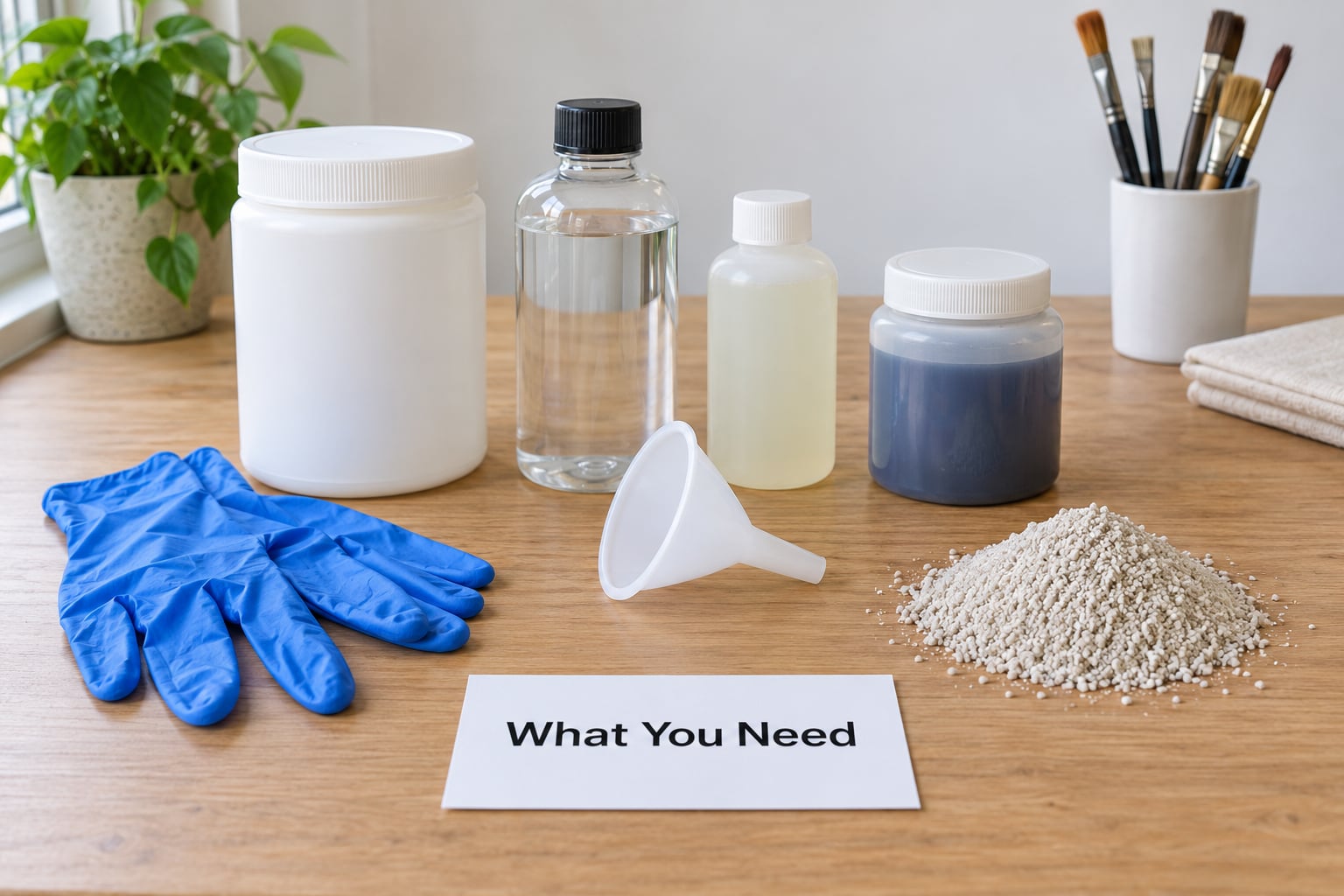
Before you sort anything, gather the things that let you sort it safely. You are looking for information first and equipment second, because most household disposal decisions are made from a label rather than from a measurement.
- Original product labels. The tube, can or bottle tells you the base (water or solvent), the hazard warnings and often the manufacturer’s own disposal instruction.
- Safety Data Sheets. Search the brand plus the product name plus SDS, or check the manufacturer’s site. Section 2 gives hazards, section 13 gives disposal considerations.
- Gloves and eye protection. Nitrile gloves and simple goggles are enough for most home sorting tasks. Solvent handling deserves more than that.
- Absorbent material. Cat litter, sawdust, vermiculite or commercial absorbent pads soak up spilled liquid so it cannot reach a drain or floor.
- Appropriate containers. Sealable, rigid, labelled containers. A jar with a loose lid is not a container, it is a delayed spill.
- A way to identify liquids. A clean jar, a funnel and masking tape are enough to decant small amounts safely and label them properly.
- Access to a local program. Search your county or city for household hazardous waste drop-off, and note whether it needs an appointment and what it charges.
Step-by-Step
How to dispose of art materials responsibly follows the same five moves every time, whether you are clearing a single apartment closet or a shared studio. Identify the material, read what the label and Safety Data Sheet say, pull out anything reusable, choose the correct route, then confirm the destination. Steps three and four are where the safety lives, so do not skip ahead.
How to check each product before disposal
Read the front and back of every container before you make a decision, even the ones you think you know. Look for the product name, the base (water-based, oil-based or solvent-based), pictogram warnings such as a flame or an exclamation mark, and any disposal statement.
Then match what you read to what is physically in the container. Paint that has thickened, skinned or gone chalky is still the same category as the wet paint it started as, and a jar that once held mineral spirits is still a solvent hazard even if it now looks like clean water. Form and use history both matter.
Pull the Safety Data Sheet for anything ambiguous. It will confirm the hazard classification, list whether the product is flammable or toxic, and point you toward the manufacturer’s disposal guidance, which is the most reliable instruction you will find on the material.
Unlabeled containers are common, especially in shared studios and art school cubbies. Do not guess based on smell alone, and never mix an unknown liquid into a labelled jar to “make it easier”. Set unknown containers aside together, keep them closed, label the holding container as unknown art material, and contact your local household hazardous waste facility or your waste authority to ask how they want unknowns handled. Many facilities accept them without question because sorting them is their problem, not yours.
Damaged containers get the same treatment with extra caution. A leaking can or a broken jar goes into a sealed secondary container with absorbent packed around it, and it stays on an incompatibility list until someone qualified has looked at it.
How to separate reusable, recyclable, and trash items
Sort into three physical piles before you sort by hazard. Usable supplies first, then clean containers and packaging, then everything else. Doing it in that order keeps you from binning a half-full jar of paint that a school art room would happily use.
Anything in working order can go to a school, community art programme, community centre, reuse organisation or a local Buy Nothing or Freecycle group. Paint tubes with caps, sealed paper, canvases, brushes with intact bristles, palettes and unopened mediums all have a second life somewhere.
For recycling, the rule is clean and empty. Metal paint cans with the lid off, wiped dry inside and out, usually go in the metal recycling stream. Clean plastic lids and tubes are worth wiping before they go in the bin, and your local program decides whether the plastic is accepted. Anything with paint still in it or still smelling of solvent is not recyclable.
Rinsing a container only makes sense when the label allows it and your local rules permit it. For water-based paints, a rinse of plain water into a bucket used for rinsing art waste is usually fine. Never rinse a solvent container, and never rinse anything into a sink that connects to a storm drain rather than a sewer.
Preserve the label on any container you keep for reuse, and separate caps and lids where your program asks you to. A reusable container with hazardous contents still sitting in the trash stream defeats the whole exercise.
How to handle oil, solvent, and paint waste
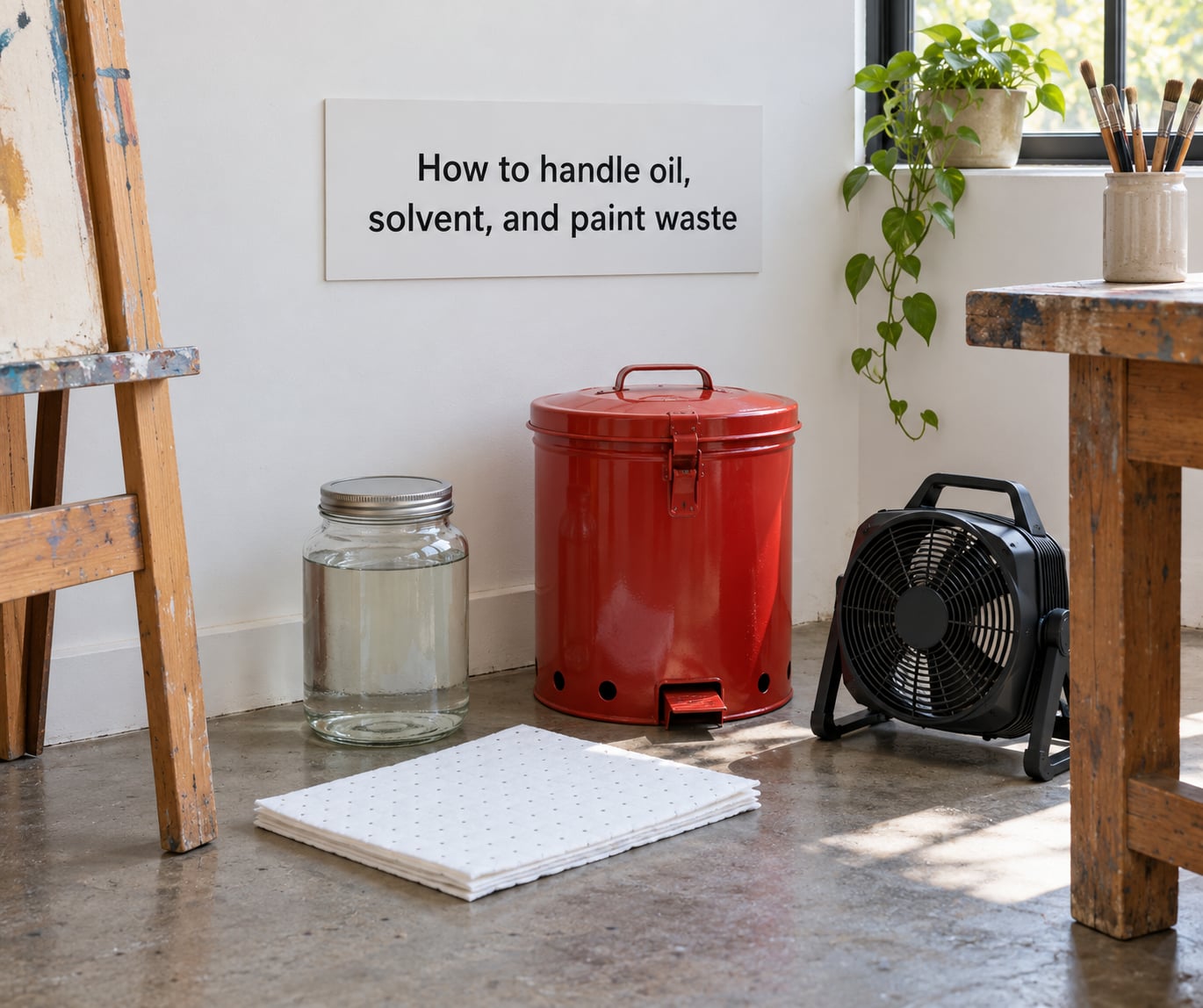
Oil paint, mineral spirits, turpentine, Gamsol, varnishes and thinners are the materials that make art studio disposal a safety question rather than a tidying question. They are flammable, they evaporate into vapours you breathe, and the waste has to reach an approved route.
Work in a ventilated space and keep every ignition source away, which means no pilot lights, no hot plates, no smoking, and no sanding that throws sparks. Open windows and run a fan; do not rely on a mask alone if you are working with solvent for more than a few minutes.
For used thinner and cloudy turpentine, the sequence is straightforward. Let the solids settle or pour the liquid off the top into a clean sealed jar, add absorbent material to the remainder so it cannot run, screw the cap on, label the jar with the contents and the date, and take it to a household hazardous waste facility. Never pour it down a sink, a storm drain, a gutter or onto the ground, and never mix it with used acrylic rinse water, which turns the whole batch into an unpredictable mixture.
Swish-out solvent that is still clear enough to reuse gets reused. Paint settles out of it, and the clean top layer is perfectly good for the next brush session. Keeping it in a labelled, closed jar with a lid is what makes that possible, and it removes a lot of waste before it ever becomes waste.
Oil paint skins and rags go to the household hazardous waste route rather than the trash unless your local program says otherwise. Palettes, mahl sticks and studio knives with dried oil paint on them are normally accepted as solid waste by most programs once fully dry. Never put solvent-wetted tools in a general bin, and never leave a jar of used thinner open on a shelf.
Artist-grade paint changes the classification in a way student-grade does not. Heavy metal pigments including cadmium, cobalt and lead carry toxicity warnings that often survive even after the paint dries, which is why serious programs and manufacturers route them to hazardous waste rather than landfill. When the label names a heavy metal pigment, treat the dry solid as hazardous unless your local program tells you otherwise.
How to dispose of water-based paint, dye, and acrylic waste
Water-based materials are the easiest category, and the easy part is still conditional. Latex, acrylic, tempera, gouache, watercolour and dye residues can normally go to general trash once they are completely dry and solid, in small quantities. That is the rule most municipal guides give, and it is the answer to whether you can throw acrylic paint in the garbage.
The drying step is what makes it true. For leftover paint in a jar, leave the lid off or cracked in a ventilated area away from pets and children until the surface skins and the mass solidifies, then scrape it into the trash. A layer of cat litter or sawdust on top speeds this up and keeps the sticky mass off the jar walls.
For rinse water, the bucket method works better than pouring and wiping. Rinse brushes into a bucket, let the water sit until the paint settles and the surface dries, then pour off the clear water and bag the residue. Absorbent material and a spray bottle for the final wipe cut the amount of wastewater you generate in the first place.
Larger volumes change the answer. A studio that generates gallon-sized amounts of paint water needs a paint collection program or hazardous waste stream rather than the trash. Preservatives, biocides, pigments and any contamination with oil or solvent also move a batch out of the simple dry-and-trash category, so check the Safety Data Sheet before you assume.
How to manage aerosols, markers, and contaminated rags
Spray paint, fixative sprays and aerosol primers are pressurised containers with solvent contents, so they belong in the hazardous waste stream in most places. Do not puncture them, do not try to empty them into a drain and do not leave them in a hot bin. Many fire departments and waste facilities specifically warn against attempting to make them “safe” yourself.
Solvent-based markers and paint pens follow the same route as their ink. Water-based markers and felt tips are usually fine in the trash once dry, but check the barrel for flammable or toxic warnings, because refillable markers often contain more solvent than cheap disposable ones.
Rags, paper towels, tissues and anything else that has absorbed oil or solvent are the highest-risk item in a studio, and the reason is spontaneous combustion. Oil oxidises as it sits on a rag and generates heat faster than a rag can dissipate it. That heat can raise the centre of a crumpled pile past its ignition point with no open flame anywhere nearby, which is how studio fires most often start.
The fix is storage, not disposal. Put oily rags in a sealed metal container with a tight-fitting lid, or submerge them completely under water in a container that keeps them from drying. Never leave oily rags in a plastic bag or an open bin, and never leave them overnight on a worktop. If you lay them flat outside to dry, spread them in a single layer on a non-combustible surface away from anything burnable, and give them time.
Paint-stained shop towels sold for cleanup are treated differently from ordinary towels because they are designed to be disposable after use, but they still belong to the waste stream for the solvent involved rather than the ordinary laundry route. Wiping cloths are waste, not laundry, whenever solvent is involved.
Common Mistakes
Most of the bad outcomes in this topic trace back to six habits, and every one of them is easy to stop.
Pouring paint or rinse water down a sink. It blocks drains, contaminates a whole load of recyclables and sends that load to landfill. A single container of paint can spoil the contents of an entire recycling cart, which municipal programs point out constantly.
Putting oil paint, solvents or oily rags in the general trash. This is the one that starts fires. Solvent-soaked paper towels in a kitchen or studio bin are a leading cause of preventable structure fires, and no amount of care elsewhere fixes it.
Washing containers without checking the rules. Rinsing a solvent can creates a mixed waste stream nobody can classify, and rinsing down a storm drain puts solvents straight into waterways and onto wildlife.
Leaving chemicals unlabelled. An unlabelled jar is unusable to a facility, unsafe for your household and a liability if it lives on a shared shelf. Label everything with contents and date, including the “unknown” holding container.
Combining incompatible wastes. Oil paint and acrylic rinse water must never share a container, and neither should two solvent types with unknown contents. Incompatibility is exactly what facilities sort on, and you have destroyed that information by mixing.
Assuming dried means safe. Drying removes volatility, not toxicity. Dried cadmium or lead-bearing artist paint is still a heavy metal solid and belongs with hazardous waste under most programs.
One habit worth adding: keep a short disposal log. Write down what you routed where and on what date, then photograph labels before they go into a waste container. When a studio manager or an insurer asks a question six months later, that log answers it in a minute instead of triggering a whole investigation.
Frequently Asked Questions
Can I put art supplies in my regular trash?
Once they are fully dry and solid, yes: water-based paints, acrylics, gouache, watercolour, dried palettes and dried brushes usually go in general trash in small quantities. Oil paint, solvents, thinners, varnish, spray cans and oily rags do not. They go to a household hazardous waste facility. Read the product label first, and check your local program, because a few places route even dried artist paint differently.
What should I do with an unlabeled container of paint?
Do not guess and do not pour it into another container. Put it into a sealed secondary container, add absorbent if it is leaking, and label the outside as unknown art material with the date. Most household hazardous waste facilities accept unknowns without sorting them because classification is their job. If it is a large volume, call your waste authority first so you do not arrive at a facility that cannot accept it.
Is dried acrylic or oil paint safe to throw away?
Dried acrylic or water-based paint in small amounts is generally accepted in general trash. Dried oil paint is treated as hazardous by many programs, especially artist-grade paint containing cadmium, cobalt or lead pigments. Drying removes the solvent vapours, not the metal compounds. The label tells you which pigments a product contains, and your local household hazardous waste program tells you how they want that solid handled.
How should I dispose of brushes and rags soaked in oil or solvent?
Store them sealed and take them to a household hazardous waste facility. Rags that absorbed oil or solvent must go into a closed metal container with a tight lid, or be submerged under water, until you can move them. Never leave them in an open bin, a plastic bag or a pile on a workbench. Oil-soaked rags generate heat through spontaneous combustion and can ignite without an open flame.
Who is responsible for disposing of materials in an art class or studio?
In a school or shared studio, the facility manager or department holds that responsibility, and the rules come from the institution’s environmental health and safety plan rather than personal preference. If you are a self-employed artist working from a home studio, you are the generator and you follow your local household hazardous waste rules. Commercial studios handling bulk volumes may register as waste generators and have manifest obligations.
Conclusion
Start by photographing or saving every label before you throw away a single container, then read the disposal instructions and check your local household hazardous waste program before you sort anything. That one evening of label work is what keeps the rest of the process accurate.
The rule underneath everything else is simple: do not mix products, and do not send hazardous art waste to ordinary drains or trash without authorization. Oil paint, solvents and oily rags go to an approved program. Dry water-based solids go in the trash. Clean empty packaging goes in recycling. Usable supplies go to another artist.
Local rules vary by county and they change, so confirm with your waste facility rather than trusting a general answer, including the one above.