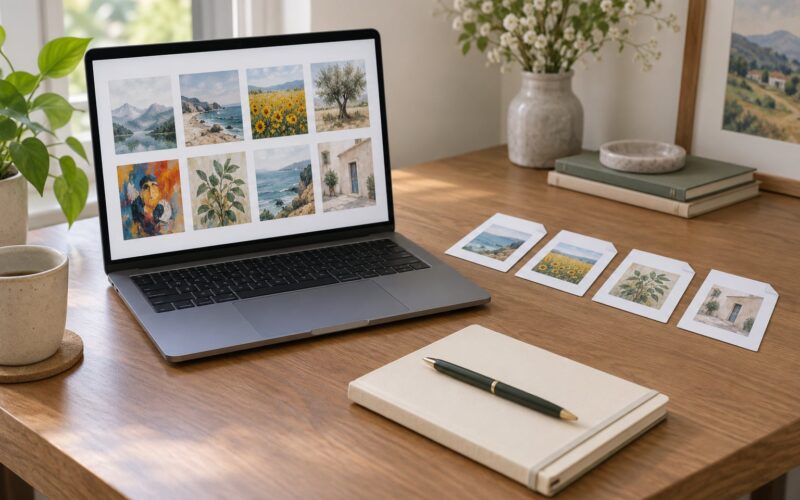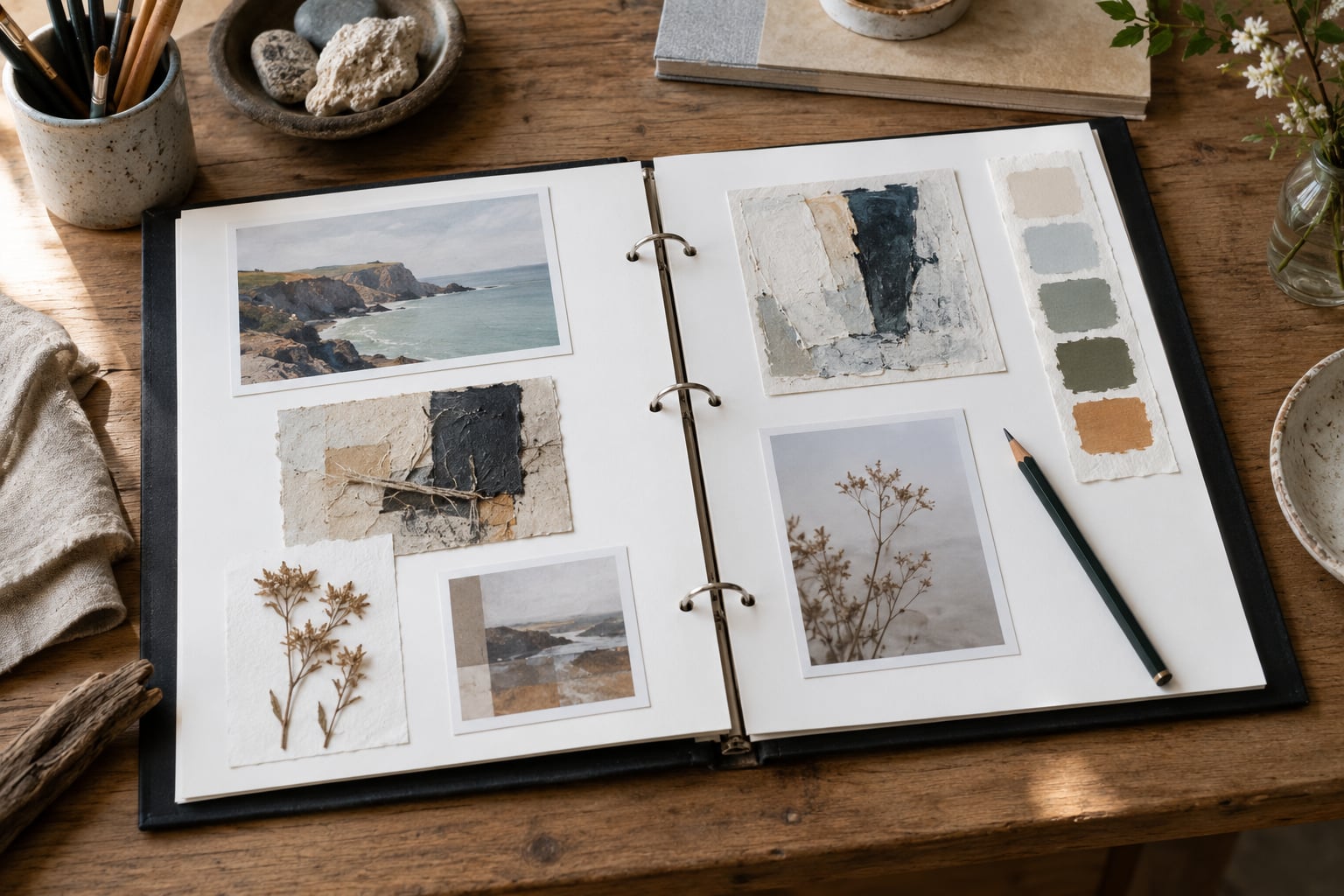
How to organize a portfolio by series: audit everything you have made, group the pieces that share an idea into bodies of work of three to seven pieces, give each one a name and a short statement, then order the series and the pieces inside them so the strongest work leads. The whole job takes a couple of sitting-down sessions once the inventory exists, and the hard part is not the formatting, it is the cutting.
Most portfolios are not badly built. They are just flat. Forty images in a grid, loosely chronological, with no reason for the viewer to stay past the first scroll. Grouping that same work into a few named series instantly gives it an argument, and that argument is what editors, clients, and admissions committees are actually looking for.
Below is the process I use when I help a maker sort a body of work, from the first spreadsheet to the finished PDF. It applies to fine art, photography, illustration, textile and surface pattern work, and anything in between.
Table of Contents
- What You Need
- Step-by-Step
- How to Identify Your Strongest Series
- Define the Scope of Each Series
- Order the Artworks Within a Series
- Write a Clear Series Title and Description
- Prepare Consistent Images and Labels
- Build the Portfolio Presentation
- Review, Edit, and Share the Portfolio
- Common Mistakes
- Frequently Asked Questions
- How many pieces should be in a series?
- How many series should an artist portfolio have?
- Should my portfolio be in chronological order?
- What do I do if my work is not a series yet?
- How do I organize a portfolio by series for a school application?
- Should unfinished and process work go in the portfolio?
- Conclusion
What You Need
Sorting only works if everything is written down before you start moving things around. Otherwise you will spend the afternoon rearranging files and still not know what you have.
- A complete inventory. A spreadsheet with one row per piece: title, date, medium, dimensions, and where it physically is. If a piece is not in the row, it does not go in the portfolio.
- Photos of everything. Even pieces you would never show, because the weak ones often reveal which group is really your strongest.
- A folder structure. One folder per candidate series, created empty. You are about to move thumbnails into them, nothing heavier.
- A series statement template. Three fields: the question the work asks, the material or visual approach, and why the pieces belong together.
- A consistent file-naming pattern. Something like
SeriesName_Title_Year_01.jpgso a renamed folder does not break your captions later. - A destination. A PDF, a website builder, or a printed binder. Decide this early because it changes how you shoot the work.
- Optional but useful: notes on materials, dimensions, edition counts, and what happened with each body of work, plus any process shots you already have.
Two hours of setup here saves the rest of the project. If you want the mechanics of the sorting itself, the steps below walk through how to organize a portfolio by series from inventory to final order.
Step-by-Step
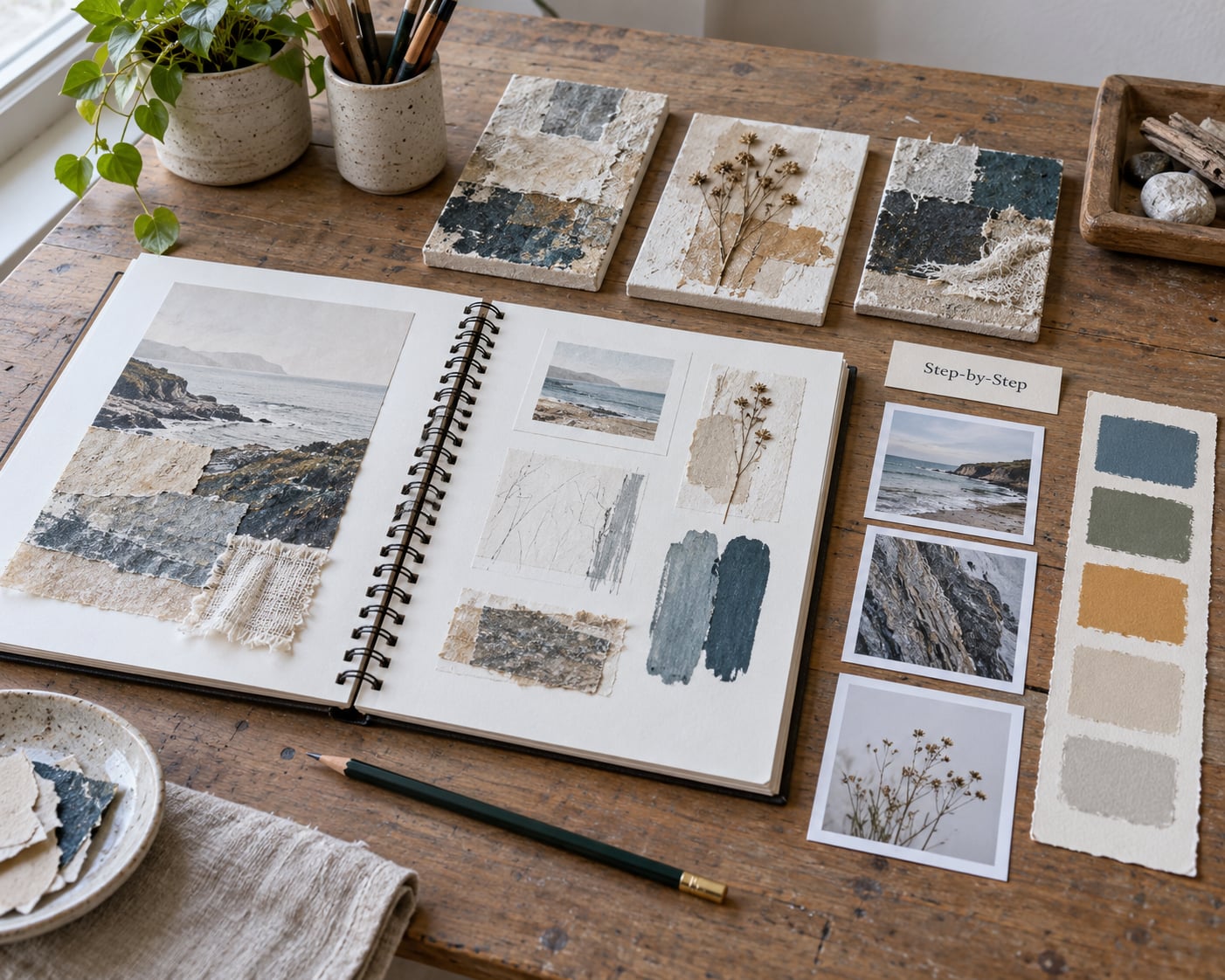
How to Identify Your Strongest Series
Lay your inventory out and look for recurrence. The same subject, the same material, the same format, the same constraint, the same idea wearing different clothes. A series can be held together by concept, by process, or by visual language, and it does not have to be one medium.
Examples from real practices: a group of twelve small stitched textile panels that all use scraps from one fabric line, a run of seven oil paintings that all treat the same stretch of shoreline at the same low light, a set of forty photographs where every frame was shot within a month at one location.
Three quick tests tell you whether a candidate group is a real series:
- The one-line test. Can you describe the group in a single sentence without using the word “miscellaneous”?
- The stranger test. Would someone who does not know you recognize the connection in under ten seconds?
- The cut test. If you removed the weakest piece, would the group still make its point? If removing it leaves a hole, the group is three works pretending to be ten.
Rank your candidates. The group with the clearest through-line usually wins, even when another group has more pieces.
Define the Scope of Each Series
Decide what belongs and what does not. The working range is three to seven pieces per series: below three it reads as a sketch study, above seven the reviewer starts skimming and the argument thins out.
Note the school convention that trips people up. Plenty of college and program review boards count an entire series as one piece, so you can show fifteen works and have it logged as one slot. Check your specific program’s rules before you build to a number.
Cutting near-duplicates is normal and expected. Keep two or three studies that document how you got somewhere, drop the rest of the near-identical versions. Admissions guidance is consistent on this: going deeper on fewer pieces beats showing thirty pieces with no depth, and a mature artist is one who can edit their own work.
Not everything needs to fit. Work that has no through-line belongs in a smaller section, or in an archive, and that is a perfectly respectable outcome.
Before you commit, it is worth comparing schemes, because artists often reach for medium or date out of habit rather than purpose.
| Organizing scheme | Best suited for | Main risk |
|---|---|---|
| By series | Fine art, photography, textile and surface pattern work, any body of work with an idea | Forces you to commit to a point of view |
| By project | Illustration, design, and commercial client work | Clients care about fit, not about your development |
| By medium | Multidisciplinary makers applying to a program with a media slot | Reads as a supply list instead of a practice |
| Chronological | A personal record, or a CV you attach to a PDF | Opens on your weakest year and hides your best work |
| By skill | Very rarely appropriate to a portfolio | Nobody hiring you is scanning for technique alone |
Order the Artworks Within a Series
Ordering happens at two levels, and confusing them is the most common practical mistake. You choose the order of your series inside the portfolio, and separately the order of the works inside each series.
For works within a series, pick the method that matches what the series is doing:
- Chronological when the series documents a process or a change over time.
- Visual progression when the series moves from dense to open, dark to light, or detailed to simplified.
- Installation order when the works are meant to hang or sit together, and walking past them is part of the piece.
- Concept-based when each work answers a different part of one question, usually opening with your strongest piece.
For the series themselves, lead with the group that best shows your point of view rather than the newest one. Professional portfolios built for clients consistently reject chronological ordering at the top level for a simple reason: it opens on whatever you made before you got good at it.
Inside a series, the safest default is strongest work first. It is not an art-historical error, and reviewers read maybe forty of your pieces before they stop.
Write a Clear Series Title and Description
Most titles do the opposite of what people hope. A stack of quietly good work labeled “Untitled Collection 3” reads as an accident.
A workable formula has three parts: the subject or question, the approach, and the material. Then keep it short enough to sit on a page as a heading.
- Weak: Series 2, mixed media experiments, last summer.
- Strong: Salt Line — stitched panel paintings from one year of shoreline debris.
For the description, three sentences is plenty. Sentence one states the central question or idea. Sentence two names the material or visual approach. Sentence three says why these pieces belong together and what changed across them.
Write it once and reuse it: the website series page, the PDF caption, the submission email, your social post. Same words everywhere, because inconsistency is what makes a portfolio feel accidental.
Prepare Consistent Images and Labels
Inconsistent photography undoes good curation faster than anything else. One piece shot in warm afternoon light, the next under fluorescent bulbs, and no viewer reads them as a series no matter how well you titled them.
- Shoot all works for a series in the same light, at the same distance, against the same background.
- Square the frame to the edges of the work so the thumbnails line up on a grid.
- Keep a small consistent margin between works rather than varying the gap.
- Record medium, dimensions, and year for every piece, plus edition count and price where relevant.
- Write alt text that says what is actually in the picture, plainly.
- Name files with your pattern so a re-sort does not scramble the captions.
Add one or two process images per series at most. Evidence of how you worked is useful; a full diary is not.
Build the Portfolio Presentation
Whatever the format, the structure is the same: a short overview page, one spread or page per series, and a closing page with contact details and next steps.
The overview page lists your series titles in order, one line each, so a reviewer can see the whole shape of your practice in ten seconds. Each series gets its own page or spread with the statement, then the works in the order you chose. The final page handles contact, availability, and formats you sell in.
In print, give a series room to breathe across a spread rather than stacking everything onto one dense page. In a PDF viewer, set the page thumbnails to show actual spreads, since that is how people will flip through it. On a website, one landing page with a thumbnail per series beats a single scrolling gallery, because each series then has a page where its statement and larger images live.
Review, Edit, and Share the Portfolio
Run this as a twenty-minute audit before you send anything:
- Read only the series titles. Do they describe a practice, or do they describe storage?
- Check every image is consistent in framing, background, and scale.
- Check each label carries title, medium, dimensions, and year.
- Spell-check the series statements out loud.
- Confirm the strongest piece in each series is visible without clicking.
- Remove any piece where your role is unclear, especially on collaborative work.
- Ask someone who has never seen your work to describe what they think you are about after five minutes. If their answer does not match your intent, the order is wrong.
Then tailor the selection without changing the underlying system. A college board, a gallery submission, and a freelance client pitch draw from the same series in different quantities and different orders. The archive grows, the current selection stays short, and you rebuild nothing from scratch.
Common Mistakes
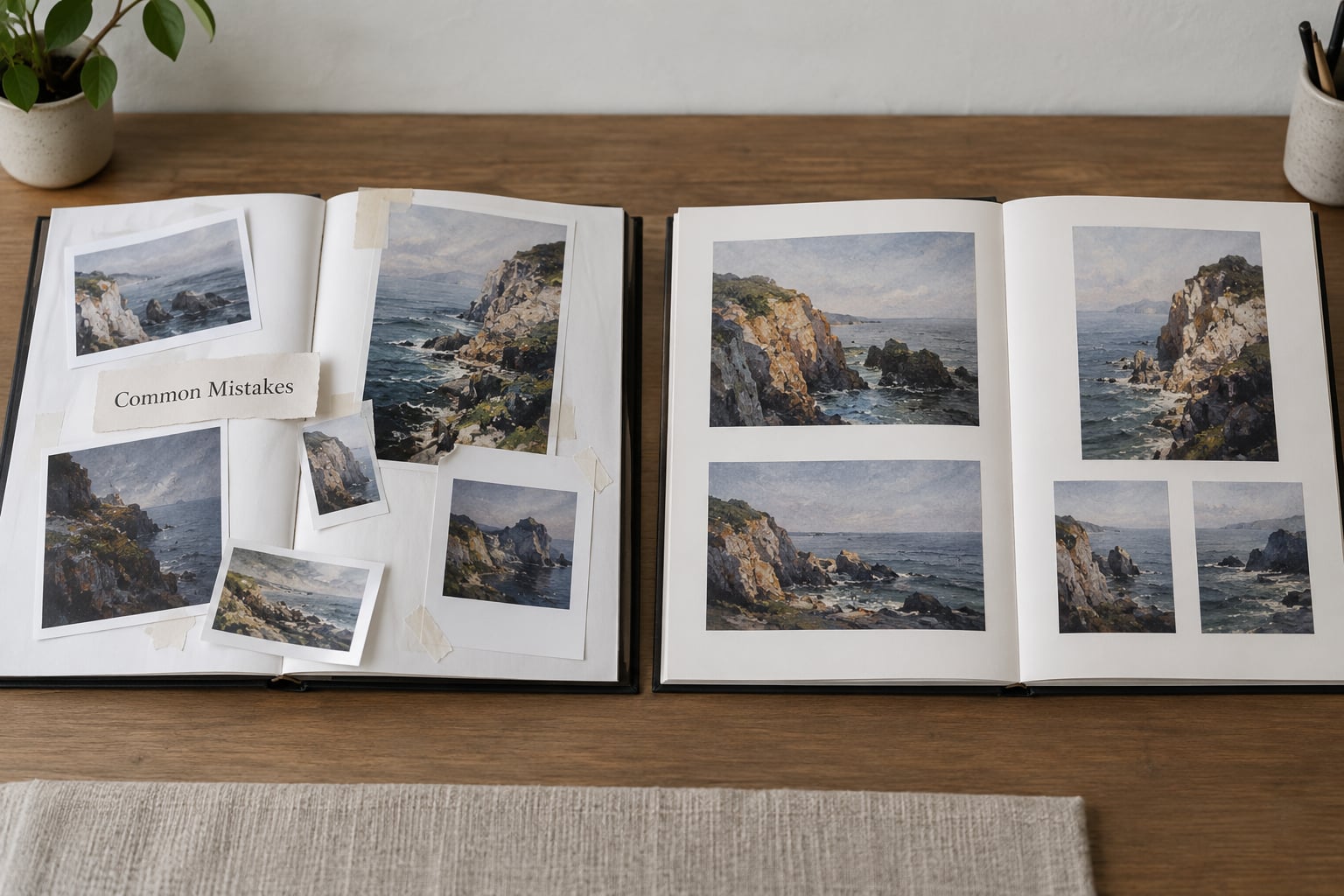
Making every project a series. A series exists to make a point. Ten loosely related commissions are a client list, not a body of work, and presenting them as a series wastes the word. Label that section “Selected Projects” and be honest about what it is.
Grouping only by medium. “All my woodwork here, all my paintings here” describes your materials, not your thinking. Group by idea and let the medium fall where it falls. If you work across media, artists running several unrelated practices at once usually do better with separate sections than with one mixed gallery that looks odd to visitors.
Inconsistent titles. Renaming a series between the website and the PDF makes two versions of the same practice. Pick a title, write it down, reuse it verbatim.
Showing too many weak pieces. Depth beats breadth every time, and reviewers stop early. Cut to the strongest three to seven and let the rest wait.
Hiding unfinished work with no context. Process pieces are worth including when they show a decision. One or two with a caption explaining what changed is enough; an unlabeled pile of half-finished work reads as abandoned.
Ordering by color for visual appeal. Harmonizing a sequence by palette is a real temptation and it usually buries the strongest work in the middle of a gradient. Choose the order that serves the idea instead.
Waiting until your work is a series. The most common question in artist forums is what to do when nothing in your archive feels like a coherent body yet. Start with three pieces that share one material, one format, or one idea and treat them as a test series. Two finished pieces are a start; three is the minimum that reads as intentional. Show it, see how people react, then build outward. A small clear series teaches you more than a large incoherent one.
One practical tip before you start: keep every retired series in the archive with its page still live, and never delete a series outright. Old work keeps earning you enquiries long after you have moved on from it.
Frequently Asked Questions
How many pieces should be in a series?
Three to seven is the working range. Three is the minimum that reads as a deliberate body of work rather than a sketch study, and seven is about the ceiling before a reviewer starts skimming. Some college and program review boards count an entire series as one piece, so check your specific program’s rules before you commit to a count. Keep process or near-duplicate pieces only when they document a decision worth showing.
How many series should an artist portfolio have?
Three to five series works for almost every audience: an online portfolio, a college application, a gallery submission, or a client pitch. Fewer than three reads as a thin archive, and more than seven usually means some groups are too small to stand on their own. Keep each series to three to seven works, which gives a portfolio somewhere between nine and thirty-five pieces overall.
Should my portfolio be in chronological order?
Rarely at the top level. Chronological order opens on whatever you made before you got good at it, so lead with the series that best shows your point of view. Use chronology inside a series when the work documents a process or a change over time, and use visual or installation order when the sequence carries meaning. One honest exception is a portfolio attached to a CV, where the record itself is the point.
What do I do if my work is not a series yet?
Look for recurrence before you assume you have none: the same subject, material, format, or constraint appearing across different pieces. Group whatever recurs, trim each group to its strongest three pieces, and treat it as a test series. Publishing that small group and watching how people describe it is the fastest way to find the through-line you could not see from inside your own studio.
How do I organize a portfolio by series for a school application?
Read the program’s requirements first, because piece counts and formats vary widely and some count an entire series as a single submission slot. Then build your series using the same method you would use for any other audience. Show the finished piece with one supporting view, keep your role explicit on collaborative work, and send fewer pieces done properly rather than a long archive. If you want the short version, start with the inventory spreadsheet.
Should unfinished and process work go in the portfolio?
Yes, sparingly, and only when it shows a decision. One or two process images per series explain how you worked and where the idea came from, which reviewers value. An unlabeled pile of half-finished pieces reads as abandoned work instead. Caption each one with what changed and what it taught you, and keep the archive separate from the presentation.
Conclusion
Start with the inventory, not the design. Write every piece down, find the three to five groups with the clearest through-line, cut each back to three to seven works, and give each one a name and three sentences of explanation.
Then arrange the clearest series first and build the presentation around it. If you have never organized a portfolio this way before, the whole method comes down to one habit: put your work into groups that make a point, and let the order serve that point rather than the calendar.