How to put together a submission packet for art shows comes down to one rule: build it once, against the exact wording of one specific call for entries, and never send it anywhere else unedited. Most artists lose a whole weekend to this because their materials are scattered — a call saved in a browser tab, a CV last updated two years ago, a statement buried in an old email, and a folder of images named final_v3_REAL.jpg.
The work itself is not difficult. An experienced juror is deciding between dozens of entries on very little time, so what they need is a complete, correctly formatted, clearly personalized set of materials they can check in one pass. Here is the order I work in, built from what juried shows actually ask for.
Table of Contents
- What You Need Before You Assemble a Submission Packet
- Step-by-Step
- Step 1: Read the Call for Entries
- Step 2: Select the Artwork
- Step 3: Prepare Digital Images and Files
- Step 4: Write the Artist Materials
- Step 5: Assemble and Proof the Submission Packet
- Step 6: Submit and Save the Packet
- Common Mistakes
- Frequently Asked Questions
- What should be included in an art show submission packet?
- How should digital artwork files be named and organized?
- Do I need an artist statement and CV for every submission?
- How many artworks should I include in a juried exhibition application?
- Can I submit the same artwork to multiple art shows?
- What should I do after submitting an art show application?
What You Need Before You Assemble a Submission Packet
Gather everything before you write a single line. Most stalled packets fail because something was missing at the last minute, not because the work was weak. Six collections cover almost every juried exhibition, residency and fellowship.
- The call for entries itself. Save it as a PDF in the folder for that opportunity, not as a bookmark. Deadlines, formats and file limits change between cycles, and last year’s rules are worse than no rules.
- Artwork files. Your highest-resolution image for each piece, plus title, year, medium, and dimensions written down somewhere you can copy from. Dimensions are the single most commonly missed item.
- Supporting documents. An artist statement, a short biography, a CV, and a list of the works you are submitting with dimensions and prices if prices are requested.
- Identification and contact details. Your name exactly as you want it printed, email, phone, mailing address, and website. Galleries reprint contact details from these, so a nickname in your email address travels further than you think.
- Display and shipping details. Framed or unframed size, whether the piece is available, any installation requirements, and where it ships from. Some calls require a shipping address even for digital entry.
- The rules that govern the entry. Number of works allowed, file format, maximum file size, file-naming pattern, media categories, entry fee, and who is eligible.
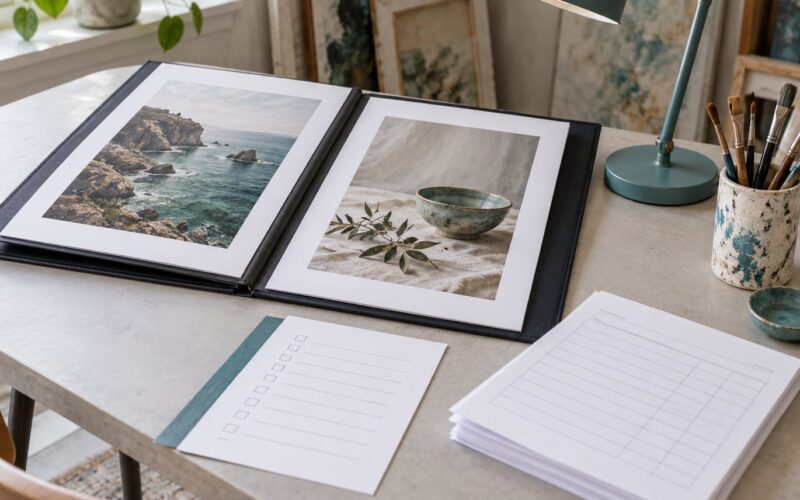
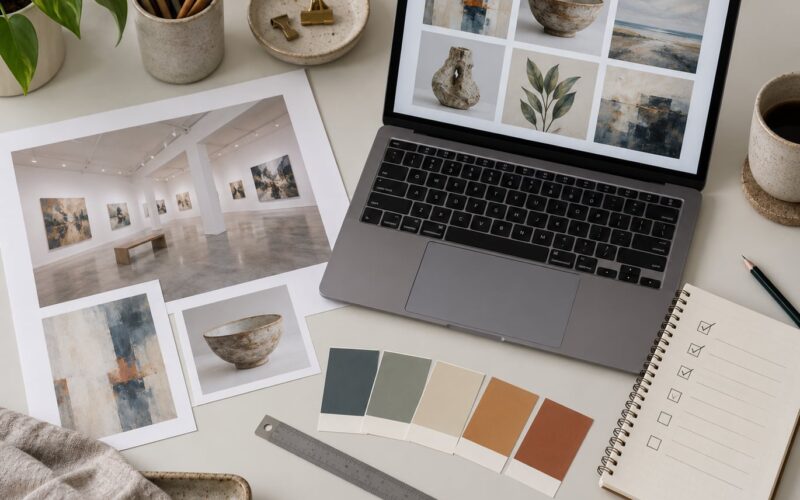
Turn that list into a one-page checklist with a pass column. When you can tick every line, you have a packet that can actually be submitted. Artists who keep a reusable checklist find they stop second-guessing it after the third or fourth send.
Step-by-Step
Six steps, done in this order. Each one feeds the next, and the order is what keeps you from rebuilding documents you already wrote.
Step 1: Read the Call for Entries
Read it twice before you decide anything. The first read gets you the theme and the feel of the show; the second read is for rules, and rules are where entries get thrown out.
- The deadline, including the time zone and whether it closes at midnight local time.
- Eligibility rules on age, residency, student status, or prior exhibitions with this organizer.
- Media categories. A show split into painting, photography, textile and sculpture sections is not asking for one portfolio.
- Number of works or images allowed, and whether that number is a maximum or a target.
- Required file format, maximum file size, and the exact file-naming pattern if one is specified.
- Dimensions requested: framed or unframed, in inches, and height listed before width.
- Which documents are mandatory. Statement only, or statement plus CV plus biography.
- Entry fee. There should not be one. Any request for payment to view or submit is a reason to walk away.
Write each rule into the checklist with a pass column and a due date. If the call asks for five images and you want to show twenty, the call wins — a portfolio that ignores the stated count reads as not having been read.
Step 2: Select the Artwork
Choose work that fits the theme and the guidelines, then order it so the strongest piece is first. Jurors spend their first seconds on page one, and the piece that opens your submission sets the standard for everything after it.
Each piece has to pass three questions: does it genuinely fit the theme or stated intent, is it the strongest version of that idea you have made, and is the image showing the whole piece at a readable size? A piece that fails the third question is not submission-ready no matter how good it is in the studio.
On count, the working number is 10 to 20 works for an open portfolio PDF, and whatever the call specifies when it specifies. When a call says six, send six excellent ones rather than six good ones plus fourteen fillers. Group the work into two or three bodies of work if you have them, because coherence reads faster than variety.
Caption every piece with title, year, medium, and dimensions, in that order, height before width. A curator cannot refer to an uncaptioned work in a follow-up email, and you cannot check your captions against reality at 1 a.m. the night before a deadline.
Write them like this: Night Ledger, 2026, archival pigment print, 24 x 36 in (61 x 91 cm). For mixed-media and textile work, name the materials honestly — stitch, pigment, and support — because juried shows are usually looking for the technique, not just the image.
Step 3: Prepare Digital Images and Files
Photograph or scan each piece flat and evenly lit, correct the files only as much as needed to represent the work truthfully, and export at the size the show will actually view them.
Export at 150 to 300 pixels per inch at final printed size. Anything higher bloats the file without improving what a juror sees on a screen. For screen-only review, 96 to 150 ppi at the display size is plenty.
| Document | Target length | File format | Notes |
|---|---|---|---|
| Portfolio PDF | 10–20 works | One work per page, captioned | |
| Artist CV | 1–2 pages | Reverse-chronological, no skills section | |
| Artist statement | 150–300 words | PDF or portal text field | First person |
| Short biography | 100–200 words | PDF or portal text field | Third person |
| Cover letter | 150–250 words | PDF or email body | Personalize to the show |
File size is where good packets die. Exporting at print resolution across twenty works will regularly produce a file nobody can open on a phone. When a call states a limit, that number wins; when it stays silent, 8 to 12 MB is a sane working target, reached by lowering resolution rather than by crushing the images into visible mush.
Name files with one convention, applied without exception: Lastname_Title_or_Show_01.pdf for the packet, and Lastname_Title_01.jpg for each image. No spaces, no dates unless you are versioning, no special characters.
Step 4: Write the Artist Materials
Four documents, each with a job. Write them once, date them, and update on a schedule rather than in a panic before a deadline.
Artist statement, 150 to 300 words. First person. What you make, how you make it, and why this work matters to you now. Three short paragraphs beat one dense one. Leave out the materials inventory and the account of how you discovered the medium — a juror can read a supply list anywhere.
Short biography, 100 to 200 words. Third person, even when you wrote it. Who you are, where you trained, where you have shown, what you are working on now. If it reads like the statement with the pronouns changed, it is doing nothing.
Artist CV, 1 to 2 pages. Reverse-chronological, most recent first: solo and group exhibitions with year, venue and city, then collections, awards, grants and residencies, then education, teaching and press. This is not a job résumé. There is no skills section, no responsibilities list, and an empty section is worse than a missing one — delete it instead of padding it.
Artwork list. Title, year, medium, dimensions, and price only when the call asks for prices. Prices in a submission packet are a signal you are selling, not asking to exhibit, so leave them out unless asked.
Step 5: Assemble and Proof the Submission Packet
Put the cover letter first, then the statement, then the portfolio, then the biography and CV as separate files when the call asks for separate files. Add a contents page inside the PDF once it runs past about fifteen pages. Follow the call’s own ordering when it specifies one.
Proof it the way a stranger would. Open the file on a second device, check your name and contact details are consistent on every page, and confirm each caption matches the dimensions on your list. Look for leftover tracked changes, comments, and hidden pages, which survive export more often than anyone expects.
If a portal has a text field for the statement, paste the statement there and attach the PDF version, using identical wording in both. That confusion — statement inside the portfolio or shipped separately — is the most common unresolved question artists have, and sending both ends it.
Save three copies: the working file, the final dated PDF, and a plain-text copy of your cover letter for pasting into an email body.
Step 6: Submit and Save the Packet
Send it the way the call specifies: a portal, an email address, or a postal address. Where a call is silent, email is the better channel; artists consistently report that most galleries prefer a submission by email to a walk-in with a portfolio.
Paper packets still exist, particularly for residencies, fellowships, and juried shows managed by volunteer boards. Print in the same order as the digital version, write your name and phone number on the back of every page, avoid putting a staple through an image, and use a rigid mailer so nothing bends in transit.
Log the submission before you close the browser. A spreadsheet with columns for opportunity, contact name, date submitted, deadline, format requirements, response date, and result is all you need. Set a follow-up date at the moment you submit: six to eight weeks for a gallery or open call, three to four months for a residency or grant.
When you follow up, keep it to three sentences: who you are, when you submitted, and one line confirming the details are still current. One message, then let it go. Response times range from days to never, and a second message does not change that.
Keep every packet you send, including the rejections. Twelve months later they are your record of what you have shown, and the next gallery will ask.
Common Mistakes
Each of these is common, cheap to avoid, and expensive to learn the hard way.
- Ignoring the file-size limit. Fix: check the stated number twice, export at 150 to 300 ppi, and test the file on a phone before sending.
- Inconsistent artwork titles. One piece should have one title everywhere, including in the file name. Fix: freeze your titles in a single master list and copy from it.
- Missing dimensions. Fix: list height before width, note framed or unframed, and add the unit.
- An outdated biography and CV. Fix: date both, update them quarterly, and re-check them before every send rather than trusting last year’s file.
- Poor image quality. Fix: shoot flat, evenly lit, and straight-on; correct only for color and cropping so the work still looks like your work.
- A generic cover letter. Fix: name the show, name one work, and say in a sentence why this body of work fits this particular call.
- Sending more work than the call allows. Fix: treat the stated number as a maximum and cut your least resolved pieces first.
- Missing the deadline. Portals usually close at 11:59 p.m. in the organizer’s time zone. Fix: submit two days early and keep the confirmation.
One more warning, since it comes up constantly: never pay a fee to submit or to be reviewed. Legitimate juried exhibitions and residencies are paid for by the organization, the sponsor, or the public arts body. Anyone charging you to look at your work is running a business, and artists keep writing in about it because it still catches people.
Frequently Asked Questions
What should be included in an art show submission packet?
Six things, usually: a personalized cover letter, an artist statement of 150 to 300 words, a short third-person biography of 100 to 200 words, a 1 to 2 page CV, a captioned portfolio PDF of 10 to 20 works, and a list of submitted works with dimensions. Some calls ask for only a statement and images, so the call always sets the minimum. Anything beyond that — press kit, teaching history, references — belongs in a separate file unless asked for.
How should digital artwork files be named and organized?
Use one convention applied without exception: Lastname_Title_or_Show_01.pdf for the packet and Lastname_Title_01.jpg for each image, with no spaces and no special characters. Keep one master spreadsheet of titles, years, media and dimensions, and one folder per opportunity with a dated final copy inside it. Version by date rather than by editing the old file in place.
Do I need an artist statement and CV for every submission?
A statement is almost always required, and a CV is usually requested for anything juried, curated, or grant-funded. The exception is a casual portfolio review where nobody asked for documents. Write both once, keep them dated, and update them quarterly so every future send uses the current version rather than the one saved from two years ago.
How many artworks should I include in a juried exhibition application?
Follow the number in the call; that is the only answer that matters. When nothing is specified, 10 to 20 works is the working range for an open portfolio, presented one per page with captions and grouped into two or three coherent bodies of work. Sending more than the call allows reads as not having been read the guidelines, which is the fastest way to be filtered out.
Can I submit the same artwork to multiple art shows?
Yes, with two conditions. Confirm the call does not restrict exclusive or first-showing entries, and tell the truth about prior showings in your CV. Not every restriction is written down, and a later gallery that discovers a gap in your exhibition history may well remember the omission. If a work has been exhibited, list the venue and year.
What should I do after submitting an art show application?
Log it immediately: opportunity, contact, date submitted, deadline, and a follow-up date of six to eight weeks for galleries and open calls, or three to four months for residencies and grants. Save the final packet and the confirmation message. If the date passes with no reply, send one short follow-up of three sentences, then stop. Keep every submission, including rejections.
If you do one thing this week, pick a call you are genuinely interested in and read it twice with a checklist open. Build the packet for that show only, using the document lengths above, and get it out before the deadline rather than around it. The system only works once it is moving, and the second packet you build takes half as long as the first.