When someone reproduces your artwork without permission, that is copyright infringement, and you have real options: a platform report, a DMCA takedown notice, a written demand, and in serious cases a lawsuit. Most theft is settled at step one or two for free. The part that decides your outcome happens first, and it takes an afternoon: preserve dated proof that the work is yours and that it was copied.
Copyright attaches the moment you fix an original in a tangible form, so you do not need a document to own your painting. You do need proof, and you need it before you accuse anyone. The sequence below runs from documenting the copy to escalating if nothing changes, and it works whether the theft is a repost on social media, a digital download sold on a marketplace, a print on someone else’s shirt, or an AI model that reproduces your work without credit.
Here is the whole plan in order:
- Document the original and the copy with dates before contacting anyone.
- Identify who posted or sold the copy, and which platform is hosting it.
- File a report or IP complaint through that platform’s own system.
- Send a short factual written demand to the infringer, if you can find them.
- Send a DMCA takedown notice to a hosting service or marketplace, if the copy stays up.
- Escalate to registration, an attorney, or court only when money is actually moving.
A note before we start: this is practical information about US copyright process, not legal advice. For a specific case, especially one with real money involved, talk to a US copyright attorney.
Table of Contents
- What You Need
- Step-by-Step: What to Do If Someone Copies Your Artwork
- Confirm That the Work Is Actually Infringing
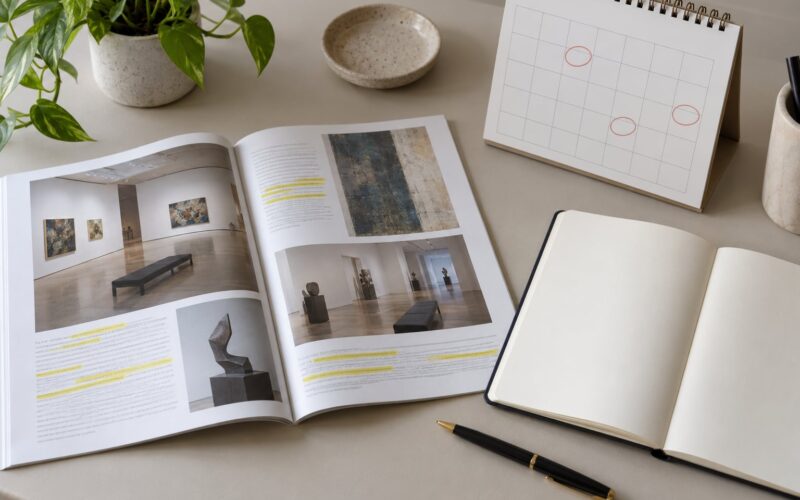
- Document the Original and the Copy
- Identify the Infringer and the Platforms Involved
- Contact the Infringer or Platform
- Use Copyright Registration or a Takedown Process
- Escalate When the Copy Continues
- Common Mistakes
- Frequently Asked Questions
- Is copying someone’s artwork illegal?
- Can you sue someone for stealing your artwork?
- Do I have to register my art before I can complain?
- How do I prove the copy is mine?
- What if the person copying my art is anonymous or overseas?
- How do I protect my artwork from being copied?
- What to Do First
What You Need
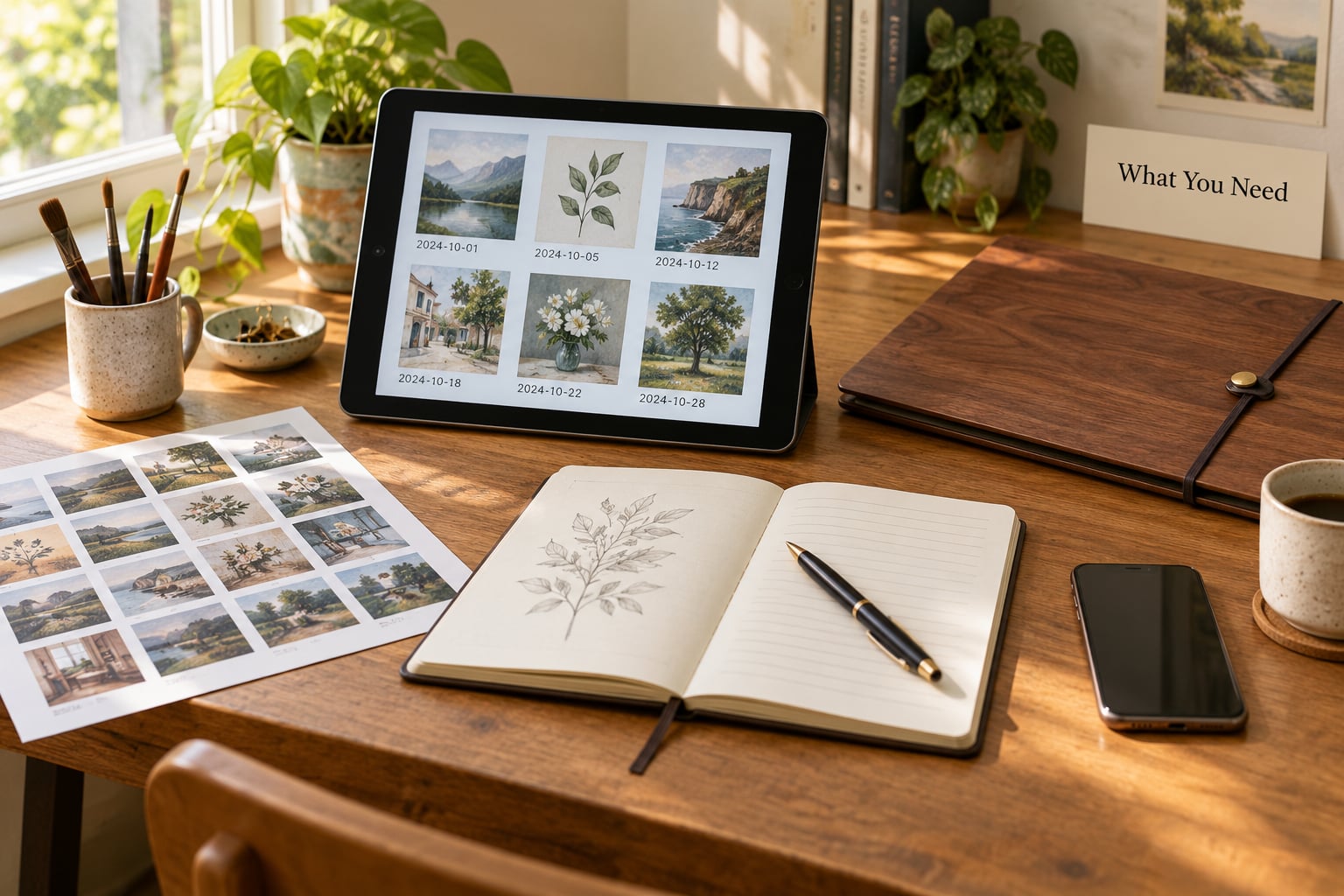
Everything you need is already in your studio or your camera roll. The point is to gather it in one place before you send a single message, because a claim that falls apart on the details is the one a platform waves through.
- Your original file at full resolution. Keep the layered or high-resolution version with metadata intact. Embedded creation dates and software names are useful corroboration.
- Dated proof you made it. Layer history, sketchbook photos with dates, timelapse videos, out-of-context studio shots, drafts, and emails you sent showing the work in progress.
- Publication records. The URL, the date you first posted, your post’s caption, and a capture from the Internet Archive Wayback Machine. An archived snapshot of your own post can be more persuasive than a live link that can be deleted.
- Captures of the copy. Full screenshots including the URL bar, the account name, the date, and the surrounding context. Add screen-recording of scrolling through the infringing post, which catches anything a still frame misses.
- Contact details for yourself. Full legal name, mailing address, phone number, and email. Platforms will ask for all four, and a notice missing them can be rejected outright.
- Contract records, if there was a commission. The written agreement, the invoice, and what it says about ownership and reproduction rights.
- A written timeline. One page. When you started, when you finished, when you posted, when you noticed the copy, and every action you have taken since.
One rule about evidence: never delete the infringing copy before it is captured, and never delete your own original posts. Forum accounts describe losing leverage by cleaning up first and being unable to prove anything afterward.
Step-by-Step: What to Do If Someone Copies Your Artwork
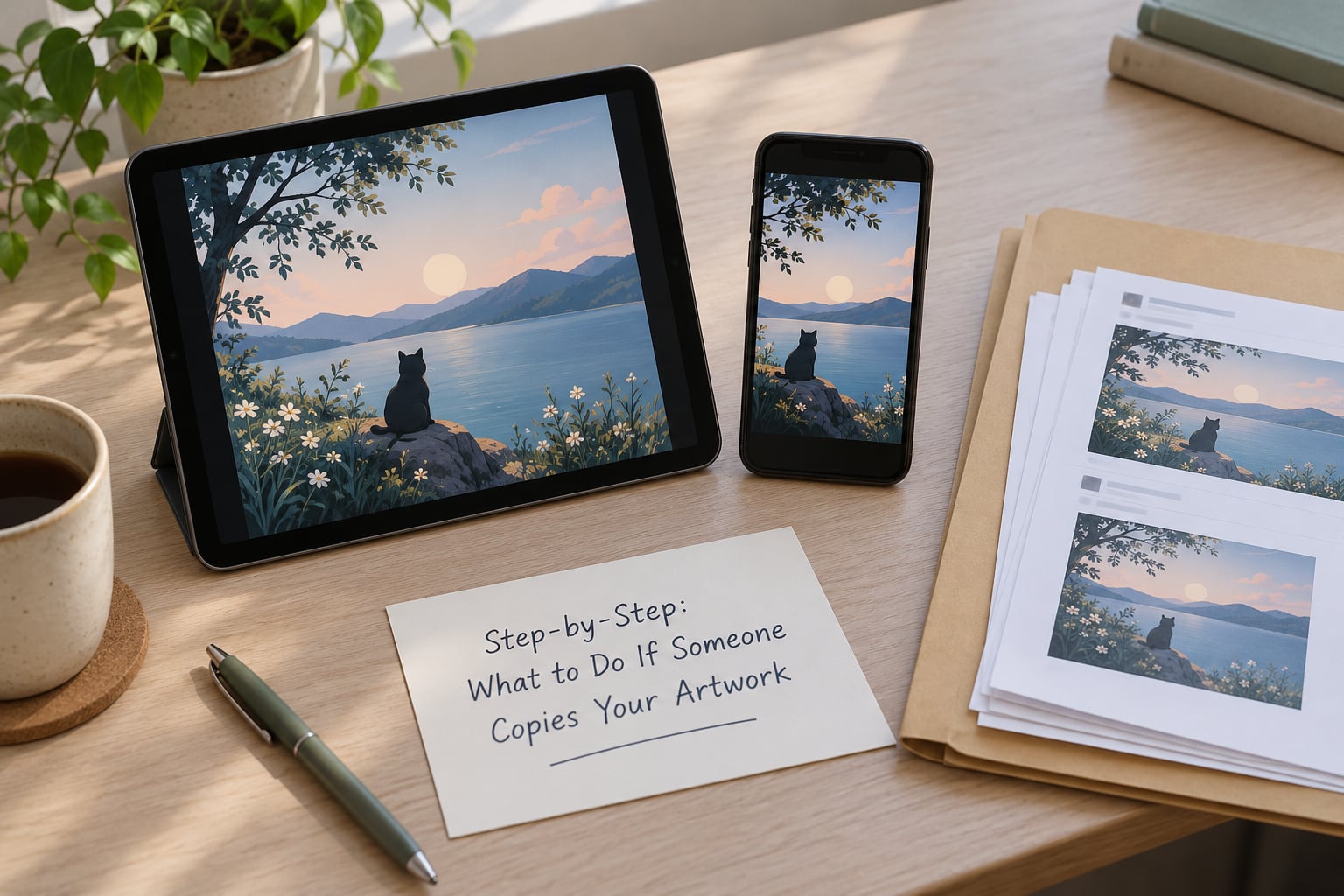
Confirm That the Work Is Actually Infringing
Compare the two images side by side before you accuse anyone. Copyright does not protect ideas, styles, techniques, subjects or the general look of a genre. It protects the specific expression you fixed in a tangible form.
Three things are never protected by copyright: ideas, methods and processes, and facts, titles and short phrases. A painter who sells you a pastel sunset is selling a style and a subject. Someone who reproduces your exact composition, palette, brushwork and unusual compositional choice is copying protected expression.
The usual test courts use is substantial similarity: whether an ordinary observer would recognize the copy as having been derived from your work, and whether the copied parts are protectable. Similar composition alone is weak. Matching arrangement plus matching distinctive elements is strong.
Also rule out fair use before you send anything. Four factors are weighed: purpose and character of the use, nature of the copyrighted work, amount used, and effect on the market. Commentary, critique, teaching, parody and news reporting often qualify. Commercial resale of the whole image almost never does. If a critique post or a news article uses your image, that is usually not infringement.
Two more innocent explanations come up constantly. Independent creation happens more often than artists expect, especially in styles with heavy repetition. And licensed reuse is legitimate, so check whether you sold a print license, a stock license, or a commercial license through an agency such as an art marketplace or stock photo site.
When plagiarism is the issue rather than infringement, no takedown will help. Artists in forums make the distinction often: copying your drawing with full credit is unethical and not generally illegal. Copying it and selling it is both.
Document the Original and the Copy
This is the step almost every guide leaves out, and it is the one that decides whether a claim succeeds. Platforms and courts want to see that the work existed before the copy, that you created it, and that what is posted matches what you made.
Build the record like this:
- Save your original file to at least two separate places, with metadata untouched.
- Export a PDF of the layered file or a photograph of every stage, dated.
- Archive your earliest public posts at web.archive.org so they exist independently of the platform.
- Screenshot the infringing post with the URL bar and account handle visible, and note the date and time.
- Run the copy through reverse image search to find every other site using the same file, since a single report often leaves reposts elsewhere.
- Save the product page or listing if the copy is being sold, including any sales counts or listing ID.
- Keep everything in one folder with a plain-language index, and back it up somewhere off your computer.
Write down what makes your work distinctive in a sentence. Courts and platform reviewers respond to a specific observation, not to “they copied me.” Something like “the figure’s proportions, the four-frame border, and the color sequence are identical, including a scratch on the shoulder that appears in my original” carries weight.
Identify the Infringer and the Platforms Involved
Find out who posted it and who hosts it. Those are different parties, and you will need the host for a DMCA notice and the poster for a demand letter.
The poster is whoever runs the account or the shop. The host is the company holding the file: a social platform, a marketplace, a print-on-demand service, a website host, or a search engine. Marketplaces like Etsy and Redbubble run their own IP complaint flows and often require you to complete a form, sometimes with a declaration that carries legal consequences.
Start with reverse image search on the infringing image, then search the account name and any distinctive title from the listing. Check whether the shop has physical products, meaning a print-on-demand partner is manufacturing items, and note the listing ID or order number where you can see it.
If the seller is anonymous or overseas, you can still act. Hosted platforms in the US are required to act on valid DMCA notices regardless of where the infringer lives, and print-on-demand services route removal requests back through the seller account that uploaded the artwork. Cross-border collection of damages is genuinely hard, which is why removal matters more than payment in most of these cases.
Contact the Infringer or Platform
Start with the platform’s own reporting flow. It is free, it is faster than any legal step, and in practice it removes more infringing art than anything else on this list. Use the in-app report option or the intellectual property report page, attach your evidence, and describe the specific protected elements you are claiming.
A short written demand covers the cases a report button does not, such as a social media account or a direct message. Keep it under a page, keep it factual, and keep the tone flat. State the work, where you first published it with a date, where the copy appears, what you want, and a reasonable deadline. Mention that you may file a DMCA notice or a claim if the deadline passes, but do not threaten a lawsuit you would not file.
Include a line about what happens if they claim fair use or independent creation, and ask them to explain their basis in writing. That single request does more than any threat, because most people who repost art cannot articulate a legal reason and will remove it rather than try.
Two warnings from artists who have done this: do not confront someone publicly in the comments, and do not expect the reporting tool to work in your favor. Forum threads describe reporters having their own posts pulled for alleged violation. Keep your own account clean, and stick to one account, one claim, one piece of evidence at a time.
Use Copyright Registration or a Takedown Process
A DMCA takedown notice is the formal mechanism that makes a host remove material. It comes from the Digital Millennium Copyright Act, and it works because service providers get safe-harbor protection if they act on notices they receive in the proper form. Most large platforms have a designated agent registered with the U.S. Copyright Office and publish a reporting address, usually in their legal or copyright section.
A valid notice needs six elements:
- A physical or electronic signature of the copyright owner, or a person authorized to act on their behalf.
- Identification of the copyrighted work claimed to have been infringed. If multiple works are covered by a single notice, a representative list is acceptable.
- Identification of the infringing material, with information reasonably sufficient to let the provider locate it, such as a URL.
- Contact details for the copyright owner: name, address, telephone number, and email address.
- A statement that the complaining party has a good-faith belief that use of the material is not authorized by the copyright owner, its agent, or the law.
- A statement, under penalty of perjury, that the information in the notice is accurate and that the complaining party is the owner or authorized to act for the owner.
Send it to the platform’s copyright agent, not to a general support inbox, and keep a copy of everything you send. If the material stays up because the notice was defective, fix the defect and resubmit. Most rejections come down to missing contact details or an unsigned declaration.
The infringer can respond with a counter-notice. If they do, the host is generally required to forward it to you, and you then have about 10 to 14 business days to file a court action. If you do nothing, the host may restore the material. Counter-notices are usually used to buy time, and they expose the sender’s contact information.
Copyright registration is a separate question, and artists get confused about it constantly. You own the work without registering. What registration does is unlock statutory damages and attorney’s fees in a lawsuit, which are the numbers that make a small claim worth bringing. Registration through the U.S. Copyright Office can be done for a single work or a group of unpublished works, and the standard application is the slow option that can take months, so start it early if you think you may ever need it.
Escalate When the Copy Continues
If the copy is still up after a platform report and a DMCA notice, or if the infringer is making money from it, that is the signal to talk to a US copyright attorney. Fees for a cease-and-desist letter sent by a lawyer are far lower than litigation, and the letter itself carries weight that yours did not.
Before spending anything, get an honest read on the economics. Consider the amount actually taken, whether the infringer is collectible, how strong your documentation is, and what registering would cost you in time and fees for a single work. Some situations genuinely are not worth pursuing, and knowing that early saves money and months. An artist whose stolen image was reposted once with no commercial gain has a removal problem, not a damages problem.
If it is worth pursuing, the path is a cease-and-desist letter, then a suit in federal court. Registration generally has to be filed before filing a US infringement suit, and the statute of limitations is three years from the date of infringement, so act well before that window closes. Small claims courts exist in some states and can handle low-value claims, but many require the plaintiff to be a lawyer, so check your state’s rules before assuming you can go alone.
Two situations deserve special mention. If an AI image generator reproduced your work, the ground is still moving; document every example, keep the prompts and outputs you can save, and report through the tool’s own reporting form, because each platform handles these differently and policies change often. And if the copy came from a commission or collaboration, go back to the contract first, because ownership and reproduction rights were decided on paper long before anyone argued about them.
Common Mistakes
Posting a public accusation first. A public callout tends to produce denial, deletion of evidence, and an audience split. It also tells the infringer exactly what you know. Report through official channels first.
Deleting your own posts. Your publication history is your proof of independent creation. Archive it before you clean anything up.
Trusting a screenshot alone. A single cropped screenshot is easy to challenge. Combine full captures, screen recordings, archived links, and your dated originals.
Confusing inspiration with infringement. Studying an artist and producing different work is legal and common. Reproducing the composition, the elements, or the finished image is the problem. Claims built on “it looks like” tend to fail and can cost you credibility.
Filing a claim you cannot support. DMCA notices carry statements under penalty of perjury. A knowingly false notice can expose you to liability, and platforms ban repeat reporters who abuse the system.
Sending over-long letters full of threats. Long emotional letters get ignored. A short factual notice with a deadline gets answered.
Selling your rights in a settlement without reading it. If you agree to remove an image, say whether it can be posted again, and whether you are licensing or permanently waiving. “Remove the image” language that does not address future use leaves the door open.
Frequently Asked Questions
Is copying someone’s artwork illegal?
Reproducing all or a protectable part of someone’s artwork without permission is copyright infringement, and it is generally illegal. Ideas, styles, techniques and subjects are not protected, so imitation alone is not infringement. What matters is whether someone copied your specific expression, whether the copied parts are protectable, and whether the use falls under fair use, such as commentary, teaching, parody or news reporting.
Can you sue someone for stealing your artwork?
Yes, you can file a copyright infringement suit in US federal court, and most states also allow smaller claims in state small claims court, though many require a lawyer to appear. Registering the work with the U.S. Copyright Office generally must happen before you file suit, and it is what makes statutory damages and attorney’s fees available. The statute of limitations is three years from the date of infringement.
Do I have to register my art before I can complain?
No. Copyright attaches automatically when you fix your original in a tangible form, and platforms will act on a DMCA notice without registration. Registration matters later, because it unlocks statutory damages and attorney’s fees if you sue, and it strengthens your claim in negotiations. If you think your work may be copied and monetized, register it before trouble starts.
How do I prove the copy is mine?
Build a dated record: high-resolution originals with metadata, layered files or dated progress photos, archived captures of your earliest public posts, and a written timeline. Add full screenshots of the infringing use with the URL and account name visible, plus a short description of the specific elements that match, such as composition, palette, brushwork and distinctive details. Back everything up outside your computer.
What if the person copying my art is anonymous or overseas?
You can still get it removed. US-hosted platforms are required to act on valid DMCA notices regardless of where the infringer lives, and print-on-demand marketplaces route removals back through the account that uploaded the file. Collecting damages from an anonymous overseas seller is realistically very hard, which is why removal and credit matter most in these cases. Focus on the host rather than the person.
How do I protect my artwork from being copied?
Post low-resolution previews publicly and keep full-resolution files for sale only. Add a visible watermark or signature and embed an invisible one in files you distribute. Turn off download and embedding where you can, keep a copyright notice in your bio and on listings, and use written licensing agreements that specify scope, duration and territory. Register works you care about most.
What to Do First
Stop scrolling the comments and open a folder. Today, capture your original with its dates, archive your earliest post, screenshot the copy with the URL visible, and write the one-sentence timeline. Everything else in this guide depends on that. When the folder is done, file the platform report the same day, because that is the step most likely to remove the work this week rather than next year.