Yes, in the United States you can sell art made with found images, but only if every image you used is public domain, licensed for that use, or covered by a fair use argument. Owning the physical artwork you made does not transfer the right to reproduce the images inside it. If you found an image online and cannot name its rights holder, treat the piece as commercial risk, not as a sale.
I work with a lot of textile and mixed-media makers who pull from vintage advertising, old seed catalogues, seed packet envelopes, and library book scans, so this question comes up constantly in studio conversations. The legal rules differ by country and they change, so what follows is general information for US-based sellers rather than legal advice. A licensed attorney answers your specific piece better than any blog can.
Table of Contents
- Can You Sell Art Made with Found Images?
- What counts as selling art made with found images
- Copyright: Why Finding an Image Does Not Mean You Own It
- Public-Domain and Creative-Commons Images
- How Transformative Is Your Artwork?
- What Permissions Should You Ask For?
- How to Clear Found Images Before Selling
- How to Document the Image and Your Creative Process
- How to List and Sell Artwork Without Rights Problems
- How to Clear Found Images: A Practical Checklist
- A Rights-Safe Example for a Textile Artist
- Frequently Asked Questions
- Can I use a found image if I give the creator credit?
- Does changing a found image into a quilt, painting, or wood cutout make it legal to sell?
- Can I sell prints, postcards, or digital reproductions made from a found image?
- What is the difference between a public-domain image and a Creative Commons image?
- Can I use an image found on Pinterest, Instagram, or a museum website?
- When should an artist consult a copyright attorney?
- Conclusion
Can You Sell Art Made with Found Images?
There are only three legal states a found image can be in when you sell the finished piece: it is public domain, you hold a licence or written permission for the use, or your use qualifies as fair use. Everything else is a risk you are choosing to carry.
That is the whole framework. It sounds blunt, and it is, but it cuts through most of the confusion artists report. A fourth state people assume exists — the image was free to look at, or it was old, or I found it in a junk drawer, or nobody knows who made it — is not a legal state at all.
What counts as selling art made with found images
Selling the original object, selling prints of it, listing a digital download, licensing the design to a fabric company, and putting it on a product through a print-on-demand service are all commercial reproduction. They trigger the same question about rights in the source image, so a marketplace listing and a wholesale licensing deal are treated the same way here.
The practical difference is reach. A one-off original at a craft fair is a small target. A design licensed to a manufacturer may appear on thousands of units, which is exactly the kind of market effect that makes a rights holder act.
Copyright: Why Finding an Image Does Not Mean You Own It
Copyright is the legal right to make copies. Under 17 U.S.C. section 106, the owner holds exclusive rights to reproduce the work, prepare derivative works based on it, distribute copies, and publicly display or perform it. Those rights cover photographs, drawings, illustrations, advertisements, fabric designs, book pages, lettering, and logos.
Dropping a photograph into a quilt, a painting, a wood cutout, or a collage is a reproduction of that photograph. A derivative work is anything built on an existing work, so your finished piece usually counts as one too. Because the work is copyrighted, you need permission from the owner.
Two ideas do most of the damage to beginners here. First, buying the source does not buy the rights. If you find a photograph in a 1950s magazine in a thrift store, you bought a copy of that magazine, not the right to reproduce its images. The same applies to an original painting: you own an object, and the right to reproduce the image on it stays with the copyright owner.
Second, the test courts use is substantial similarity, not theft. Nobody has to be proven careless. If the protected expression in your piece is substantially similar to the original and the use is not fair, infringement is established. Photos also carry a separate layer of rights for the people in them, which is why model releases matter even when the photographer has cleared everything else.
Public-Domain and Creative-Commons Images
Public domain means copyright has expired or never attached. For US work published with a notice, copyright generally lasted life plus 70 years, and it now runs to 95 years from publication or 120 years from creation, whichever is shorter. Published works also age out on a schedule that moves every January, so for 2026 the safe line for a US-published image is 1930 or earlier. Unsure? Check the current cutoff rather than trusting a habit or a forum post.
Other routes into the public domain include federal government works produced by US employees in the course of duty, and many works too old or too small to qualify for protection at all. Undated or unclear material is where I would slow down, because an old-looking scan is not a status. If you cannot establish a date or an author, you cannot easily establish the term.
Creative Commons is a licence, not a status. The creator keeps copyright and grants you permission under stated conditions, so read which of six variants you have:
- CC0 waives rights as far as law allows. Treat it as public domain and keep a screenshot of the page.
- CC BY allows commercial use including modification, with credit required. That covers selling work based on it.
- CC BY-SA adds a share-alike condition on adaptations, which is awkward when your piece is textile or three-dimensional.
- CC BY-NC forbids commercial use. Selling a piece built on it is a breach of the licence, not fair use.
- CC BY-ND forbids distributing adaptations. A collage counts as an adaptation.
- CC BY-NC-ND is the narrowest and the most common on image-sharing sites.
Two details catch people out. Version matters — CC 4.0 and earlier licences differ in wording, and the version stated on the page governs. And free to view means nothing about reuse. Most images found on a social feed carry no commercial licence at all, and museum websites usually reproduce their own photographs under terms that forbid commercial reuse.
Rights vary by country too, which is worth knowing if you ship to buyers abroad. UK rules changed in 2022 to life plus 70, which extends some works compared with the old life plus 50. Canadian law adds its own rules. Public domain in the United States can still be protected in France, where moral rights and separate commercial reproduction rights run differently.
How Transformative Is Your Artwork?
Changing medium does not make a use fair. A hand-painted copy of a photograph is still substantially similar to that photograph, and a judge will look at the work as a whole rather than at your technique. Transformation is one factor among four, set out in the U.S. Copyright Office’s Circular 3 on fair use:
- Purpose and character. Non-profit or commentary weighs favourably; a commercial sale does not settle it either way, though Warhol v. Goldsmith (2023) stopped anyone treating commercial purpose as an automatic loss.
- Nature of the original. A factual photograph gets thinner protection than an unpublished novel, so publishing work already available online is the weaker claim.
- Amount used. A recognisable whole image, or the expressive heart of it, is worse for you than a fragment that is not the point.
- Market effect. If your piece could substitute for the original, that matters a great deal.
The decided cases show how thin the line is. In Cariou v. Prince (2d Cir. 2013), appropriated portraits dominated the new work and the transformation argument failed. In Blanch v. Koons (2d Cir. 2006) and Seltzer v. Green Day (9th Cir. 2013), varied sources and a genuinely new context and market carried the day. In Morris v. Young, works described as little more than reproductions with minor variations failed. Warhol Foundation v. Goldsmith (2023) settled that commercial purpose alone is not dispositive, but the transformation claimed has to be real.
Here is where the risk actually sits, band by band:
- Traced or painted copy, sold as the image. Red zone. Expect a takedown or a letter.
- Copy with different colours. Red zone. Recolouring changes little that is legally relevant.
- Small crop used as one element among many varied sources. Amber. Better, still fact-specific.
- Image overlaid, obscured, or cut into fragments, with a new message. Amber to green, depending on how much survives.
- Public-domain or properly licensed image. Green. No fair-use argument needed at all.
Two distinctions get tangled together. Parody is not the same as copying. Campbell v. Acuff-Rose Music (1994) protected a parody that commented on the original, while Cariou involved art that did not comment at all. And looking at references is not copying: you may study how a photograph handles light or how a poster sets type, then build something of your own from that understanding. The line sits at whether you reproduced protected expression.
A note that applies to artists outside the US. Collective rights societies in the UK, EU countries, and Canada manage resale and reproduction rights, and those collecting societies can enforce even where a US court might call the use fair. Assume the stricter rule for work sold internationally.
What Permissions Should You Ask For?
Start by identifying the rights holder. Look for a credit line on the original source, then check whether it has been assigned to an agency. Rights pass to estates, publishers, and stock libraries, and the artist who made an image forty years ago rarely holds the right to license it today.
Write a short licence request and ask for terms in writing. An email exchange that clearly grants permission with stated conditions has been treated as a valid written licence in US courts, so keep the whole thread and save it with the piece.
Request language should cover:
- Commercial use of the finished artwork, including sale of originals.
- Reproduction in your listing, packaging and marketing photographs.
- Crops, alterations, partial use, and derivative works.
- Duration and territory, stated plainly.
- Merchandise and print-on-demand products, if that applies.
- Attribution wording and whether a credit line is required.
- Exclusivity, which you normally decline unless offered.
- Any fee, and who pays it.
Be ready for a no. Rights holders decline commercial requests often, particularly where a brand or a person’s likeness is involved. Turnaround runs from a same-day email to weeks of corporate review. Costs range from nothing to a flat administrative charge, and either outcome is fine — a clear no is more useful than a vague maybe.
How to Clear Found Images Before Selling
Run the same check on every image, and keep a red, amber, and green rating for your own review.
- Green. Public domain with a verifiable date, CC0, or a licence that permits commercial modification. You are clear.
- Amber. Creative Commons with conditions, an orphan work, an image of art in a public place, or a fair-use argument you could defend. Slow down, document, and accept some risk.
- Red. NC or ND terms, a brand or celebrity, a known living creator, or an image whose source you cannot trace. Do not list it commercially.
The workflow itself is short: identify the image, find the rights holder, read the licence you actually have, test it against your intended commercial use, request written permission if the test fails, record the restrictions, then check the platform’s own rules before publishing.
Different product types stress different parts of it. A quilt photographed and sold as an original depends on the status of each fabric image plus any visible text or logo. A digital download and a print-on-demand listing add reproduction and distribution on top. An altered book keeps the publisher’s pages visible, which raises how much of the original you are showing. A wood cutout reproduces line and image in a new material without changing what the viewer sees.
Platform policy is a separate question from law, and this is the distinction that helps most. A marketplace may require a release for photographs of identifiable people even where no court would, because that is the platform’s rule and its risk appetite rather than a legal test. A release is a risk-reduction tool, not a switch that makes an unlicensed use legal.
How to Document the Image and Your Creative Process
A source log turns an argument you would otherwise have to reconstruct from memory into evidence. One row per image, kept as a spreadsheet or a folder of images and text files:
- Source URL or shelfmark, and where the physical original came from.
- Creator or attributed rights holder.
- Licence name, version, and a screenshot or PDF of the licence text.
- Date you downloaded or photographed the source.
- Every change you made, in order.
- Working photographs and sketches, each dated.
- Finished-piece photograph, plus the file name of the source log entry.
A dated process record matters more than people expect. A sequence of sketches and photographs showing research, cropping, testing and repeated revision documents transformation in a way a single finished image cannot. The Copyright Office registers works, and keeping records is good practice regardless of whether you ever register.
Receipts belong in the same folder, along with any income records, so the financial side of the piece is as traceable as the creative side. When you license artwork to a client or manufacturer, that log is also how you show the buyer what you have the right to deliver.
How to List and Sell Artwork Without Rights Problems
Describe the piece accurately. Say that it incorporates found imagery, name the source where you are able, and list the licences. A listing that reads “hand-painted collage using a 1940s seed catalogue page” tells a buyer what they are getting without you claiming ownership of the catalogue photograph.
Never imply you own the photographed image. Phrases like “original art” and “one of a kind” describe your work, not your rights in someone else’s photograph, and overstating them is the fastest way to turn a misunderstanding into a dispute.
Disclose editions properly. The original object, a signed limited edition, and an open-ended print of a found-image piece are different products with different risk, and buyers deserve to know which one they are buying. Where you sell a physical object made from licensed imagery, keep the artwork and the licensed products as separate listings rather than bundling a right you cannot transfer.
A workable listing example: “Hand-stitched fabric collage, 18 by 24 inches, on cotton. The central botanical image is from an open 1928 seed catalogue held by the library; the catalogue has been altered and torn. Original piece, no reproduction rights transferred. Ships in a rigid mailer.” It does three jobs at once — it describes the object, it discloses the source, and it reserves reproduction rights.
How to Clear Found Images: A Practical Checklist
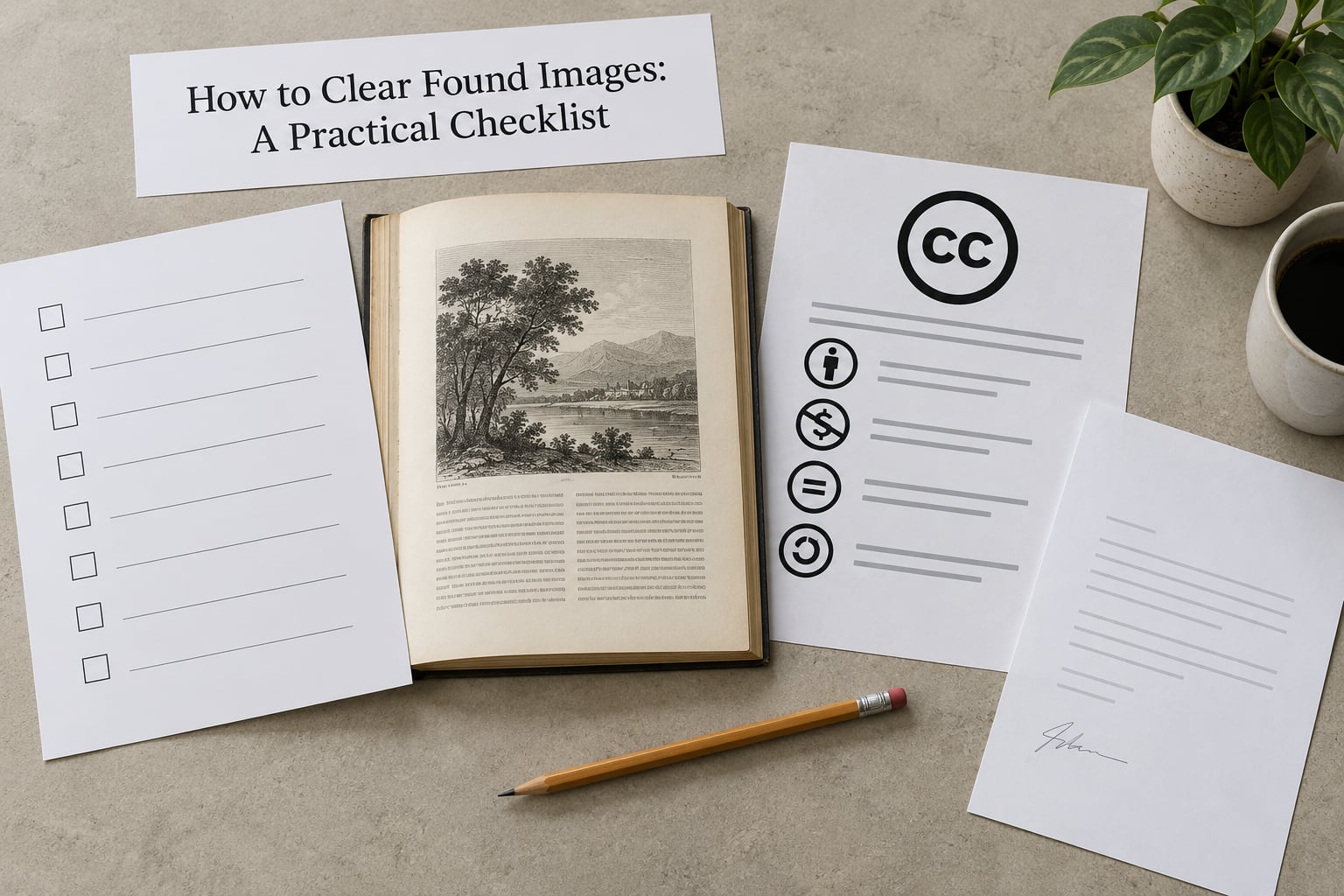
- Identify the image. Record the source URL, shelfmark, or where the physical original came from. No traceable source, no sale.
- Determine the status. Public domain and expired, still under copyright, licensed, or genuinely unknown.
- Read the licence. Note the version, the NC and ND flags, and the attribution requirement.
- Test the intended use. Original sale, prints, digital downloads, merchandise, licensing to a client.
- Request permission when needed. In writing, with the term list above.
- Record the evidence. Licence, permission thread, dates, modification notes, process photographs.
- Check the platform rules. Release requirements, prohibited content, and what the marketplace does with a claim.
- Verify before publishing. Read the listing as a stranger and a lawyer. If you would not sign your own description, rewrite it.
A Rights-Safe Example for a Textile Artist
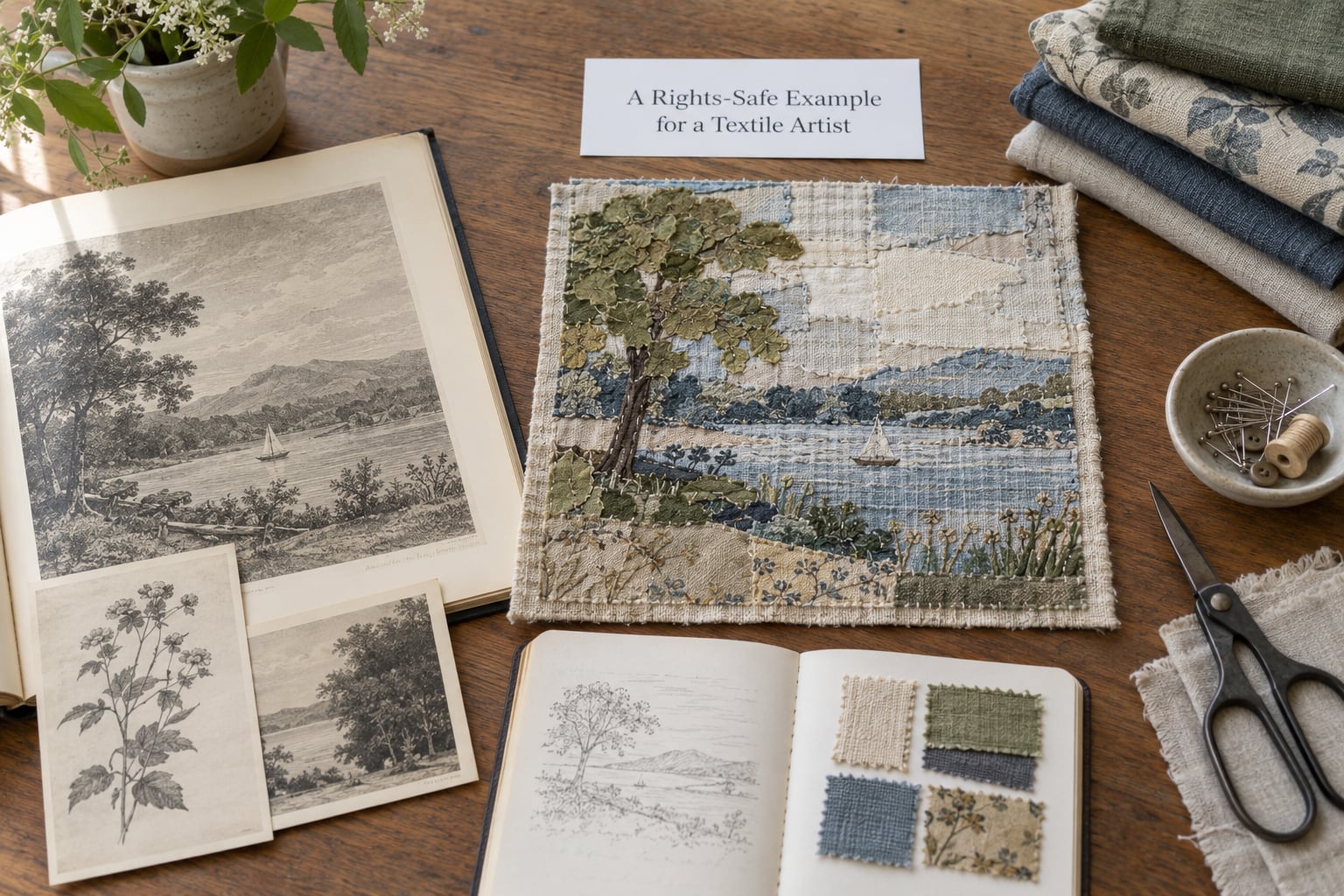
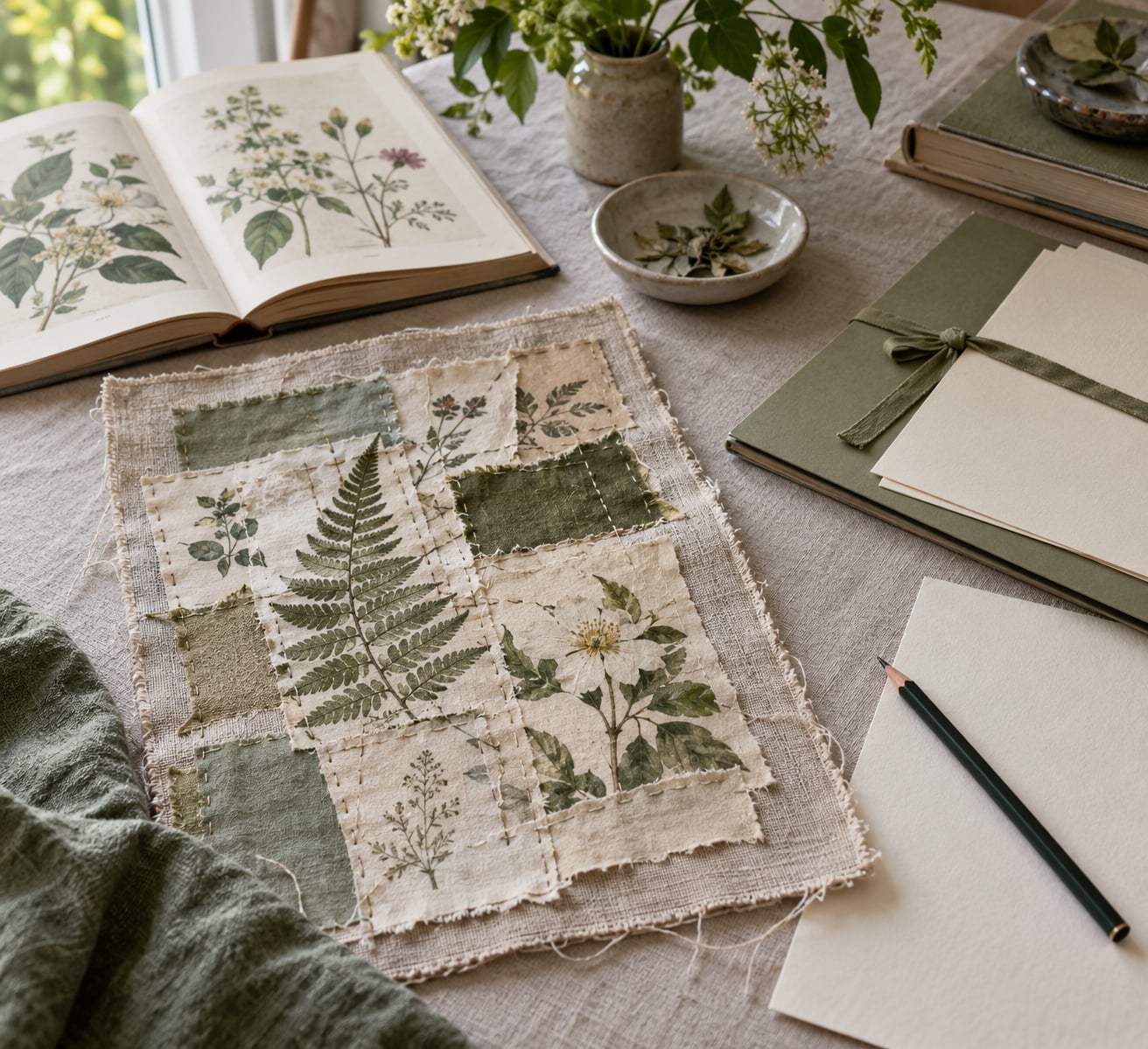
A textile artist picks up a botanical plate from a 1928 seed catalogue listed by a university library. She checks the library record, confirms the catalogue is public domain in the United States, and photographs the plate herself rather than downloading a scan from a shop.
She prints the photograph, rips it into fragments, layers it with hand-dyed linen, and stitches over the seams so the original composition breaks apart. Her notes record the library shelfmark, the date of the photograph, and each stage of the work. Nothing about that process is legal magic. It is a documented, public-domain source and a visibly altered piece.
She sells the original quilt as a one-of-one object. She does not sell printed reproductions, digital downloads, or a fabric design licensed to a manufacturer, because the library’s terms and her own permissions do not cover those uses. Even with public-domain source material, the marketplace may have its own rules about image quality or third-party content, so she checks before listing rather than after a claim.
The part artists most often miss is the last one. Public-domain status settles the copyright question and settles nothing else. It does not clear a person’s likeness in a photograph, it does not satisfy a platform’s rules, and it does not override a trademark claim. Treat it as the answer to one question rather than to the whole file.
Frequently Asked Questions
Can I use a found image if I give the creator credit?
Credit is an ethical practice and sometimes a licence condition, but it is not a substitute for permission. Giving a photographer credit does not make reproducing their image fair use, and it does not satisfy a no-credit-needed question. What credit does help with is a Creative Commons licence that requires it, and with goodwill if you later approach the rights holder for a written licence.
Does changing a found image into a quilt, painting, or wood cutout make it legal to sell?
No. The medium is not the test. A quilt, painting or cutout that reproduces a copyrighted image is still a reproduction, and commercial sale does not settle the fair-use question in either direction. What matters is whether the source is public domain or licensed, and whether your use is genuinely transformative under the four factors rather than merely recoloured or re-scaled.
Can I sell prints, postcards, or digital reproductions made from a found image?
Only with clear rights in the source. Selling the original object you made is one thing; printing copies, issuing postcards or uploading digital downloads reproduces and distributes the image at a scale that makes a rights holder far more likely to notice. Public-domain or licensed sources handle this fine. Unclear sources do not, and the first-sale doctrine does not extend to reproduction rights.
What is the difference between a public-domain image and a Creative Commons image?
Public domain means copyright has expired or never attached, so anyone may use the image for any purpose with no conditions. A Creative Commons image is still under copyright; the creator has granted permission under published terms. CC0 is effectively public domain, CC BY allows commercial use with credit, and NC or ND variants forbid commercial use or adaptations. Always check the licence version stated on the page.
Can I use an image found on Pinterest, Instagram, or a museum website?
Assume not for commercial use. Images on social platforms carry no commercial licence just because they are easy to download, and museum or gallery sites reproduce photographs of their own works under terms that usually restrict reuse. Some museums publish open-access or public-domain images. Follow the original source rather than the repost, and save the licence text with the piece.
When should an artist consult a copyright attorney?
Consult one before you commit money or scale. That means a licensing deal, a print run, a design licensed to a manufacturer, a trademark or celebrity in the piece, a demand from a rights holder, or a piece you plan to build a business on. For ordinary collage sold direct, a written licence and a source log handle most risk. Look for an intellectual property attorney who works with visual artists.
Conclusion
Do one thing before you list the next piece: pick a single found image, identify where it came from, and determine its copyright status. Everything else — medium, transformation, credit, documentation — sits on top of that one answer.
Copyright rules here are fact-specific, they vary by country and by state, and they change as terms expire and cases are decided. As of 2026 the safest route is still the same: identify the image, verify its rights, get written permission where you need it, and keep the record. For any unclear use with real money behind it, talk to an intellectual property attorney in your state.