To send a commission progress update, write one dated note in the original agreement thread: a current photo, the stage the work has reached, what is finished, what happens next, and one decision you need from the client. It takes about ten minutes once the habit exists, and it is the difference between a client who checks in twice a week and one who waits.
Most of the anxiety around commissions comes from silence. A client cannot see your easel, your drying rack, or the fact that you are waiting on a glaze to cure before the next layer. When you tell them where the work is sitting, the checking-in stops. When you do not, they assume the worst and start asking questions you have already answered in your head.
This guide covers the whole routine: what to gather before you write, the five steps for writing and sending an update, the wording that keeps you warm without over-promising, and what to do when the project slips.
Table of Contents
- What You Need
- How to Send a Commission Progress Update: Step-by-Step
- Review the brief and confirm what changed
- Summarize the work completed since the last update
- Explain the timeline and next steps
- Add useful proof and a clear call to action
- Proofread, attach, and send the update professionally
- Common Mistakes
- Vague timelines
- Too much studio detail
- Unlabelled photos
- Blaming the delay
- Asking for something and not saying it clearly
- Sending updates with no thread record
- Frequently Asked Questions
- How often should I send a commission progress update?
- What should I include in a commission progress update?
- Should I send progress photos of the artwork?
- How do I tell a client that a commission will be late?
- What if the client does not respond to my progress update?
- Can a commission progress update be sent by text message?
- Conclusion
What You Need

Gather these before you type anything. Ten minutes of prep is what makes the message itself take two.
- The signed agreement or brief. Scope, size, deadline, deposit terms, number of included revisions.
- A fresh photo of the work. Shot in the same spot and at the same angle as your previous photos so change is visible.
- Your stage label. Sketch, underpainting, first color pass, detail, varnish, crating.
- The timeline. Current estimated completion date and the tasks standing between here and there.
- Your approval record. Which checkpoints the client has already signed off on, and what you asked for last time.
- One question or request. A single decision you need from them, phrased so it can be answered with one word.
- Contact details and the agreed channel. Usually the email thread you already used to confirm the commission.
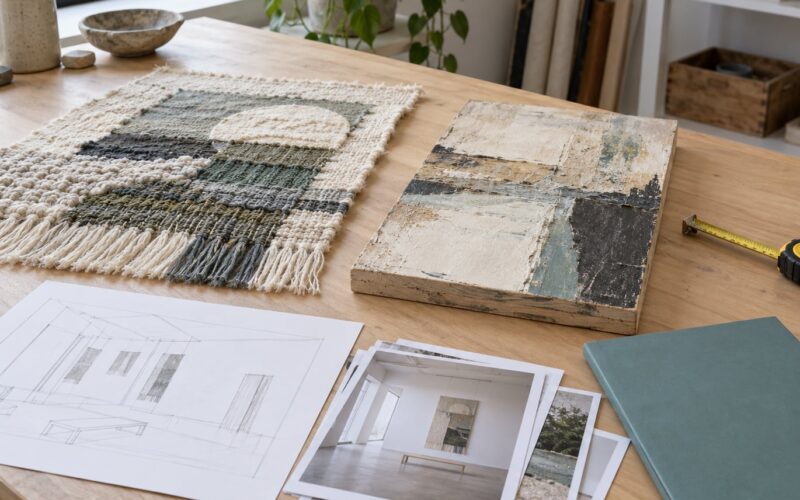
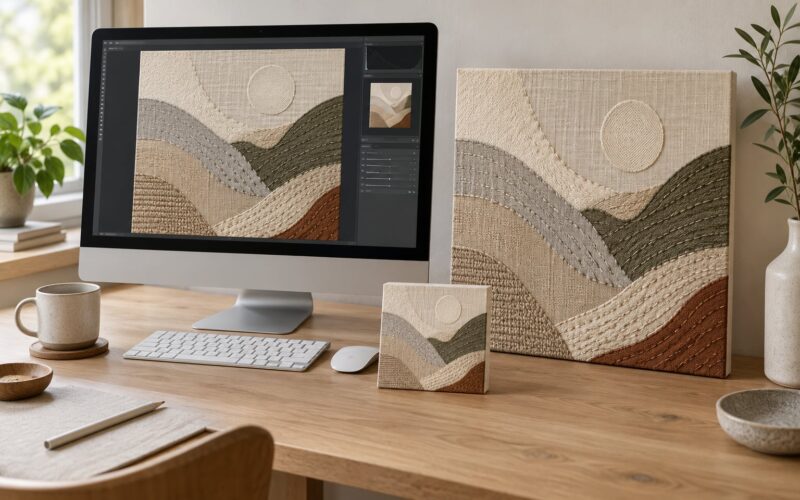
For textile and fiber work, add the physical state of the piece: which sections are quilted or stitched, whether anything is pressed or blocked, and whether any dye or mordant batch needs to fully dry before the next pass. Clients rarely know to ask, so it is worth stating.
How to Send a Commission Progress Update: Step-by-Step
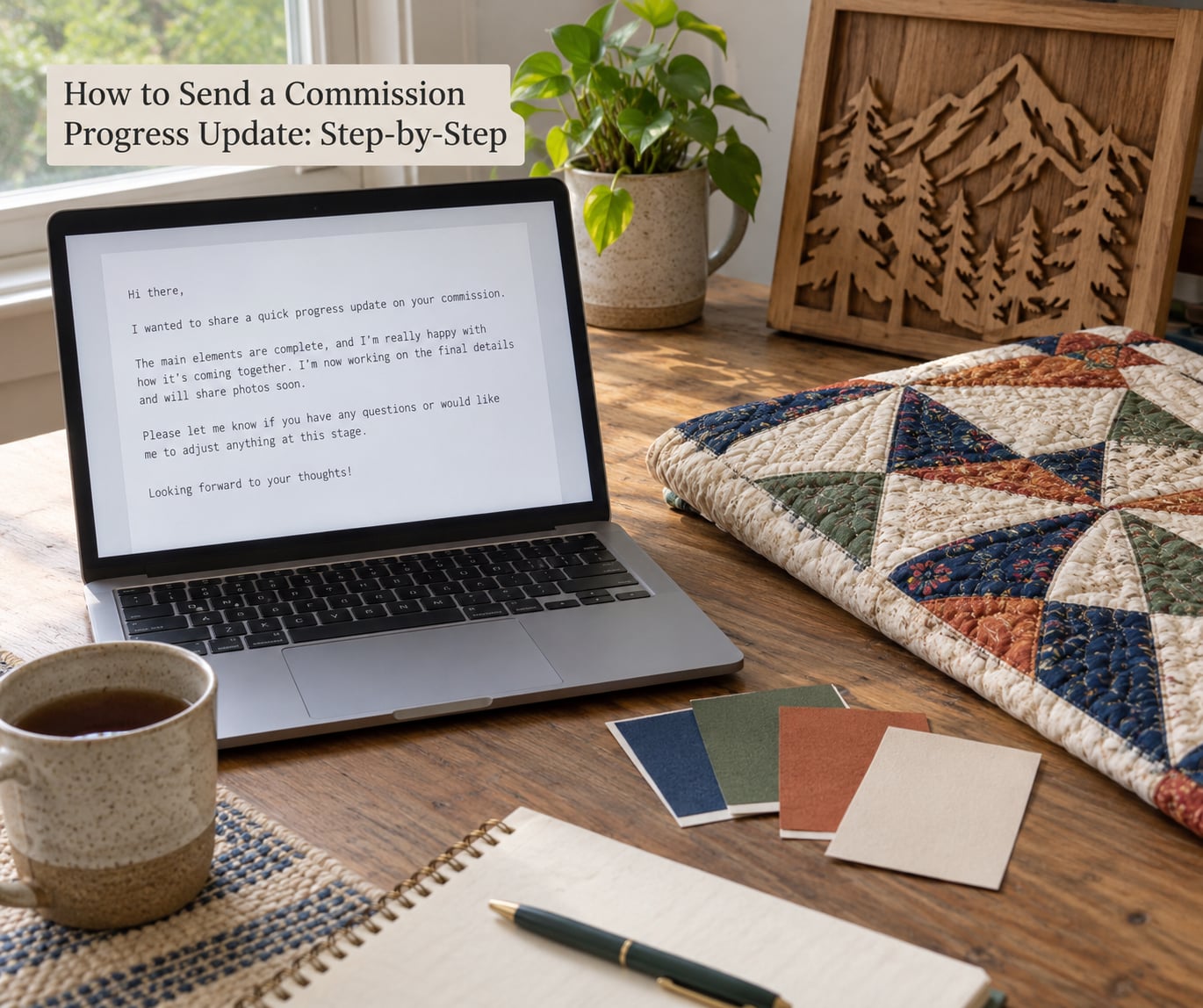
Write the update in the same thread as the original agreement, keep it under about 200 words, and end with one clear ask. The five steps below are the whole process.
Review the brief and confirm what changed
Re-read the agreement before you describe the work. You want to catch anything that moved since the last message: a new client request, an approved change to size, a revision that was added or used up.
Check the approved revision count. If the client has used both included rounds, say so early and price the extra rather than absorbing it. This review matters because the whole message has to describe the commission that exists now, not the one from three months ago.
Summarize the work completed since the last update
Translate studio activity into client-facing progress. “Blocked in three value masses, glazed and dried” becomes “The background is finished and the color balance is set.”
Keep it to two or three sentences. Name completed stages, state where the work is right now, and leave the messy process out. A client does not need to know that your ground layer bloomed on the second pass or that you switched brushes twice.
Explain the timeline and next steps
Give a real estimated completion date, not a feeling. Say what remains and what each remaining step depends on, especially drying and curing time, which is where textile and mixed-media timelines most often slip.
Then say what you are doing next in the same breath. A client who knows the next two steps will not check in asking what is happening this week.
Add useful proof and a clear call to action
Attach one or two photos, not a folder of thirty. Name your files so they are identifiable later, something like “harvest-quilt-step2-underpainting.jpg” rather than “IMG_4821.jpg”.
Finish with exactly one question. “Does the warmer background work for you, or should I cool it before the top layer goes on?” is answerable in a sentence. Three questions at once turns a check-in into homework.
Proofread, attach, and send the update professionally
Check names, dates, measurements, tone, and attachments before you hit send. Look at the photo as if you have never seen the piece, because you have not seen it in six weeks and neither has the client.
Send through the channel named in your agreement, keep the thread intact, and save the message. That thread is your record if scope or timing is ever questioned later.
Common Mistakes
Most bad updates fail in predictable ways. Here is what goes wrong and the fix that works.
Vague timelines
“Almost done, soon!” tells a client nothing and creates the exact anxiety the update was meant to prevent. Fix: name the stage, name the remaining tasks, and give a date you can defend. “Detail work is finished; it goes to the framer on the 18th and ships the following week.”
Too much studio detail
A three-paragraph account of pigment ratios reads as a diary, not an update. Fix: one sentence on what is done, one on what is next.
Unlabelled photos
A bare image with no stage name forces the client to guess, which invites a reply that should not be needed. Fix: label each attachment with the stage and the date it was taken.
Blaming the delay
Explanations about your health, your family, or your unreliable supplier read as excuses, even when they are true. Fix: state the new date, give the cause in one neutral clause if you want to give one, then move on. Neutral wording is what keeps the relationship intact when a date moves.
Asking for something and not saying it clearly
“Let me know your thoughts” gets silence, because it is not really a question. Fix: make the ask specific and put a deadline on your own next step. “I will start the quilting on Friday unless I hear otherwise.”
Sending updates with no thread record
Approvals scattered across chat apps and DMs are hard to point to later. Fix: send the update by email and let the chat app be the reminder, not the record.
Frequently Asked Questions
How often should I send a commission progress update?
Match your cadence to the medium. Fast-drying work such as digital art, gouache, or clean line illustration suits updates every 3 to 5 days. Oil, acrylic skins, dyed textile, and anything curing under varnish needs more room, so every 7 to 14 days or at each dried stage. Whichever rhythm you pick, state it in the commission agreement so the client knows what silence means. Predictable beats frequent.
What should I include in a commission progress update?
Include a dated photo of the current work, the stage name, what is finished since your last message, what happens next, an estimated completion date, and one clear question or approval request. Add the channel you expect a reply in and a soft deadline for it. Anything else belongs in a later message. An update that needs two paragraphs of context is really two updates.
Should I send progress photos of the artwork?
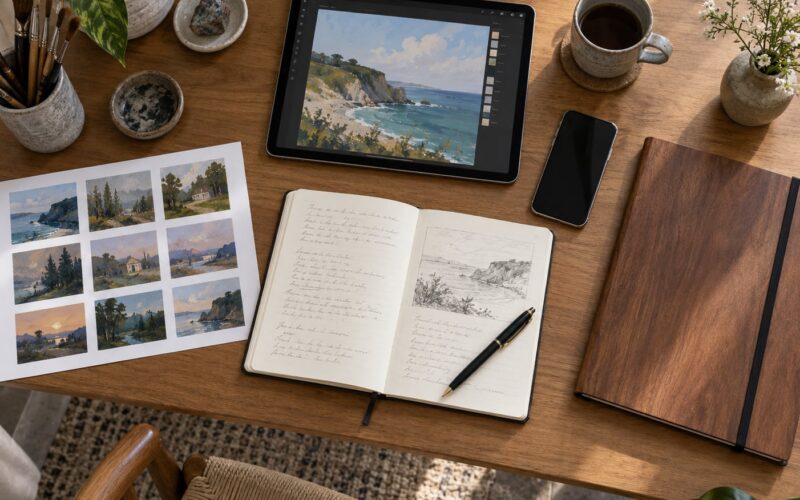
Yes, and keep the framing consistent. Photograph the piece in the same spot, at the same angle, under similar light each time so the client can see actual change rather than a flattering angle. One or two images is enough for most updates. A short time-lapse works well for digital and illustration work. Label every file with the stage and date so it stays identifiable in your archive.
How do I tell a client that a commission will be late?
Send it early rather than at the deadline. Lead with the new estimated date, give the cause in one neutral sentence if you want to, and describe the recovery plan. Do not list everything that went wrong. Then continue your normal update cadence rather than going quiet after the apology. Silence after bad news is what turns a two-week slip into a lost client.
What if the client does not respond to my progress update?
Follow up once, politely, and keep working on parts that do not depend on their answer. A good follow-up names what you are holding and when you need it: I can continue with the background this week, but I need your call on the border colour before the 12th. After a second missed reply, keep sending the agreed cadence and document your attempts. Silence is rarely about your work.
Can a commission progress update be sent by text message?
Technically yes, practically no for anything over two months long. Texts suit a quick nudge or a delay notice when the client is across time zones. They are a poor record for approvals and dates, and messages get buried. Send the substance by email in the project thread and treat text as the reminder. If the client insists on messaging, ask them to confirm key dates back to you in writing.
Conclusion
Start with the project’s current status, not with your studio news. One dated photo, one plain status line, one real date, one clear question, sent in the thread where the commission was agreed.
If you only do one thing today, decide your cadence by medium and write it into your agreement template. Then the next update you send is already half written.