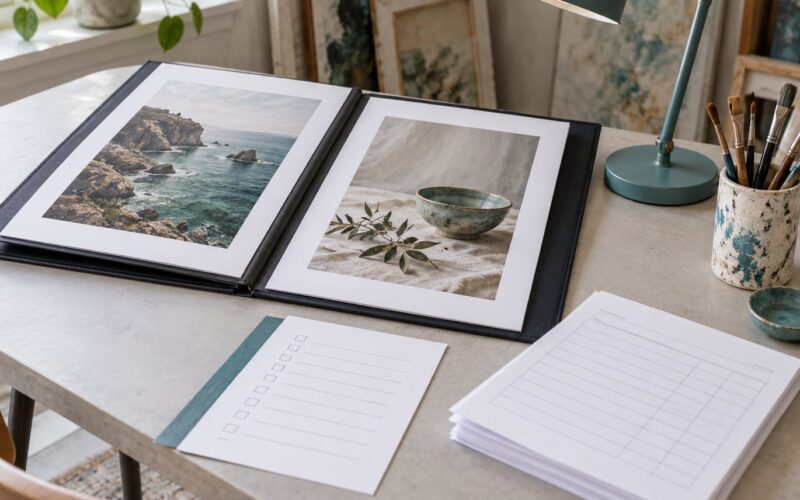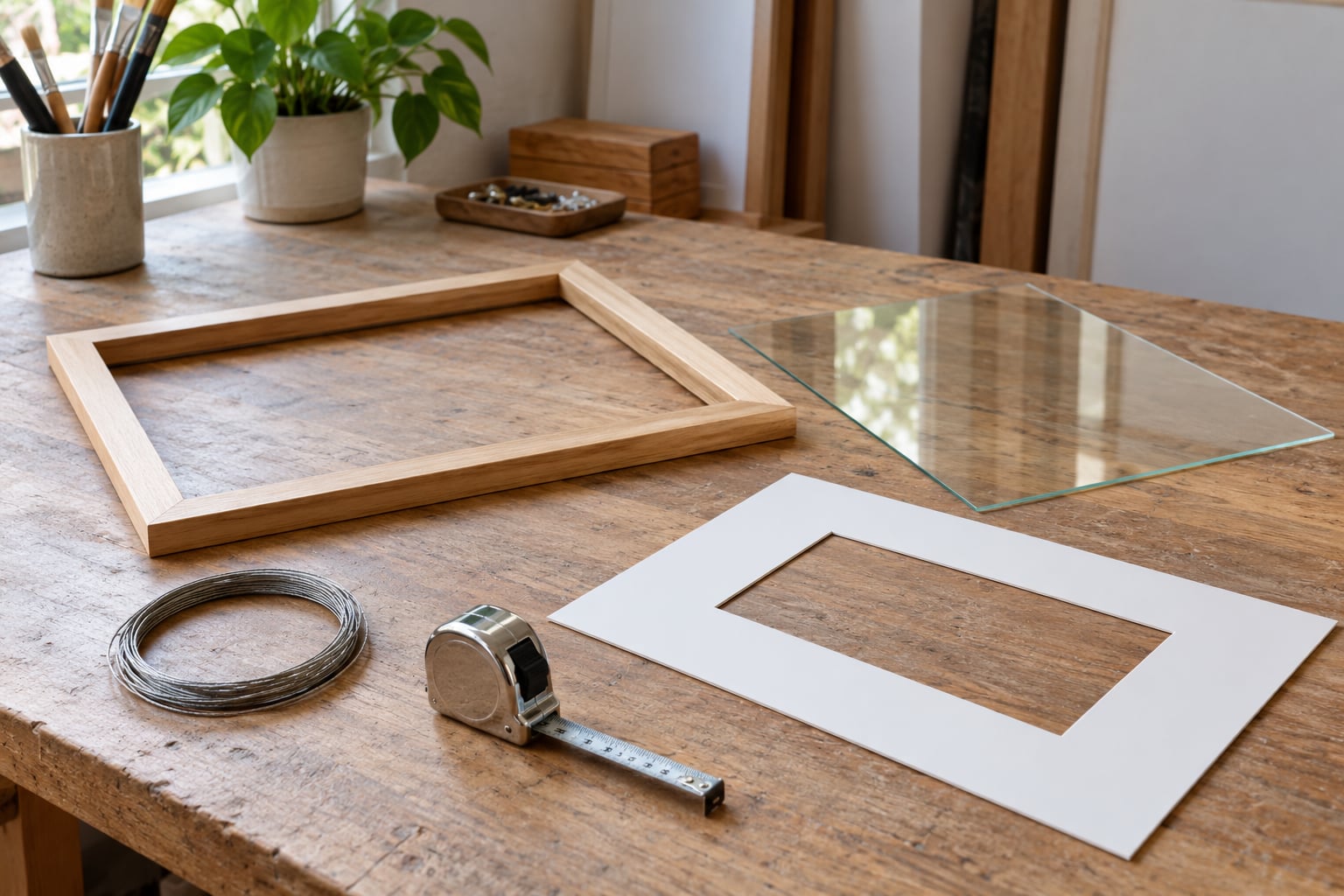
To frame artwork for a gallery show, you match the presentation to the medium, build the frame with acid-free mats and UV-filtering glazing, and attach real hanging hardware before opening night. Most of the work happens before you buy anything: the call for entries usually specifies frame style, mat colour and size, and whether the venue frames the work or expects you to deliver it finished. Get those answers first and you will not spend money twice.
The rule underneath everything else is simple. The frame serves the work, not the room. A frame that competes with a painting costs you sales, and a piece in a falling-apart frame tells a collector exactly how much you value it.
Table of Contents
- What You Need
- Step-by-Step: How to Frame Artwork for a Gallery Show
- How to frame artwork for a gallery show by checking the venue requirements
- How to frame artwork for a gallery show by selecting the frame
- How to frame artwork for a gallery show by measuring and cutting
- How to frame artwork for a gallery show by protecting the artwork
- How to frame artwork for a gallery show by assembling the frame
- How to frame artwork for a gallery show by installing and labeling it
- How to frame artwork for a gallery show by preparing for transport and installation
- Common Mistakes
- Frequently Asked Questions
- Do I need to frame my artwork before applying to a gallery?
- Should I use glass or acrylic glazing for a gallery show?
- How do I frame a quilt or thick mixed-media artwork?
- What kind of frame is best for contemporary mixed-media artwork?
- Does the gallery provide the frame, or should the artist supply one?
- How do I label framed artwork for a gallery show?
- Conclusion
What You Need
Most of this list is short, and half of it you may already own.
- Venue paperwork: the call for entries or submission guidelines, plus any written answer from the gallery about framing responsibility.
- Measuring tools: a steel rule or tape measure, a pencil, and a square. A combination square beats a ruler on moulding.
- Framing materials: the moulding, mat board, glazing, backing board, spacers and corner tabs or hinges.
- Assembly tools: a mallet, a staple gun or a brad nailer, a screwdriver, and a block plane or small saw if you are cutting moulding yourself.
- Hanging hardware: D-rings, picture wire, or a French cleat for heavy work.
- Protective supplies: glassine, acid-free tape, bubble wrap, corner protectors and a sturdy carton.
- Documentation: a camera and a sheet of paper for your artwork list and wall label copy.
What is optional depends on your medium. Stretched canvas on a cradled panel needs no mat and usually no glazing. Works on paper need a mat, glazing and either hinges or archival corners. Dimensional work needs a box or shadow frame. Buying a full conservation kit for an oil painting is money spent on nothing.
Step-by-Step: How to Frame Artwork for a Gallery Show
How to frame artwork for a gallery show by checking the venue requirements
Open the submission guidelines and search for frame, mat, glazing, label and hardware before you search for mouldings. Juried shows often specify a frame finish, a neutral mat, no glass over pastel, or a maximum depth. Some societies require white, off-white or cream mats and nothing dark.
Then ask the gallery three questions in writing: do you supply the frames, do you supply them at cost, or do you want the work delivered framed? Who decides, and who pays? How to frame artwork for a gallery show is largely settled by the answer, so send that message the day you are accepted.
How you know it worked: you have the specifications in writing, and nobody has to guess on install day.
How to frame artwork for a gallery show by selecting the frame
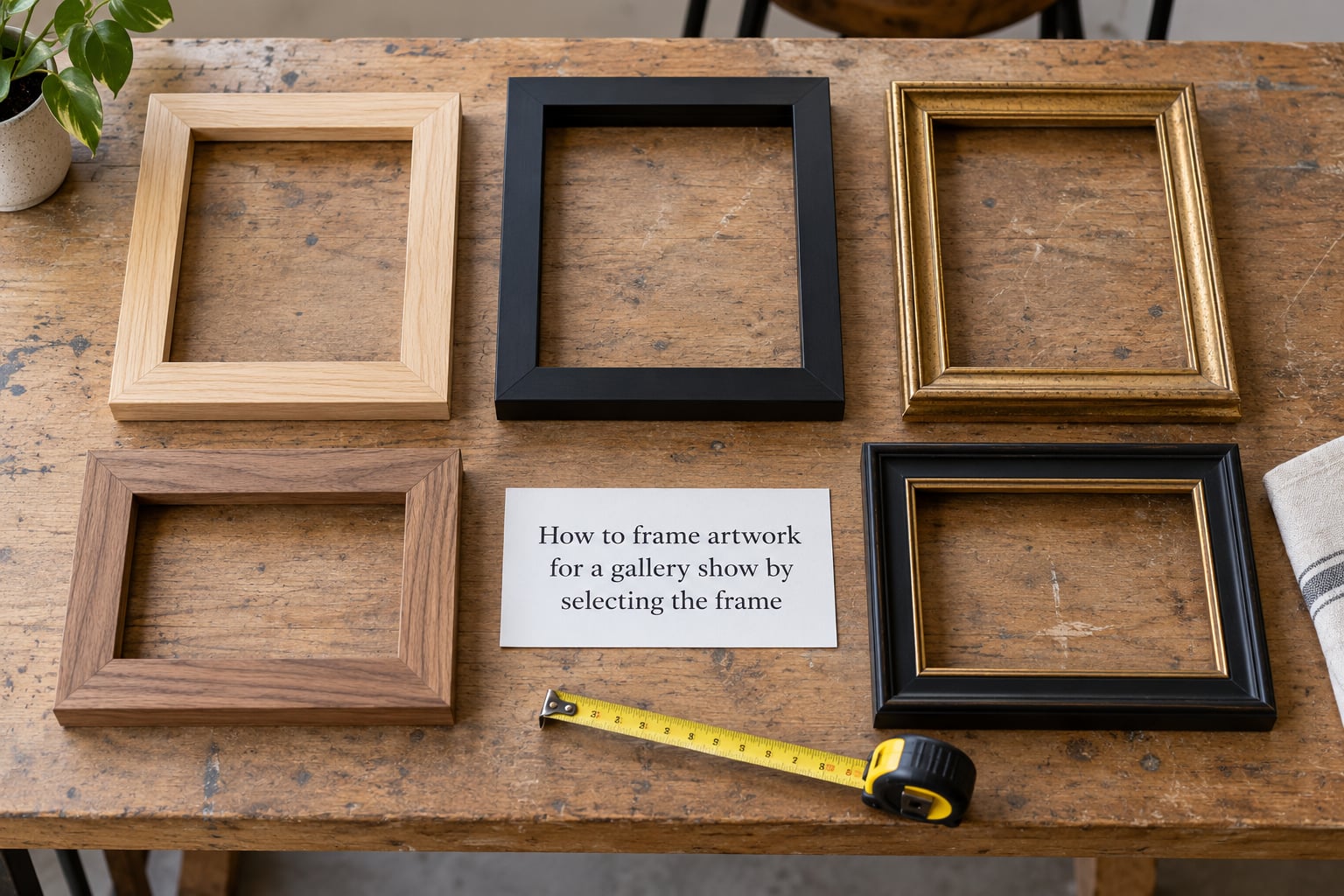
Match the presentation to how the work is built, not to how you want the room to feel. Here is the pairing most artists land on.
| Medium | Presentation | Frame | Glazing |
|---|---|---|---|
| Oil or acrylic on canvas | Gallery wrap or float | Floater, 1 to 2 inch depth | None |
| Watercolour or gouache | Matted | Slim wood or moulded, deep rabbet | UV glass or acrylic |
| Drawing on paper | Matted | Simple wood, 1 inch or wider | UV glass or acrylic |
| Photographic print | Matted or full bleed float | Slim moulding, or floater on rigid board | UV glass or acrylic, or none |
| Soft pastel | Float with spacers | Floater or deep box | Acrylic, held off the surface |
| Collage and mixed media | Float | Floater with spacers | Acrylic, never touching the work |
| Quilt or textile piece | Shadow box | Box frame with spacers and glazing | Acrylic for anything large |
| Three-dimensional object | Box or vitrine | Shadow frame, deep rabbet | Acrylic front panel |
Wood, metal and moulded frames are all legitimate. Wood suits almost anything and can be routed or painted. Metal reads clean and takes a thin profile well. Ornate mouldings still belong on Victorian watercolours and nothing else in a contemporary show.
How you know it worked: viewers look at the artwork, not the frame. If the frame is the first thing you notice, it is wrong or it is too heavy.
How to frame artwork for a gallery show by measuring and cutting
Measure the artwork, then write down three numbers: the artwork’s height and width, and its depth. The frame’s outside measurement has to clear all three.
For a matted work, work backwards from the image. Mat window plus the mat border gives the visible opening, and the visible opening plus a slip gives the size of artwork the mat is cut to. A slip is usually an eighth of an inch — enough overlap to hold the piece, small enough that nobody sees it.
Cut the moulding 2 to 4 inches longer than the outside dimension before mitring, so the long point has room to be cut back square. Cut mat board with a sharp mat knife on a self-healing mat, one continuous stroke per side, and test the cut against the artwork before the second cut.
How you know it worked: every border is the same width on all four sides, no edge of the artwork shows, and the frame sits square to the artwork on a table.
How to frame artwork for a gallery show by protecting the artwork
Frame material touches your work forever, so nothing ordinary goes inside. Mat board made from wood pulp contains lignin and breaks down into acids that will brown the paper edges and stain the mount over a few years. Use acid-free and lignin-free board throughout, including the backing.
Glazing needs the same thought. Museum glass blocks around 99 percent of ultraviolet light and cuts reflections; standard acrylic blocks about 91 percent and weighs less. Both work for most media. Neither is the answer for unfixed soft pastel, where any contact transfers pigment, so hold the glazing off with spacers or a deep rabbet.
Mount works on paper with archival hinges or corners rather than tape. Hinges sit on the back of the sheet and let it expand and contract with humidity; tape across the face does not. If a framer insists on a fully sealed package, ask what they used to seal it and whether the adhesive can be removed later.
How you know it worked: nothing inside the frame touches the front of the work except at the mounting points, and the package smells faintly of nothing at all.
How to frame artwork for a gallery show by assembling the frame
Work on a padded surface and keep the area clear. Dry-fit the frame around the artwork, check the alignment, then take it apart. Glue and pin the moulding joints, or use corner hardware, and let the joint set fully before any load goes on it.
Drop the art into the frame, seat it on the spacers or mat, and attach the backing board. The backing holds the dust cover and everything inside, and it also protects the piece from a bump on the back. A frame with an open back looks unfinished from a stairwell and lets dust in permanently.
How you know it worked: lift the frame by the moulding and nothing shifts or rattles, and the back is closed, clean and labelled.
How to frame artwork for a gallery show by installing and labeling it
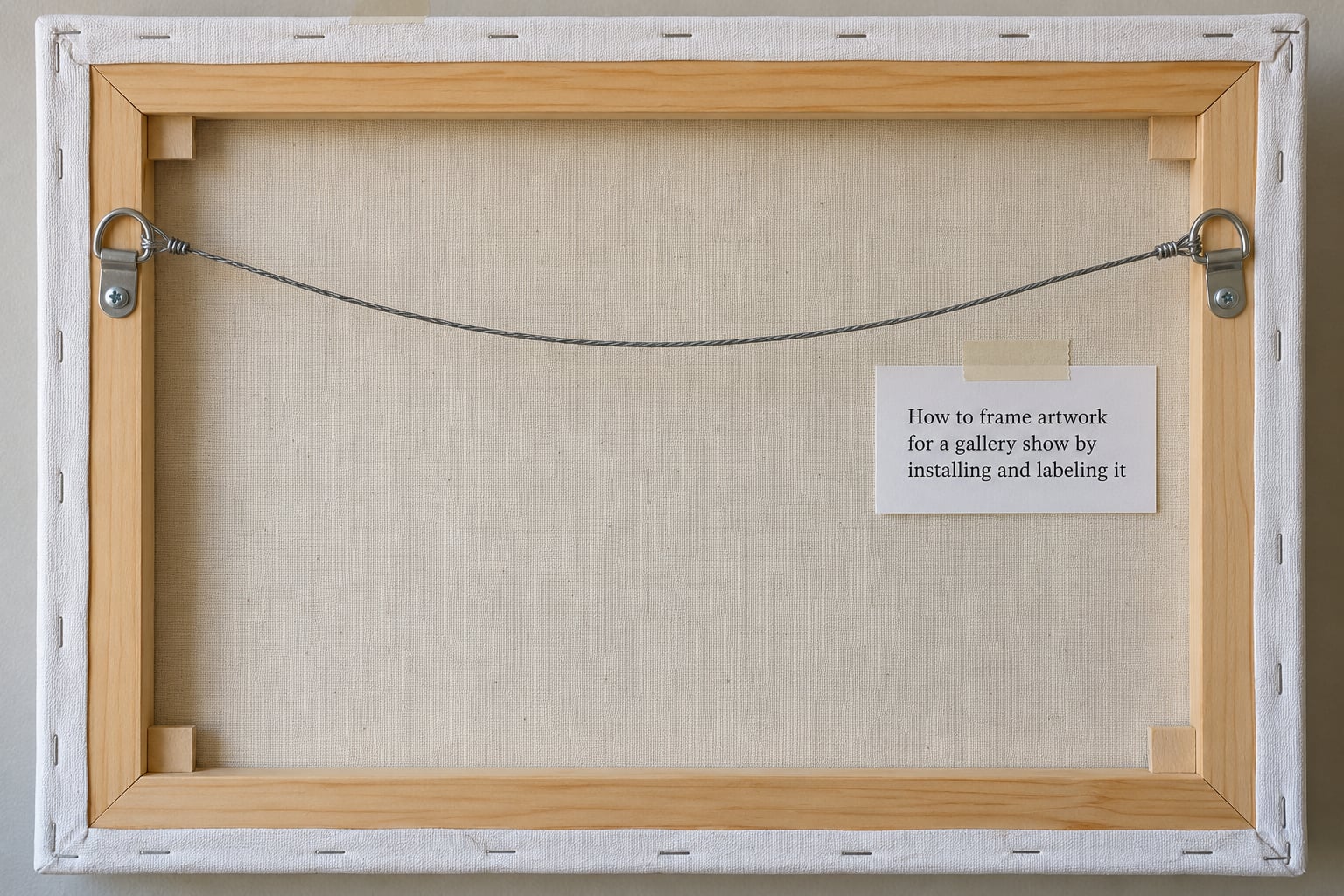
Use picture wire, not the sawtooth hanger that came in the ready-made frame. Gallery owners dislike sawtooth hangers, and group shows are often hung by volunteers, so wire spreads the load and forgives a badly marked wall.
The numbers matter. Set the D-rings about a third of the frame height down from the top edge, and the apex of the wire should sit roughly 3.5 inches below the top of the frame. Do not stretch the wire tight — a slightly loose wire lets the piece tilt forward a fraction of an inch, which keeps dust from settling on the art or the glazing. For a heavy or large piece, two D-rings and a French cleat are safer than wire alone.
Label the back of the frame with your name, phone number, email, title, medium, year and the outside dimensions of the frame. Separately, give the gallery your wall label copy in the order they asked for it: title, year, medium, dimensions, price. Do not write the price on the back of the work unless the gallery asks for it — staff hand the frame over directly to a collector, and that back label is the handover document.
Photograph the finished piece straight on and one at an angle, in good light, before it leaves the studio. If it arrives damaged, that photograph is your only record of its condition.
How you know it worked: the piece hangs on the wall with a slight forward tilt and does not touch the wall behind it.
How to frame artwork for a gallery show by preparing for transport and installation
Framed work travels badly in a thin cardboard box. Wrap the glazing in glassine first, then bubble wrap with flat pads over the face so nothing presses into the artwork. Put corner protectors on every moulding corner — these are the first thing to chip, and it happens on loading docks and in van doors.
Carry small work upright in a rigid carton, not flat, and never rest the unglazed face of anything on a surface. Keep large pieces upright and strapped, and keep the frame free of the venue’s tape and stickers: gold and silver mouldings scar permanently from a single sticker left too long.
Confirm the delivery window with gallery staff rather than guessing, and ask who will be on site to receive it. A short conversation about the door width and the hanging system removes most of the last-minute stress.
How you know it worked: the work arrives with no cracked glazing, no chipped corners and no new dents in the artwork.
Common Mistakes
- Measuring the frame opening instead of the artwork. Measure the piece first, then build outward. Check every border by eye before cutting the second mat layer.
- Using ordinary mat board. Lignin-based board off-gasses and damages paper within a few years. Ask the framer to show you the board label before you pay.
- Touching the glazing during installation. Bare fingerprints show more than dust. Handle glazing by the edges with clean cotton gloves, and keep the face protected until the frame is on the wall.
- Leaving the push-in hook that came with the frame. Replace it with D-rings and wire, or the first person to lift the piece off the wall will pull it out of the frame.
- Overloading a light frame. Wide mouldings on large canvases bow outward and warp the work. Check the span and add a brace or a deeper frame.
- Ignoring the written specification. A dark mat or a gilded frame in a show that asked for neutral mats is a reason the jury or installer sees the work as careless.
- Framing each piece differently. Consistent mouldings and consistent mats let a varied body of work read as one show. Let the mat border vary if you need to make sizes work, not the frame finish.
One more warning worth keeping: beautiful framing does not sell work by itself. An artist once showed 35 pieces in slim black frames with white mats, a flawless hang, and sold one. The frame earns respect for the work. It does not replace it.
Frequently Asked Questions
Do I need to frame my artwork before applying to a gallery?
Usually not. Most calls for entries ask for the medium, dimensions and a digital image, and the jury reviews work before any physical framing happens. Do read the guidelines for frame specifications, though, because some juried shows and societies require a particular presentation at the point of acceptance or delivery. Photograph each piece the way it will be presented so the jury sees an accurate version of it.
Should I use glass or acrylic glazing for a gallery show?
Museum glass blocks around 99 percent of ultraviolet light and reduces reflections best. Acrylic blocks roughly 91 percent, weighs about half as much, and will not shatter if the piece is dropped or handled by volunteers. Either is fine for most work on paper. Choose acrylic for anything large, heavy or travelling, and hold it off the surface with spacers for pastel, collage and anything unfixed.
How do I frame a quilt or thick mixed-media artwork?
Both need depth rather than a mat. A shadow box or deep box frame gives you room for the loft of quilting or for protruding elements, with spacers or a mat forming the inner border. For dimensional collage, float-mount the piece so nothing presses on it. Leave clearance around every protrusion so the glazing never touches the work, and use acrylic rather than glass once the frame is bigger than about 24 inches on any side.
What kind of frame is best for contemporary mixed-media artwork?
A simple floater frame in natural wood or matte black, 1 to 2 inches wide, is the safest answer for most contemporary mixed media. It keeps the moulding away from the surface, avoids covering any part of the composition, and matches what most galleries already hang. Ornate mouldings belong on work with a historic look. When a gallery has a house style, follow it rather than competing with it.
Does the gallery provide the frame, or should the artist supply one?
All three arrangements exist: the gallery supplies the frames, the gallery supplies them at cost and bills you, or the gallery expects the work delivered framed and ready to hang. Nobody tells you reliably until after acceptance, so ask in writing as soon as you are in. Ask who chooses the frame, who pays, and whether you are reimbursed. The answer changes your materials budget and your delivery timeline completely.
How do I label framed artwork for a gallery show?
Two labels, two jobs. The wall label sits beside the work and carries title, year, medium and dimensions exactly as the gallery’s guidelines format them, including whether dimensions mean the framed or the unframed piece. The label on the back of the frame carries your name and contact details, the title, and the framed size, so staff and couriers can identify the work. Keep the price off the back of the piece unless the gallery asks for it.
Conclusion
Confirm the venue’s specification before you cut anything. Pick a presentation that suits the medium and stays consistent across the whole show, build it with acid-free board and glazing held clear of the surface, and hang it on D-rings and picture wire set to the measurements above.
Then hang the finished frame on your own wall, photograph it, and decide whether it passes. If it does not, you still have time to change it — which is exactly what you will not have in the last week before opening night.