How to paint on fabric so it stays soft comes down to three decisions: pick a medium that stays elastic after it dries, keep each coat thin, and set the paint from the reverse side. Acrylic straight from the tube dries into a plastic film, and that film is exactly what makes a painted tee crack across the shoulder or turn a soft jersey dress into a stiff board. Swap in a textile medium, work in light layers, and the cloth keeps its drape.
This guide covers what to put on the brush, how to prep the fabric, how to heat set without cooking the fibres, and how to wash the finished piece so the softness survives. It works for cotton, linen, canvas, cotton blends and knits, and it is written for anyone who has already ruined one shirt with a thick coat of craft acrylic and would rather not do that twice.
The product advice below is current as of 2026, and the ratios are given as mixing directions rather than exact formulas, since every medium thickens differently.
Table of Contents
- What You Need
- How to Paint on Fabric So It Stays Soft: Step-by-Step
- Test the Paint on the Actual Fabric
- Choose a Flexible Paint or Textile Medium
- Prepare the Fabric Without Making It Rigid
- Apply Thin, Flexible Layers
- Dry and Set the Paint as the Manufacturer Directs
- Seal Only When Needed
- Finish and Maintain the Soft Hand
- Common Mistakes
- Frequently Asked Questions
- What type of paint stays soft on fabric?
- Do I need to use a fabric primer before painting?
- Can I iron fabric paint to make it last?
- Is fabric paint supposed to be sealed?
- How do I wash painted fabric without making it stiff or fading?
- Conclusion
What You Need
The short list: a flexible fabric paint or an acrylic mixed with textile medium, soft brushes or a foam roller, clean water, a palette, a scrap of the actual fabric, and heat for setting. A fabric primer is optional and only worth buying when your chosen medium says it needs one.
Compatibility matters more than brand. Fabric paint and textile medium are made to stay flexible in the wash. A primer that is not formulated for cloth can leave a chalky film that breaks at every fold. Heavy-bodied acrylic, enamel and latex paint are built to be hard, and no amount of thin layering changes that.
Fabric type changes the plan too. Cotton and linen drink paint and take colour beautifully but need a few thin coats. Polyester and cotton-poly blends sit on the surface and dry faster, so paint sits closer to a printed graphic than a dyed-through finish. Jersey knits stretch, so anything brittle will split along the stretch line.
How to Paint on Fabric So It Stays Soft: Step-by-Step
Test the Paint on the Actual Fabric
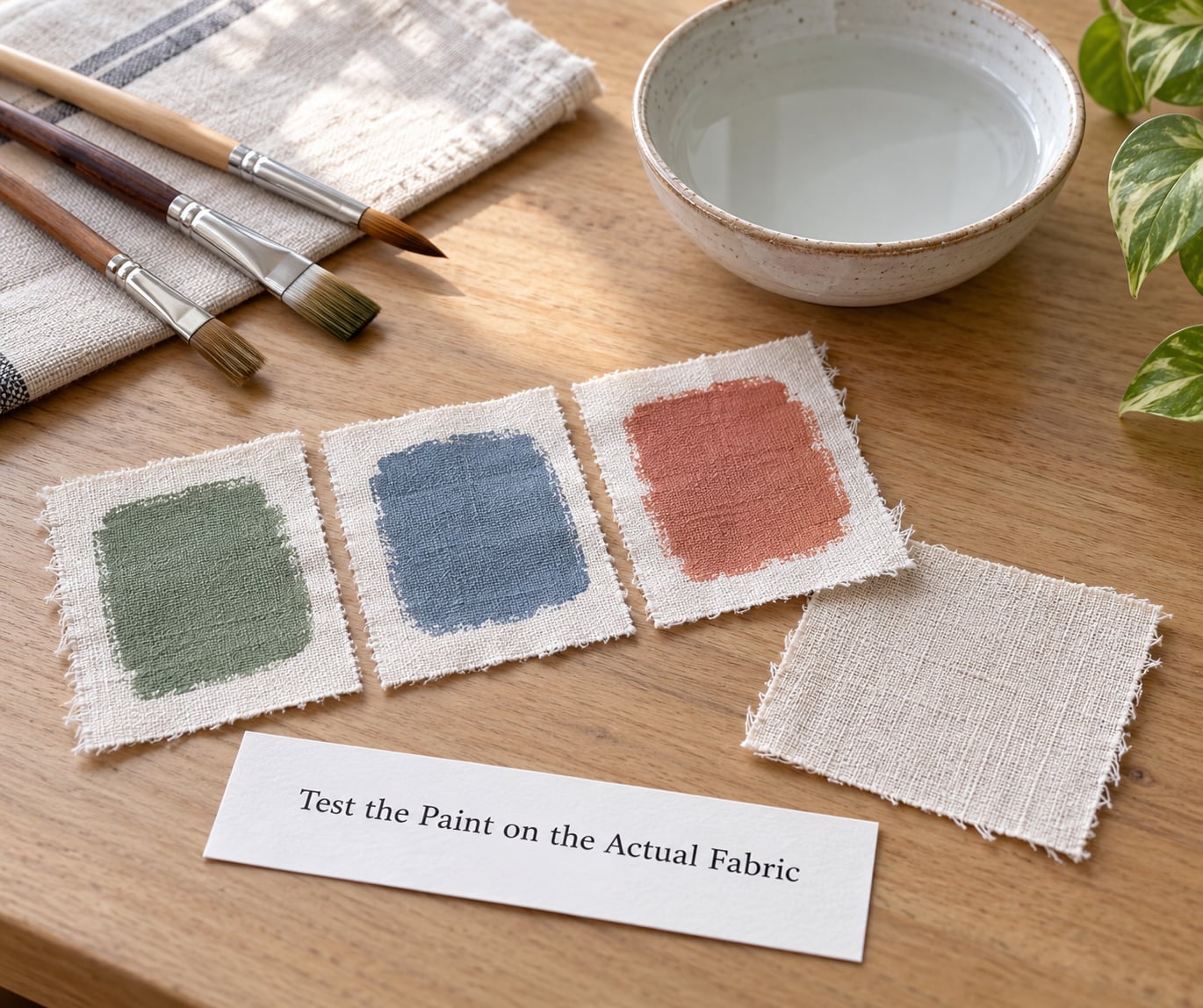
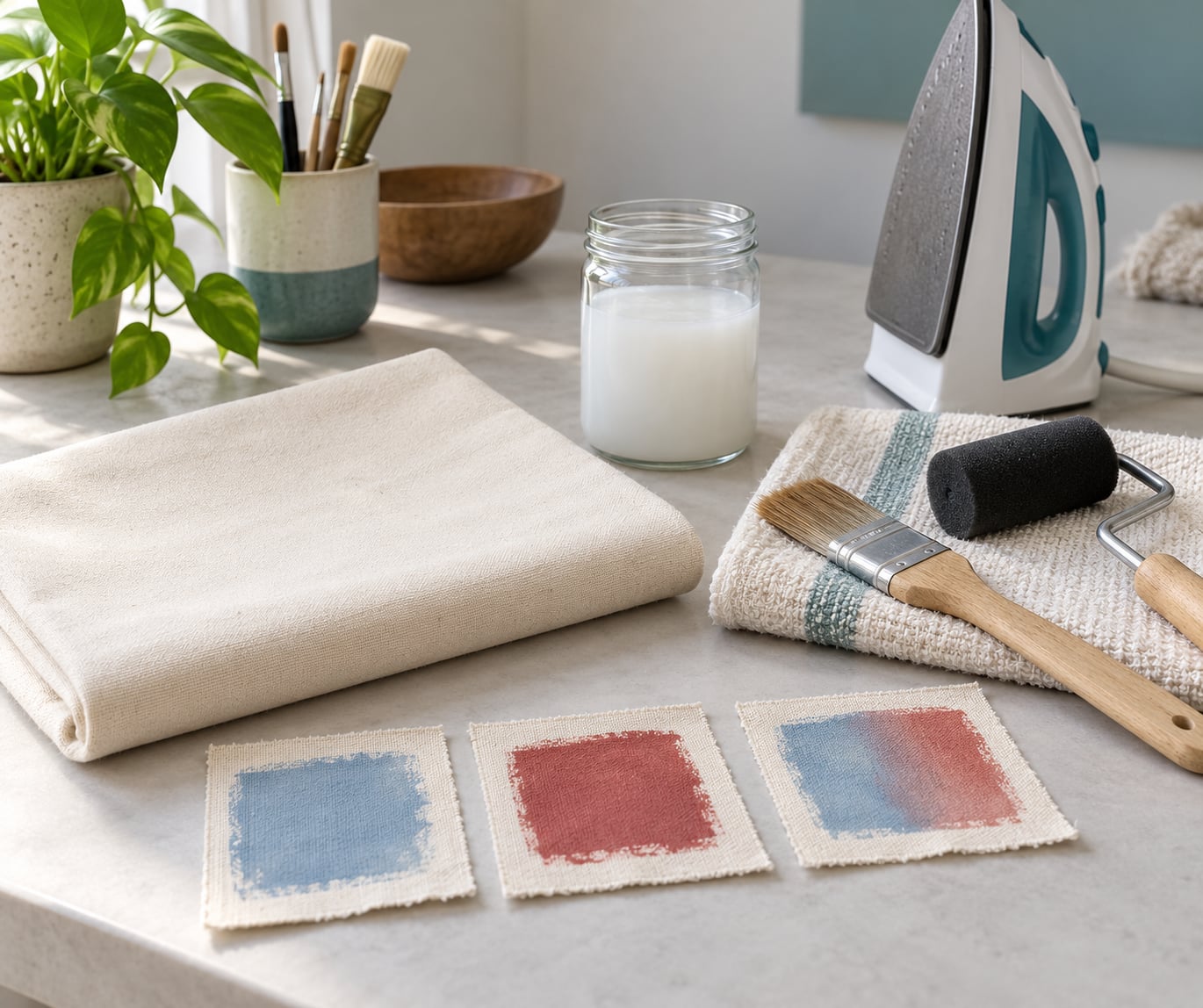
Every swatch tells you something different than the last, which is why the test piece is not optional. Cut a 10 by 10 cm square from the same cloth you plan to paint, or buy a remnant of the same weave and weight.
Paint two or three candidates on the same swatch side by side. Let them dry fully, which is usually overnight, then feel them. Hold the cloth up and drop your shoulder into it. The sample that bends freely without a stiff patch is your medium; the one that feels like paper glued to the cotton is not.
Wait 72 hours, wash the swatch cold, and look again. Check three things: does the colour bleed into the surrounding fabric, does the paint flake when you rub it with a dry finger, and does the cloth now feel different from the piece around the paint. That last check catches the failure people miss, because the paint still looks fine but the whole panel has gone board-stiff.
Choose a Flexible Paint or Textile Medium
Water-based fabric paint is the easiest route. It is made from a polymer that stays soft, it bonds into the fibre, and it usually needs no heat at all. Opacity ranges from transparent washes to solid coverage, so one bottle can do both a pale background and a bold shape. If your priority is softness, this is the safest pick.
Acrylic paint plus textile medium gives you more control over colour and finish. Mix roughly one part medium to one part acrylic and thin with water to the consistency of cream. Named commercial mediums from Golden, Liquitex and Matisse are reliable; Golden GAC900 is the version formulated to stay flexible when you need a serious surface durability. Beginners do fine with the plain textile medium.
DIY recipes come up constantly in craft forums. Fabric softener mixed into acrylic works because it leaves a plasticiser in the film, and several people on Reddit confirm soft results at around one part softener to three parts paint. A teaspoon of glycerin in a similar ratio does the same job more evenly, though it stays tacky for days. Aloe vera gel is the one to avoid for soft results, since it dries hard and is regularly reported as stiffening the cloth.
Baking soda is a different trick. A small pinch thickens paint and adds a matte, chalky texture, useful for a printed or vintage look. It also shortens the working time of the paint and gives up durability faster than any medium, so skip it on anything that will be washed often.
Prepare the Fabric Without Making It Rigid
Wash and dry the fabric first, following the care label. Washing removes finishes and dyes that would otherwise fight the paint, and it tells you whether the colour runs, which no test on new cloth can.
Skip fabric sizing, starch and heavy press starch on anything you want to stay soft. Size sits in the weave and can stiffen it on its own. If the cloth feels crisp straight out of the dryer’s box, wash it again without starch and dry it flat.
Work on a flat surface with a piece of cardboard underneath, or tape the fabric taut to a frame. The backing keeps the weave from stretching and the paint from sinking through to your table. Do not let the backing stay glued to the piece, and keep the fabric flat rather than letting it hang while wet, which puts a heavy wet weight on one edge.
Apply Thin, Flexible Layers
Dilute first. Add water a few drops at a time until the paint falls off the brush in a steady line rather than a thick ribbon, and mix in a separate dish so you do not thin the whole bottle.
Two or three light coats beat one heavy coat every time. A thick coat dries as a film, and films crack. Each thin coat soaks closer to the fibre, which is what keeps the finished hand soft.
Use a soft round brush, a flat synthetic brush for edges, or a foam roller for larger areas. Scrubbing with stiff bristles pushes paint to the surface instead of letting it settle in. Let each coat dry before the next; on cotton and linen that is a few hours, and a fan or a hair dryer on cool will speed it along.
To get a thin, printed look on a t-shirt rather than a painted-on one, work thin and let each coat dry completely. Heavy coverage will always look heavier than a screen print, and the film thickness is what you are trying to avoid.
Dry and Set the Paint as the Manufacturer Directs
Dry time and cure time are different. Dry means you can touch it; cure means the paint has bonded deeply enough to survive washing. Most paint needs 24 hours to dry and up to 72 hours to cure before a wash, and a few labels ask for four days. Follow the label on your specific medium, since the bonding mechanism differs.
For heat setting, put the fabric painted side down on a thick towel, set the iron to medium-hot with no steam, and press in one spot for three to five minutes without sliding. Move the iron and repeat until the whole area is covered. Pressing rather than gliding matters, because dragging the iron can smear paint that has not fully cured.
Some mediums should not be ironed at all. If the label says air cure or air dry, leave the piece alone for the full cure time instead. Silk, chiffon and most polyester blends can scorch or shrink under a hot iron, and those are the cases where air curing or a tumble dryer on a low setting is the safer route.
After setting, rub the dried area firmly with a dry finger. Colour that lifts away means it needs another heat pass or more cure time. Colour that stays put has locked in.
Seal Only When Needed
Most fabric paint needs no separate sealer, and adding one is often what ruins the soft finish. A varnish or gloss coating forms a hard film over the cloth, which is how you get a shine you cannot press out and a surface that peels.
If you want extra protection, use a flexible textile medium rather than a fixative. A light coat of textile medium over cured paint stays in the same soft family as the paint itself and adds abrasion resistance for things like bag straps or aprons. A fixative spray is acceptable on delicate work you will never wash, but skip it on anything you plan to launder.
Never use a wax finish or an epoxy-style coating on wearable fabric. Those are built for hard surfaces and they will not flex with the cloth.
Finish and Maintain the Soft Hand
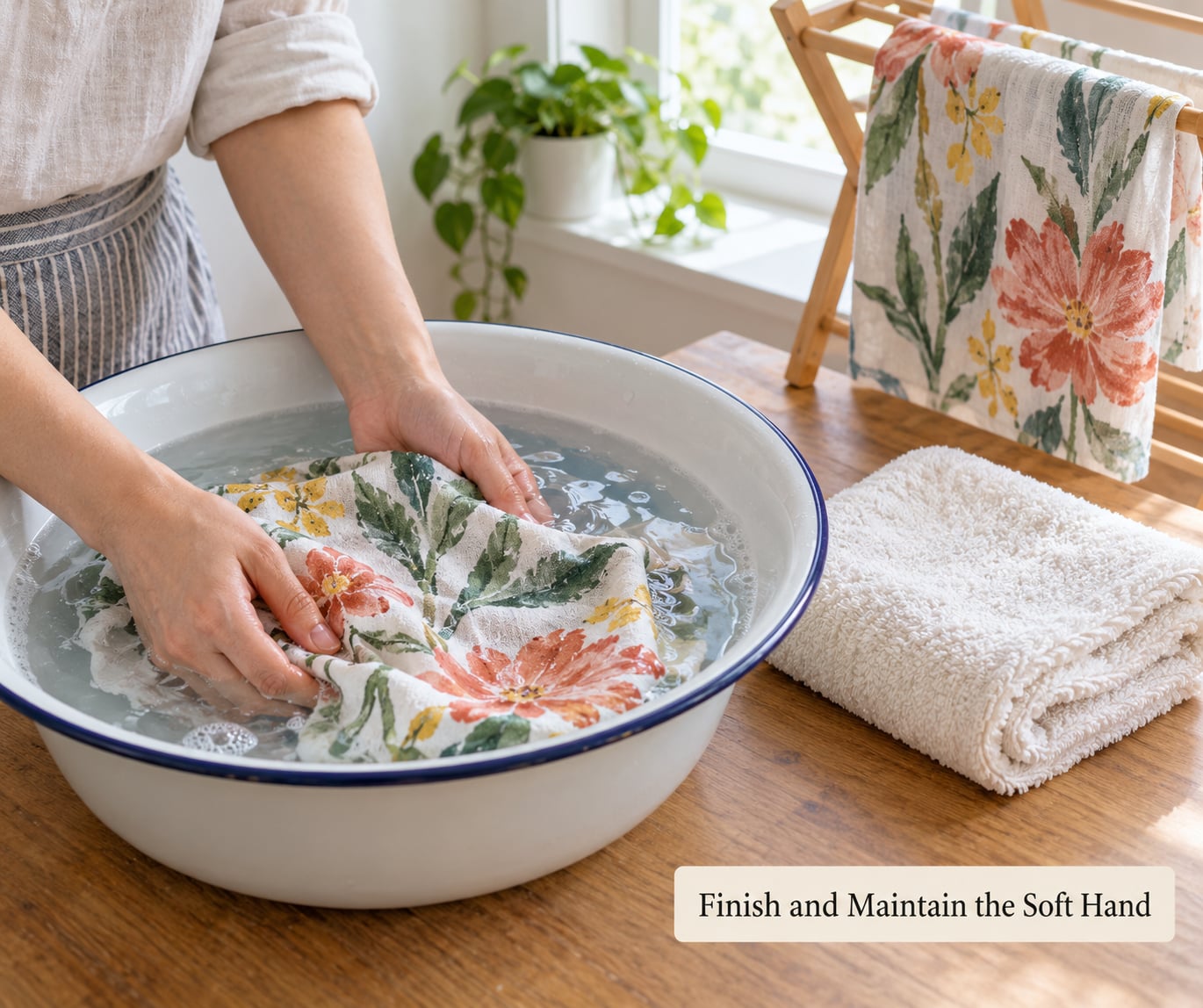
Give the piece the full cure period before the first wash. Then wash it inside out, cold, on a gentle cycle, with mild detergent and no fabric softener. Softener leaves a film that can dull the colour and holds onto the painted area, which is the opposite of what you want here.
Line dry it flat or hung in shade. A high tumble setting drives heat into the paint film and is the usual reason a well-set design starts cracking after a few washes.
Iron from the reverse side, or press with a cloth over the painted face, and skip the steam. If the paint ever does flake, do not scrub it. Wash the piece cold and dry it before making any more decisions, because most rub-off that appears after one wash is really paint that had not finished curing.
Common Mistakes
Using plain craft acrylic straight from the tube. Acrylic is designed to be permanent and hard on a hard surface. Mix it with textile medium, or use a paint formulated for cloth.
Building up coats to get full coverage. Each coat adds film. Use three thin coats, and if you need an opaque background, print it in a lighter tint so fewer layers are required.
Skipping the wash test. Unwashed fabric with a finish already on it will drink the paint differently and can bleed. Wash it first and find out before you paint the good piece.
Ironing before the paint is dry. Heat plus moisture lifts paint and can push it through to the back. Wait the full dry time, then press, never glide.
Sealing with varnish or gloss. That film is stiff by design. Use textile medium only if you need added protection.
Washing hot, early, or with softener. Give it 72 hours, wash cold inside out, skip the softener and line dry. That single habit decides how long the softness lasts.
Frequently Asked Questions
What type of paint stays soft on fabric?
Water-based fabric paint is the most reliable soft finish, because the polymer in it is designed to flex with the fibre instead of hardening. Acrylic paint stays soft only when you mix it with a textile medium at roughly one to one, or use a flexible medium like Golden GAC900. Avoid enamel, latex and heavy craft acrylic, and skip any varnish or gloss sealer that forms a hard film over the surface.
Do I need to use a fabric primer before painting?
Usually no. Fabric paint and acrylic mixed with textile medium bond to cotton, linen and canvas without a primer, and an extra coating only adds film the cloth has to flex around. A primer is worth it when your paint label specifically calls for one, or when you are painting over a dark, tightly woven synthetic that will not take colour otherwise. Test it on a scrap first and check whether it leaves the fabric stiffer.
Can I iron fabric paint to make it last?
Yes, for most mediums, but there are rules. Wait until the paint is fully dry, usually at least 24 hours. Put the fabric painted side down on a thick towel, set the iron to medium-hot with steam off, and press in place for three to five minutes at a time rather than sliding. Some paints are labelled air cure and should never be ironed, and silk, chiffon and polyester blends can scorch, so check the label and the fibre before using heat.
Is fabric paint supposed to be sealed?
No, most fabric paint is self-sealing once it has cured, and a separate sealer is often what makes the finish stiff. If you want extra abrasion resistance, use a flexible textile medium as a light topcoat rather than varnish, gloss or fixative. Waxes and hard coatings will not flex with the cloth and can peel at every fold. Give the paint its full cure time first, since many people seal too early and trap moisture inside.
How do I wash painted fabric without making it stiff or fading?
Wait the full cure period, usually 72 hours and sometimes up to four days, before the first wash. Then wash the piece inside out in cold water on a gentle cycle with mild detergent and no fabric softener. Line dry it flat or in shade instead of using a hot tumble cycle, which drives heat into the paint film and starts cracks. If colour lifts, wash again cold rather than scrubbing, and air dry before judging the result.
Conclusion
Start with a swatch, not the garment. Paint your shortlisted mediums on a scrap of the real fabric, let them dry overnight, rub them, then wash and compare. Once you know which one stays soft in your hands, the rest is straightforward: thin coats, full drying time between them, heat setting on the reverse side if the label calls for it, and a cold gentle wash with no softener once the cure period is up.
Avoid the varnish, skip the starch, and paint less colour than you think you need. That is how you keep the drape and the hand you started with.