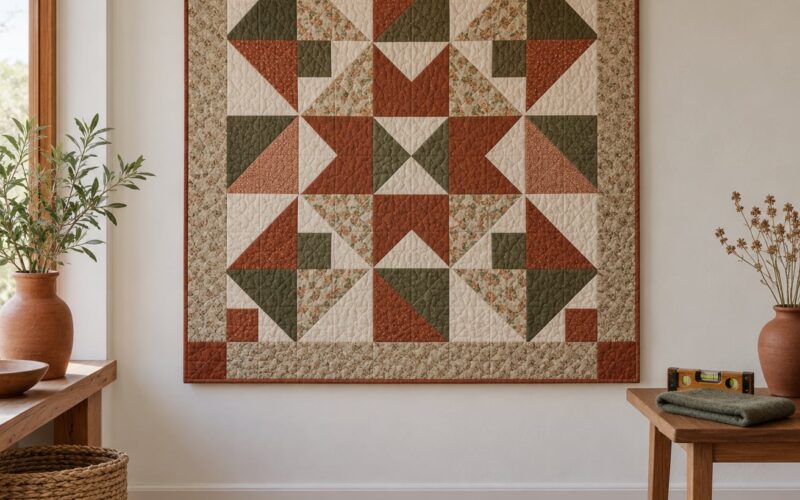
Most wall quilts do best with a thin, low-loft batting, because gravity pulls a hanging piece downward for years and heavy loft stretches, bubbles and casts shadows across the surface. Start by matching the batting to your quilt’s structure, finish and hanging method, then swatch-test before you cut. The whole process takes about an hour, including the sample.
I have hung enough pieces on studio walls to know how the failure shows up. A heavy batting looks fine on the table and a year later the bottom edge has dropped half an inch while the top stays crisp, and the quilting lines read as ridges instead of texture. None of that is about skill. It is about how the batting behaves under load.
Table of Contents
- What You Need
- Step-by-Step: How to Choose Batting for Wall Quilts
- 1. Define the Wall Quilt’s Intended Finish and Hanging Method
- 2. Choose a Fiber That Suits the Art and Care Requirements
- 3. Match Loft and Thickness to the Quilt’s Surface
- 4. Check Weight, Width, Drape, and Stretch
- 5. Test the Batting with a Small Sample
- 6. How to Choose Batting for Wall Quilts and Buy with Confidence
- Common Mistakes
- Frequently Asked Questions
- What is the best batting for a wall quilt?
- Should I use fusible batting for a wall quilt?
- Does batting show through a light-colored wall quilt?
- Is wool batting suitable for a wall quilt?
- Do wall quilts need to be washed after quilting?
- Choose by Structure, Then Test
What You Need
Before you open a catalogue, work out what you actually need from the middle layer. Write these down and the shopping gets much faster, because most of the choices collapse into three decisions: fiber, loft and weight.
Look at these properties on the batting label and in a swatch:
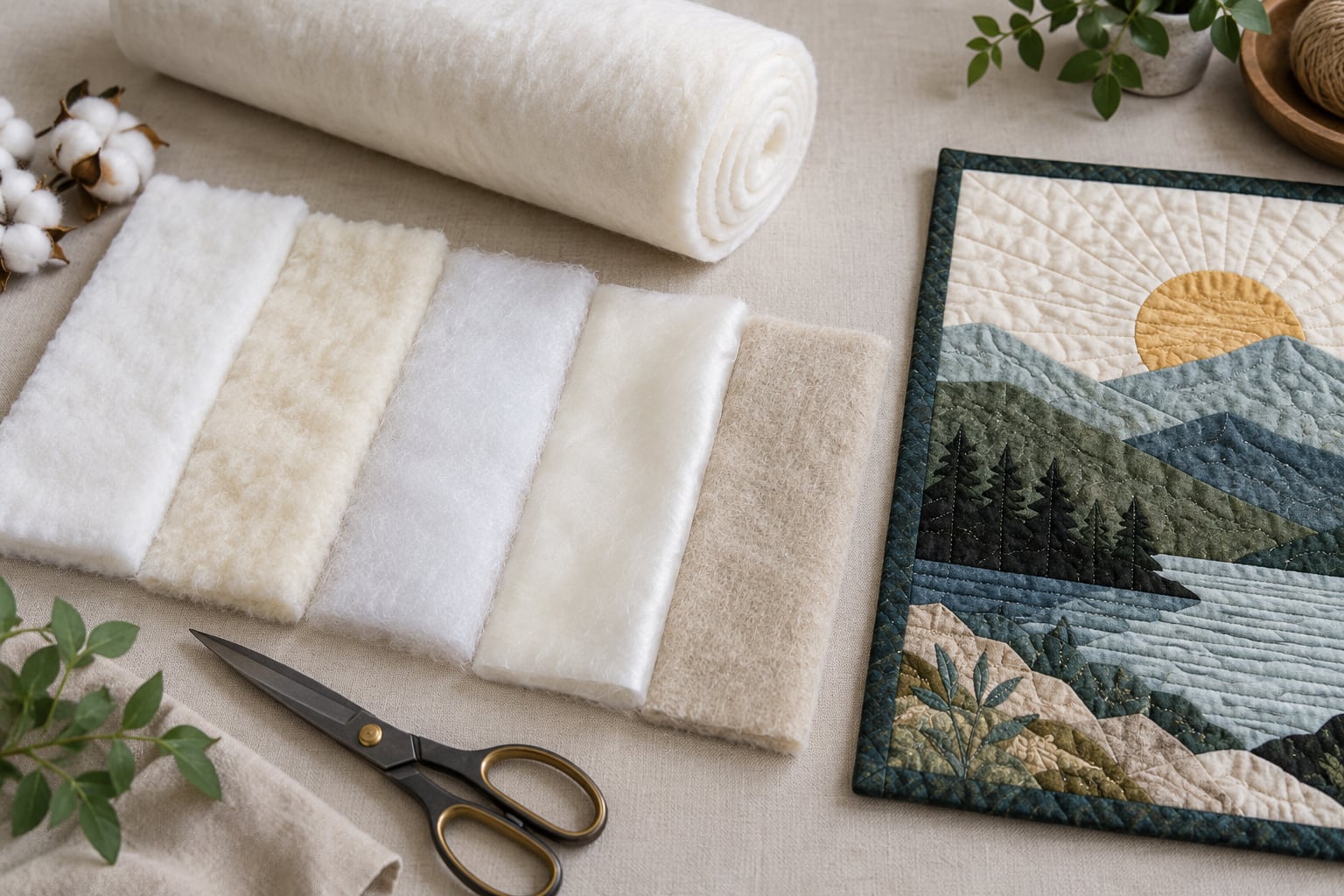
- Fiber type. Cotton, polyester, wool, silk, bamboo, or a blend. Each behaves differently under stretch and humidity.
- Loft. How thick the batting is before quilting. Thin, medium, high, or a stated high-loft designation.
- Weight per square yard. Often printed as ounces. Heavier is not better on a wall.
- Usable width. Shop rolls commonly run under 90 inches, and the usable width after the selvage is often narrower than the label suggests.
- Drape and hand. Whether it falls softly and hugs a curve, or holds a stiff shape.
- Stretch and recovery. How much it elongates under tension and whether it springs back.
- Shrinkage and washability. Whether it is pre-washed or still needs a soak.
- Construction. Needle-punched, bonded, or no-scrim. This changes how it frays at the edges.
- Recommended quilting distance. The stitch spacing the batting was tested at, usually a quarter inch apart.
Then gather the facts about the quilt itself: finished size, whether the surface carries appliqué, fusing, paint, embroidery or dimensional elements, how it will be quilted, and how it hangs. A sleeve on a dowel and a ladder hanging put stress on different parts of the piece, and that difference changes the batting choice.
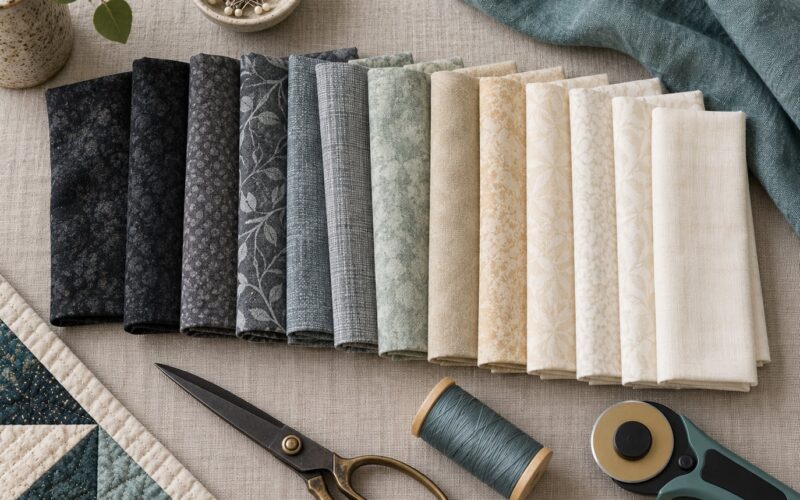
Finally, keep your actual fabric choices in front of you. You are choosing a middle layer for one specific top and one specific backing, and the swatch test only means something when it uses those exact fabrics.
Step-by-Step: How to Choose Batting for Wall Quilts
1. Define the Wall Quilt’s Intended Finish and Hanging Method
Start by naming the finish you want, not the batting you want. A thin textile hanging that should read almost like a framed print needs very little body. A soft, traditional quilt with generous stitch definition wants more. A dimensional mixed-media piece with fusing, painted areas or protruding objects needs stability so the surface does not dent around them.
Then decide the hanging method. Sleeve-and-dowel hanging lets the piece hang from a top edge and drapes freely, so gravity acts on the full height. Ladder hanging and D-rings on a rigid frame spread the load differently, but the fabric still carries its own weight.
Check: say your target finish out loud in one sentence and note whether it will ever be washed. A permanently displayed piece and a piece that gets laundered are not the same project.
2. Choose a Fiber That Suits the Art and Care Requirements
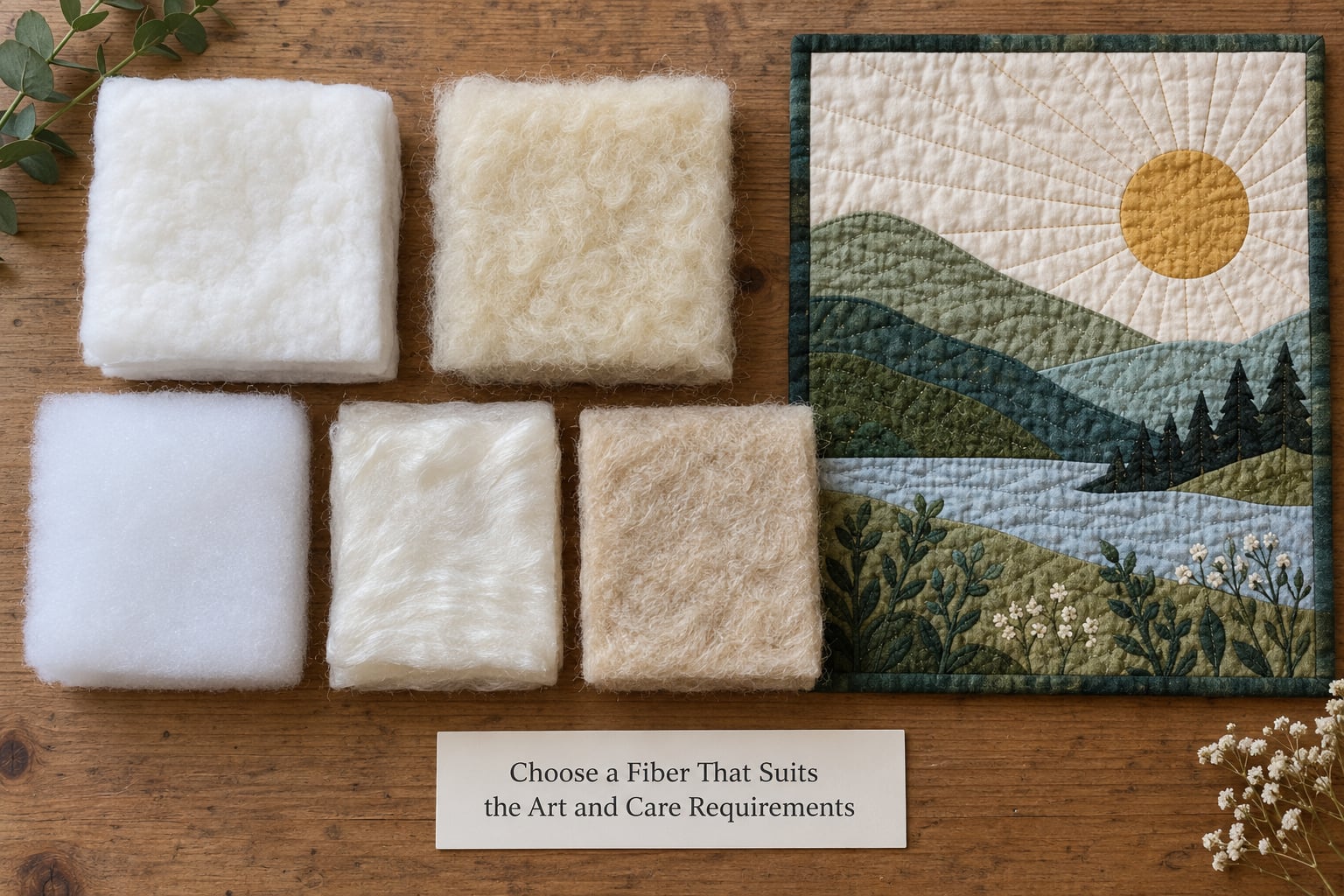
There is no universally best fiber for a wall quilt. Each one trades off something you may care about.
Cotton is the traditional choice and the one most quilters reach for on walls. It presses down flat, takes quilting lines crisply, and is inexpensive. The trade-off is weight and shrinkage: cotton is the fiber most likely to stretch on a vertical hang. Quilters on the APQS forum recommend cotton for a wall quilt specifically because it lays flatter, and suggest layering two thin layers if you want more definition.
Polyester is lighter than cotton, holds loft without much weight, and comes in very thin bonded versions that stay flat. It does not breathe and it can pill over years, but for a large hanging it is one of the least sag-prone options. One commenter on r/quilting described the difference bluntly: cotton drapes like a fabric, poly feels stiffer and denser.
Wool is warm, breathable and, according to a recurring comment on r/quilting, the one batting quilters single out for resisting creases, which matters a lot on a wall where press marks never get washed out. Wool is also the fiber most likely to felt if someone does eventually wash the piece.
Bamboo is the lightest of the common fibers. The same r/quilting thread ranked them bamboo first, then wool, then cotton, and made the point that thickness moves the weight more than the fiber does. On a small hanging that ranking is useful; on a wide piece, thin still wins.
Silk and silk blends turn up on exhibition and show pieces where the surface quality matters more than durability. They are expensive and they barely insulate, but they take an edge and a stitch beautifully.
Blends, including cotton-poly, are a reasonable middle ground when you want cotton’s flat look without all of cotton’s sag.
Check: hold the swatch up to a window. Any fiber you would not be happy to see through a pale fabric has already failed the test, and no amount of quilting will hide it.
3. Match Loft and Thickness to the Quilt’s Surface
Loft is thickness. Low-loft batting lies nearly flat, medium loft adds a soft hand, and high-loft batting is what makes a quilt look puffy in a photograph. On a wall, low loft wins almost every time, because a lofted surface catches light unevenly and turns your straight edges into shadows.
This is the closest thing the quilting community has to a rule. Low loft produces a flat surface that shows the design without adding bulk, while high loft can cause shadows and an uneven appearance once the piece is hanging. Members on the Knitting Paradise forum gave the same advice without the theory: if you are using a commercial batting for a wall hanging, choose a low-loft one because it lies flatter.
Quilting density changes the calculation. Denser quilting holds low loft in place and gives you the stitch definition to make a thin batting look deliberate. Sparse quilting lets thin batting vanish and lets thick batting bubble between stitched areas. The Quiltingboard thread put it as a straight trade: loftier batting for more quilting definition, thin batting for a flat result.
Be careful with embellished surfaces. Appliqué, fusing and heavy embroidery want a thin, dense layer. A lofted batting will dent around them and print the stitching through.
Check: after quilting your sample, hold it flat on a table under even light. Any area that stands more than a couple of millimeters proud of the rest is too lofty for that piece.
4. Check Weight, Width, Drape, and Stretch
Weight and loft are not the same thing. You can have a light, low-loft batting that will not fight gravity. Pick the lightest weight in the fiber you have chosen and go down from there.
Measure the quilt and then measure the roll. Shop widths commonly top out in the 84 to 90 inch range, and the usable width after the selvage is narrower than the number on the packaging. A finished piece wider than the usable width needs a seam.
Joining is straightforward. Quilters on r/quilting butt two pieces together, overlap slightly and secure the join with a wide zigzag. Once it is quilted, the join does not show. Keep the seam away from the most visible part of the design and away from where a sleeve will press.
Stretch is the one that sneaks up on people. A batting with high stretch and poor recovery will slowly lengthen under its own weight. Pinch the batting, stretch it gently between two fingers, and let go. If it stays elongated rather than springing back, look for a bonded or no-scrim construction, which is usually more stable.
Drape matters at the edges and over any curve in the piece. A stiff batting that will not fall around a curve will crease there permanently.
Check: hang the finished sample from a dowel for a week and mark the bottom edge with a pencil. If the mark has moved, you have a sag problem and a heavier or lower-loft batting is the fix.
5. Test the Batting with a Small Sample
Make a swatch at least 12 by 12 inches from the batting you are considering, the top fabric you will use and the backing you will use. Then quilt it the way you plan to quilt the whole piece. A sample quilted with the wrong density tells you nothing about the finished work.
Inspect the sample for the things that actually ruin wall quilts: stitch definition, whether the batting shows through a light top, puckering along seam lines, bubbling between stitched areas, and how the surface photographs under side light.
Then test recovery. Hang the swatch, leave it for several days, and check the lower edge. Fold it the way a shipping fold would and see whether the crease stays. Press it with a warm iron and see whether the line survives.
For paint, ink or adhesive work, test on the worst-case fabric first. Mediums can wick into an unsealed batting and stain the front permanently. A sealed or fusible-backed batting handles this far better, which is why mixed-media makers reach for bonded or pre-wrapped options.
Check: if the swatch has one problem, change one variable and quilt another. Two changes at once tells you nothing about which one helped.
6. How to Choose Batting for Wall Quilts and Buy with Confidence
Now you can make the call. You know the finish, the fiber, the loft, and you have a swatch that behaved or did not behave. Name the batting that passed and cut your length oversize rather than to the finished measurement, because a piece cut flush to the finished edge gives you nothing to square up while basting.
Cut in the direction of the batting’s grain where it matters, and buy enough to allow for that oversized cutting plus a spare strip for a future repair. Buy two layers if you are still unsure; a thin second layer often fixes a face that is slightly too soft without moving you into high loft.
Keep the batting label and the receipt with the piece’s records. In three years, when a section needs re-quilting or replacing, that card tells you the fiber, the weight and the quilting distance you used, and a close match is almost impossible to guess.
Check: label the offcut with the batting name before it goes back in the bin. Offcuts get shuffled within a week.
Common Mistakes
Choosing batting for warmth. A wall quilt is not under a person. Warmth-to-weight ratio is a bed-quilt criterion, and applying it to a hanging gets you a heavier piece than the job needs.
Ignoring stretch entirely. Recovery matters more than fiber on a vertical hang. A batting that does not spring back will lengthen slowly, and no amount of careful basting stops gravity.
Assuming pre-washed means pre-shrunk. Pre-washed batting has been washed once by the manufacturer and may still change dimension slightly, particularly cotton. If the piece might be washed, wash the batting you bought first and let it dry fully.
Cutting batting to the finished size. Cut oversize. The batting is the layer that needs to be trimmed square, and a flush cut leaves nothing to adjust.
Testing the batting on its own. A batting sample tells you about loft. Only a sandwich with your top and backing tells you about show-through, seam telegraphing and puckering.
Overlooking surface materials. Paint, dye, glue and fusible web can all soak into an unsealed batting. Test the medium on the swatch first, and use a bonded batting if the surface is wet media.
Forgetting the hanging method. A sleeve hanging loads the top edge and lets the rest drape. Plan for it by keeping the loft thin and the piece light, particularly above about 40 inches wide.
Frequently Asked Questions
What is the best batting for a wall quilt?
A thin, low-loft batting is the best starting point for most wall quilts, because it lies flat, shows stitch definition without casting shadows, and adds little weight for gravity to pull on. Cotton or a cotton-poly blend gives the crispest flat finish, while bonded polyester is the least sag-prone. Always test a 12 by 12 inch swatch with your actual top and backing before committing.
Should I use fusible batting for a wall quilt?
Fusible or pre-wrapped batting works well when the wall quilt carries fusing, appliqué or mixed-media elements that need a stable base. The backing holds the batting in place, so you can skip basting and the surface resists denting around raised objects. For a traditional pieced top with hand or machine quilting, plain batting gives you more control over stitch tension and texture.
Does batting show through a light-colored wall quilt?
It can. Low-loft batting in white or cream shows the least through pale fabrics, and a backing in a similar tone hides what does show. Cotton batting sometimes carries visible creases and fiber texture that read through thin or translucent tops. Quilt densely enough to hold the batting flat, and test a swatch under daylight rather than warm indoor light before you commit.
Is wool batting suitable for a wall quilt?
Yes, and many experienced quilters prefer it for wall pieces because it resists creasing, which matters when a piece hangs for years and is rarely washed. Wool drapes beautifully and takes fine stitch definition. The two cautions are that wool can felt if the piece is ever laundered, and heavier wool adds weight, so choose a low-loft wool and swatch-test it before committing to a large panel.
Do wall quilts need to be washed after quilting?
Most never are. A wall quilt is displayed rather than laundered, so gentle spot cleaning and vacuuming with a screen over the nozzle are usually enough for dust. If you might wash the piece later, choose batting that tolerates it or test for shrinkage on a swatch. Cotton shrinks more than polyester, and wool can felt, so the care plan should influence the fiber you pick.
Choose by Structure, Then Test
Start with the structure of the piece: what finish you want, what is on the surface, how wide it is and how it hangs. Those four answers narrow the field faster than any fiber chart. From there, pick a thin, low-loft batting in the fiber that suits your care plan, buy the width you actually need, and quilt a swatch before you cut the full panel. Most of the choosing is done by then, and the rest is just watching how it hangs.