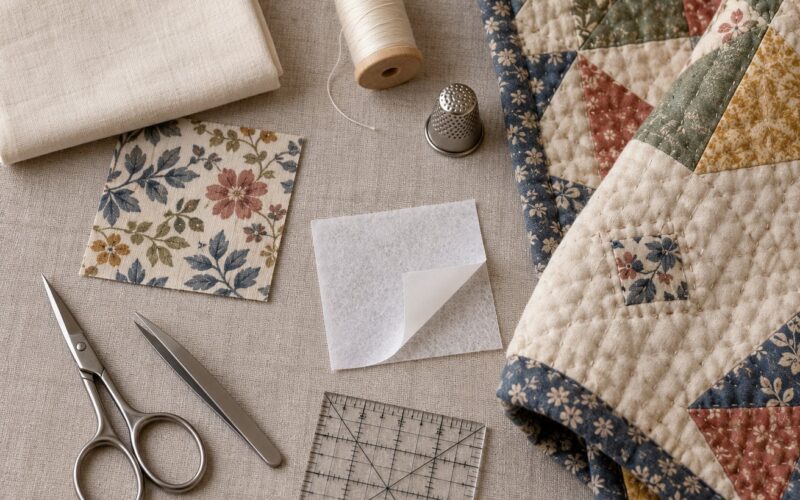
You can hang a quilt near a window, but you should not hang it in direct sunlight. Light damage is cumulative and it does not undo itself, so the job of caring for a quilt hung in sunlight is really a job of limiting exposure, supporting the weight evenly and rotating the piece out of the light on a schedule. Most of this takes under an hour to set up properly.
I have watched quilts on sunlit walls go pale on one side while the other side stays saturated, and it is almost always the side that faces the glass. That uneven wash-out is the sign that a wall needs rethinking, not the quilt.
Below is the process I use: what to gather first, then five steps, then what to do when damage has already started.
Table of Contents
- What You Need
- Step-by-Step
- Step 1: Assess the Quilt Before Hanging It
- Step 2: Choose the Least Damaging Light Exposure
- Step 3: Prepare a Supportive Hanging System
- Step 4: Maintain the Quilt Without Exposing It More
- Step 5: Rotate and Monitor the Display
- Common Mistakes
- Frequently Asked Questions
- Can I hang a quilt in direct sunlight?
- Is indirect sunlight through a window safe for quilts?
- Can sun fading on a quilt be reversed?
- How often should a quilt be washed?
- How old does a quilt have to be to be considered vintage?
- How do I store a quilt between seasons?
- Conclusion
What You Need
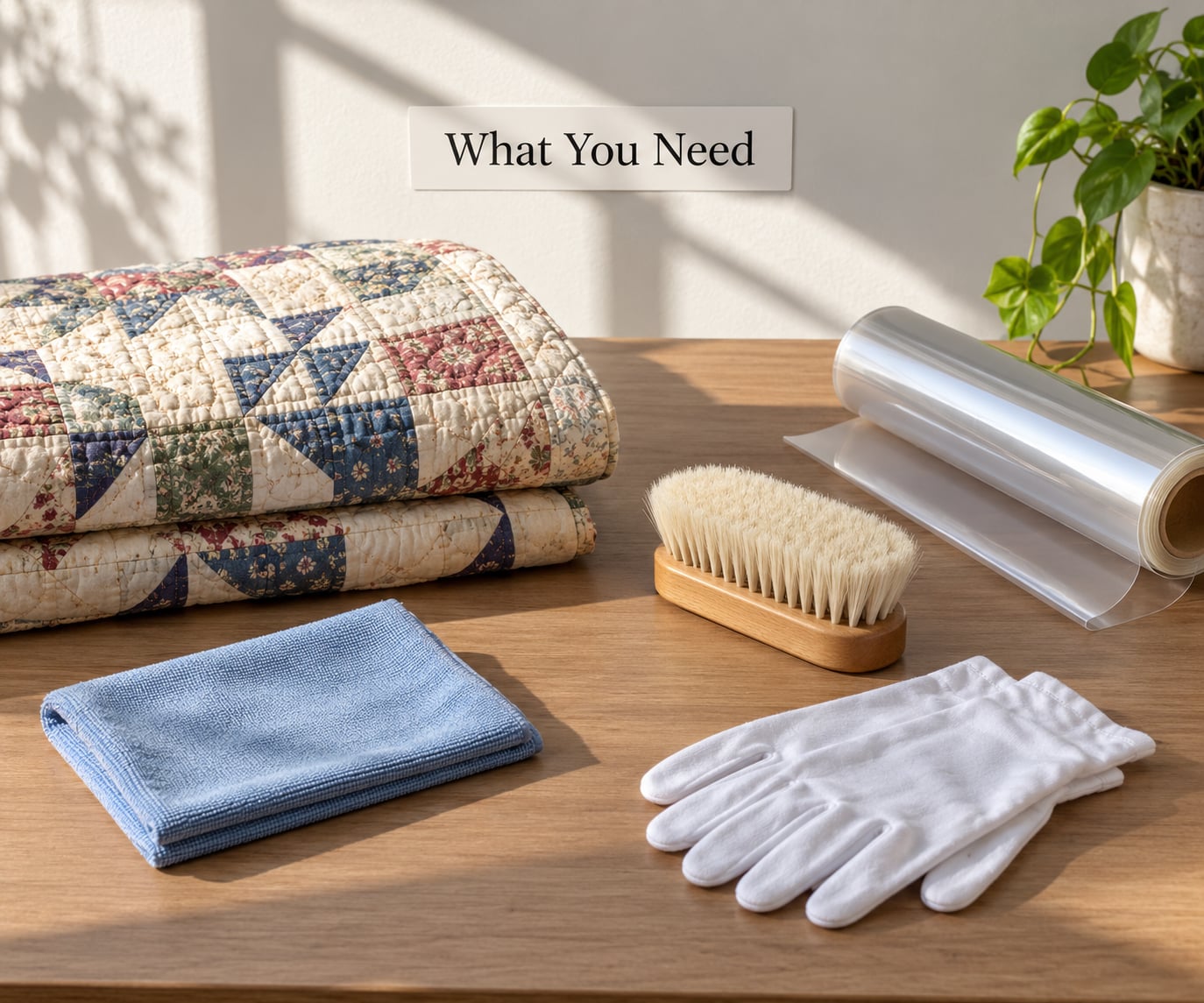
None of this is expensive, and most of it is already in the house. What matters is that you have it before the quilt goes up, not after the first fade shows up.
- A padded hanging system. A quilt ladder, a wooden dowel inside a sewn fabric sleeve, or a wide wall rail. Skip wire hangers and single hooks on anything wider than a crib quilt.
- Light control. Sheer curtains, blinds, or UV-filtering window film for any glazing between the quilt and the sun.
- A timer. A cheap kitchen timer is enough if you plan any intentional sunning at all.
- Soft cleaning tools. A clean soft-bristle brush, white microfiber cloths, and cotton gloves for handling.
- A condition record. A notebook or phone photo taken in the same spot and light each time you inspect the quilt. Without a baseline you are guessing.
- Acid-free tissue and a breathable cotton storage bag for the months the quilt is off the wall.
White cotton gloves are the item people skip. Bare hands transfer body oils to the batting over time, and those oils yellow first — long after the sun has stopped being a factor.
Step-by-Step
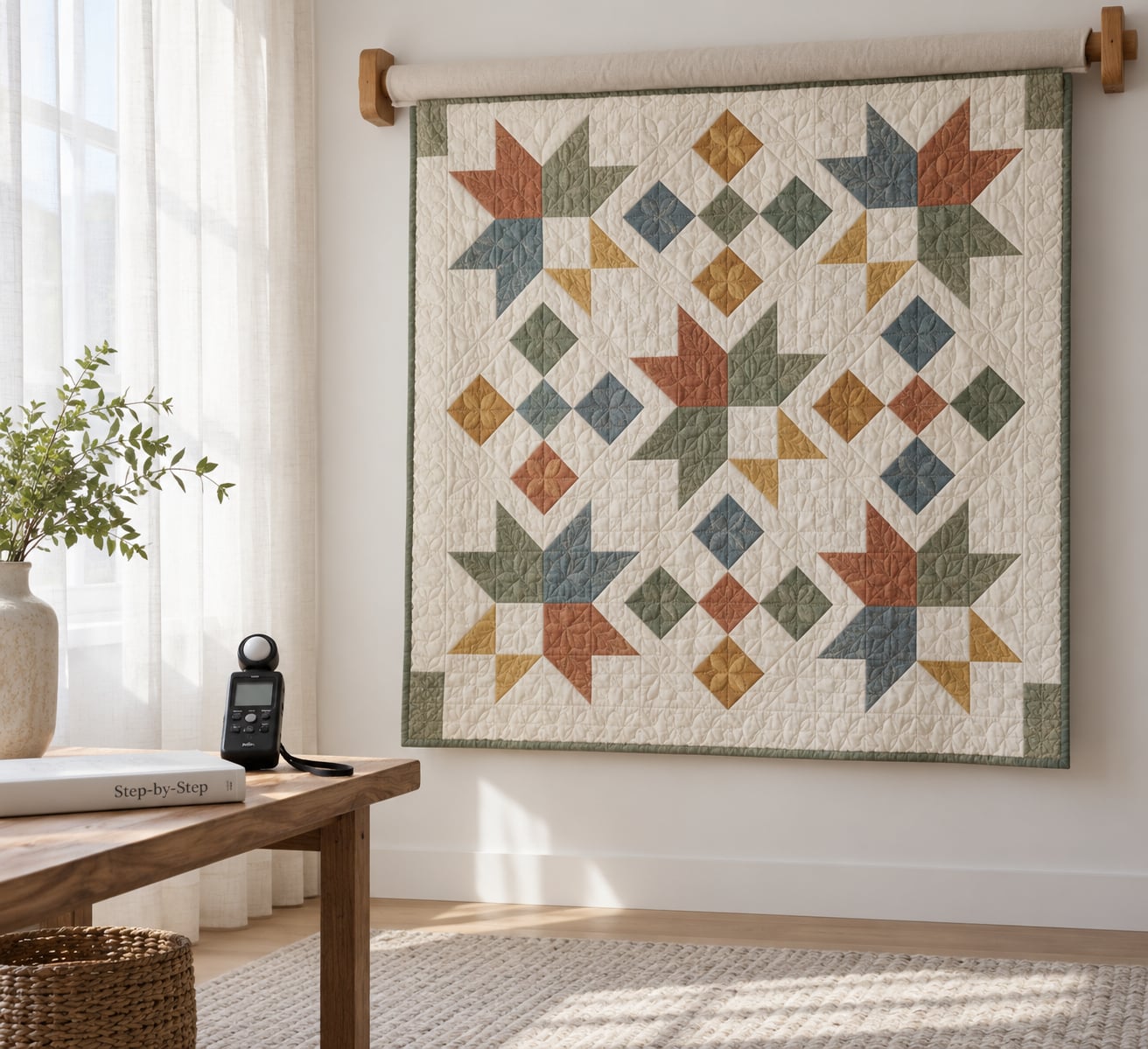
Step 1: Assess the Quilt Before Hanging It
Look at the quilt flat on a table under neutral light, not in the room where it will hang. You are checking for the things that sunlight will exploit: weak seams, shifting batting, loose appliqué, and dye that already moves when you blot it with a damp white cloth.
Hand-dyed and natural-dye fabrics are the priority here. Indigo, madder and cochineal shift faster and less evenly than commercial reactive dyes, and printed calico fades more predictably but just as permanently. If a damp cloth lifts colour, treat that quilt as the most fragile piece you own.
Old repairs matter more than age. A re-pieced seam from thirty years ago often has a different thread and a different stiffness, and that seam is where a long hang will open first.
Step 2: Choose the Least Damaging Light Exposure
Choose indirect light, distance from the glass, and rotation, in that order. The single biggest win is usually just moving the quilt to a wall that does not share a plane with a window.
Here is how the light sources rank, from most damaging to least. Conservation guidance from the Canadian Conservation Institute notes that even at a mere 50 lux, highly sensitive colours can visibly fade within a few years — so there is no level of light that is genuinely risk-free, only lower risk.
- Direct sun through glass — the worst case. Glass blocks some UV but passes a meaningful share, and the heat adds a second problem.
- West-facing window — low-angle afternoon sun, strongest fading rays of the day.
- South-facing window — long hours of steady exposure through spring and summer.
- Indirect window light — softer, but still cumulative. Quilts Kingston’s care guidance says plainly that even indirect sunlight fades fabrics.
- Fluorescent lighting — damaging over long periods, and the same guild guidance flags it explicitly. Older tubes with a magenta cast are worse.
- LED lighting — much lower UV output, though none is zero.
- North-facing window or a wall with no glazing — the best spot in most homes.
If the quilt has to live on that sunlit wall, the practical steps are: sheers or blinds closed during peak hours, UV film on the glass, and a rotation schedule you actually keep. Measure the spot if you can. A phone light meter app gives you a baseline reading you can compare each season, and it costs nothing.
Step 3: Prepare a Supportive Hanging System
Distribute the weight along the full top edge so gravity does not add point loads to the seams. A sewn fabric sleeve with a wooden dowel inside is the most forgiving option for a heavy quilt, because the sleeve spreads the load across the whole width.
Quilters on heritage forums are consistent about one thing: never use clip-on metal curtain hangers on an old quilt. The clips leave lasting dents, and the tension slowly stretches the top row of blocks. A quilt ladder works well for lighter pieces and for rotation, since you can hang several quilts on it and move them individually.
Museum practice, documented in Winterthur’s collections, uses hook-and-loop fastener systems to display quilts, precisely because they hold without concentrating stress. Leave a little slack in whatever you use. A quilt pulled dead flat is a quilt under strain.
Check the wall too. Paint that has become brittle with age will pull off in flakes when you take the quilt down, and you will be picking pigment off the front for years.
Step 4: Maintain the Quilt Without Exposing It More
Keep dust off with airflow and a soft brush rather than frequent washing. Dust on the surface is a lesser problem than dye in the wash, and a monthly pass with a clean brush takes two minutes.
For a musty smell, air the quilt indoors in a dry, shaded room rather than outdoors in sun. Twenty to thirty minutes in moving indoor air handles most of it. If you want the sun’s deodorising effect, that is a separate decision covered below.
Spot-cleaning is the right tool for small marks. Cold water, a mild detergent, and a cloth barely damp — blot, never scrub. Save the machine for quilts that are genuinely dirty and structurally sound.
Step 5: Rotate and Monitor the Display
Rotate the quilt every three to four months, and keep anything fragile on a dark wall in the off-season. Rotation works because fading is cumulative and uneven; turning the piece changes which section is taking the load.
Photograph it each time in the same light. A one-sided fade is easier to catch in a side-by-side photo than by eye, because your memory of how it looked gets replaced every time you look at it.
If you want a timer-based outdoor routine, quilters on r/quilting settle on roughly an hour per side with the stained or damp side facing up, and they use a kitchen timer rather than a guess. That is a sensible, well-practised rule for a modern cotton quilt. An heirloom does not need it.
Common Mistakes
- Hanging in prolonged direct sun. Fix: move the quilt off that wall. No amount of curtains fully solves hours of direct exposure.
- Resting the quilt against hot glass. Fix: keep a gap. Heat and light are two separate risks and the heat one gets ignored.
- Using wire hangers or spaced clips. Fix: sleeve and rod, ladder, or a wide rail. Point loads stretch seams.
- Never rotating. Fix: three to four months, on the calendar rather than in your memory.
- Aggressive cleaning. Fix: cold water, mild detergent, gentle cycle, air dry in shade. No bleach, no hot water, no fabric softener.
- Treating indirect light as harmless. Fix: assume it is cumulative and just much slower.
Frequently Asked Questions
Can I hang a quilt in direct sunlight?
Short, timed exposure is fine. Long, unmonitored direct sunlight is what fades dyes and weakens fibers. For a modern cotton quilt, quilters commonly use about an hour per side with a timer, stained side up. For an antique or hand-dyed piece, skip it entirely and hang the quilt on a wall with indirect light only.
Is indirect sunlight through a window safe for quilts?
Indirect light is safer than direct sun but it is not safe over years. Guild conservation guidance states that even indirect sunlight fades fabrics, and that fluorescent lighting causes damage over time too. The Canadian Conservation Institute notes that highly sensitive colours can visibly fade within a few years at only 50 lux. Lower risk is not the same as no risk.
Can sun fading on a quilt be reversed?
No. Light damage breaks down the dye molecules themselves, so the colour that has left is not sitting somewhere waiting to be restored. Washing will not bring it back, and neither will time. Dust and surface yellowing can be cleaned off, but genuine fading is permanent, which is why prevention matters more than repair here.
How often should a quilt be washed?
Less often than most people assume, and only when it actually needs it. Airing and brushing handle most routine dust and odour. When a quilt is genuinely dirty and structurally sound, wash it cold on a gentle cycle with a mild detergent, skip bleach and fabric softener, and dry it in shade. Heirloom or antique quilts usually should not go in a machine at all.
How old does a quilt have to be to be considered vintage?
Commonly, a quilt made at least twenty years ago is described as vintage, and one over a hundred years old as antique. Definitions vary between collectors and guilds, so treat the age label as a rough convention rather than a rule. Age matters for care decisions, but condition matters more, and a fragile sixty-year-old quilt needs gentler handling than a sturdy new one.
How do I store a quilt between seasons?
Store it cool, dark and dry in a breathable cotton bag, folded with acid-free tissue between the layers. Avoid plastic bins, basements and attics, where humidity invites mildew. Refold it along different lines each time you put it away, since a permanent crease along a fold eventually breaks fibers. Keep it out of reach of pets and dust, and check it every few months.
Conclusion
Start with the wall, not the quilt. Move it to indirect light, support the full width evenly, rotate it every three to four months, and photograph it each time so a fade shows up as a difference rather than a surprise.
Everything else on this list is maintenance. The part that cannot be fixed later is the light itself, so that is where the attention goes.