Most art quilts cost more in time than in fabric. A 16×20 wall piece usually lands between $60 and $150 in materials, a 30×40 gallery piece between $150 and $350, and a 40×60 statement work between $300 and $900 once paint, embellishment and framing are counted. Add your own hours at a rate you choose and every one of those totals triples.
All figures here are typical US ranges. Yardage prices, batting prices and framing rates differ by region and shift over time, so treat these as planning numbers rather than quotes.
Table of Contents
- How Much Does It Cost to Make an Art Quilt?
- Typical Art Quilt Costs by Size and Style
- What Affects the Price?
- Size, and how far you push past standard formats
- Fabric quality and thread count
- Surface design and embellishment
- Complexity, more than size
- How much does it cost to make a quilt once your rate is in it?
- Whether you quilt it yourself or hire it out
- Handwork
- Binding versus framing
- Design or drafting fees
- Shipping
- Ways to Save on an Art Quilt
- Work small first
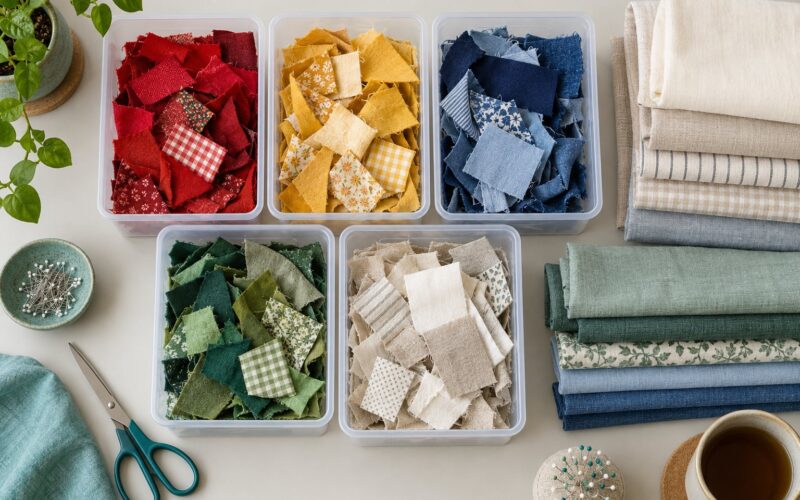
- Plan a fabric palette before you buy
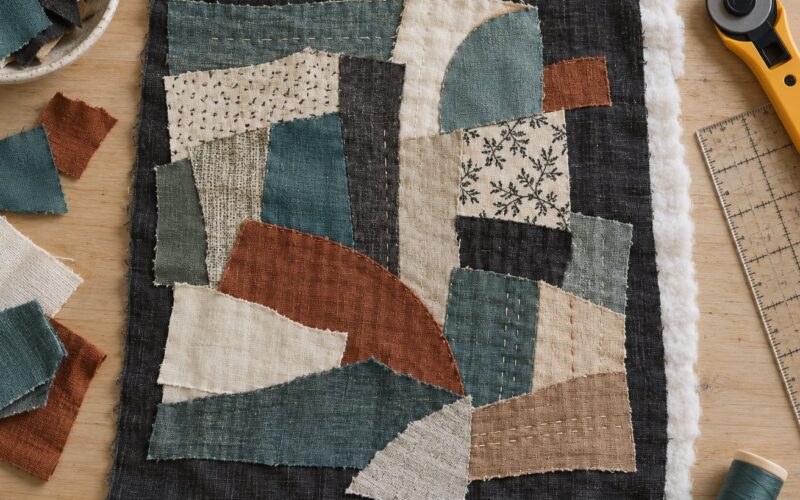
- Use scraps, selvedge and reclaimed textiles
- Spend on the middle of the quilt
- Decide what to quilt before you start
- Compare batting before the quilt sandwich goes together
- Finish it yourself
- Keep a materials and time log
- Budget for a second attempt
- Frequently Asked Questions
- How much does it cost to make an art quilt in materials?
- How much do quilts cost to make in total?
- How much do people charge to quilt a quilt top?
- What is the going rate for long arm quilting?
- How much do quilters charge to bind a quilt?
- What should a beginner budget for a first art quilt?
How Much Does It Cost to Make an Art Quilt?
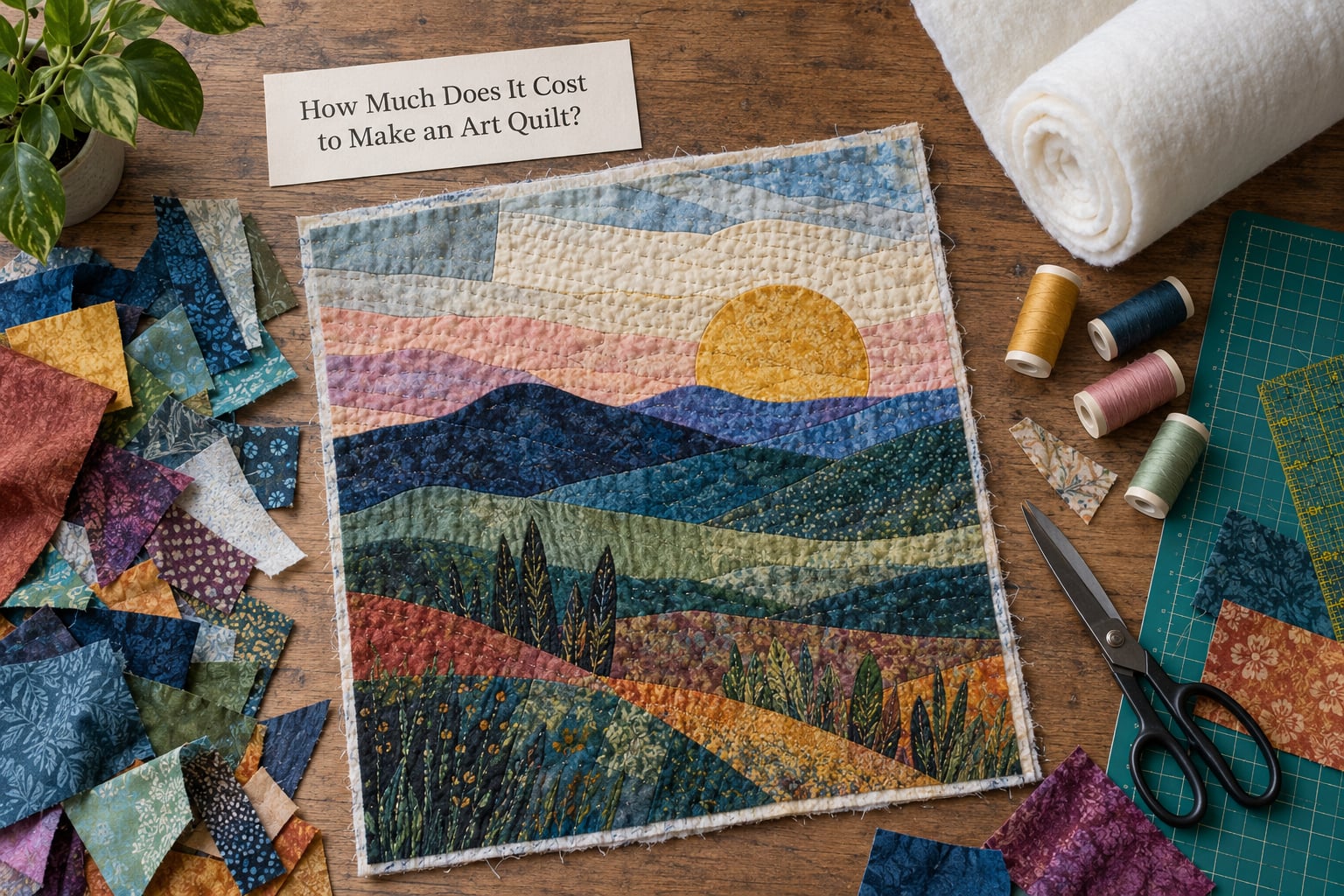
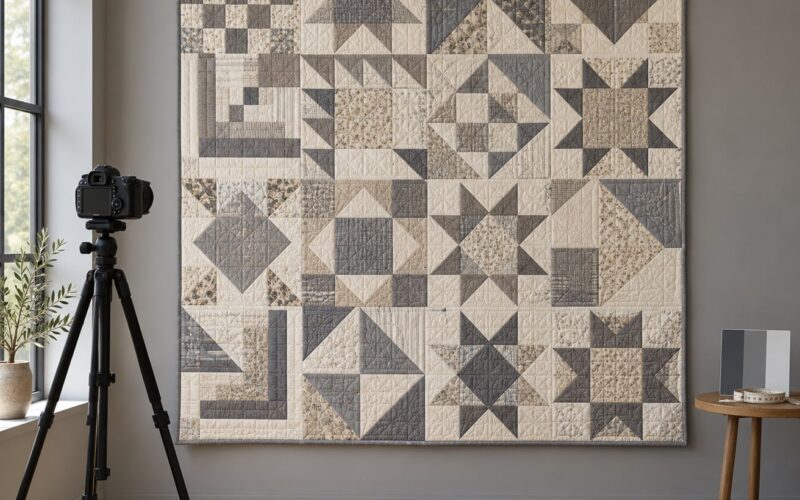
An art quilt is a quilt made to be looked at rather than slept under. It hangs on a wall, gets mounted or framed instead of sized to a mattress, and leans on surface design, appliqué, dyed or painted cloth and found objects as much as on piecing.
The cost of an art quilt works out to three things: materials, the hours spent at each production stage, and a share of your studio overhead. Materials usually account for a fifth to a third of the true cost. The rest is time, and time is the part almost everyone forgets to price.
| Size | Materials | Hours | Materials only | With your time at $20 an hour |
|---|---|---|---|---|
| 16×20 small wall piece | $60-$150 | 12-20 | $60-$150 | $300-$550 |
| 24×36 medium wall piece | $95-$200 | 20-35 | $95-$200 | $495-$900 |
| 30×40 gallery piece | $150-$350 | 28-50 | $150-$350 | $710-$1350 |
| 40×60 statement piece | $300-$900 | 50-90 | $300-$900 | $1300-$2700 |
The hourly rate moves the total more than any fabric decision does. Quilters debating rates in guild and forum threads cluster around $20 to $25 an hour as a floor and around $50 an hour for advanced or custom work. At $20 an hour, that 16×20 piece lands near $300. At $50 an hour the same quilt costs more than $700, and nothing about the quilt itself changed.
One quilter in a pricing forum put a $100 per square yard figure on custom piecing and $150 on the quilting, which is a useful reminder that the finished-quilt market already prices labour separately from cloth. When someone asks how much does it cost to make an art quilt, the useful answer includes the rate, not just the receipt.
Typical Art Quilt Costs by Size and Style
Size alone does not set the price. Two quilts at 60×72 can differ by thousands depending on how much surface design and handwork went in. Use the style rows below to find the closest match, then adjust for your own hours.
| Style | Typical size | Materials | Hours | Total with time at $20 an hour | Materials per square inch |
|---|---|---|---|---|---|
| Minimalist pieced wall piece | 16×20 | $55-$95 | 10-16 | $255-$415 | about $0.23 |
| Painted surface design, no piecing | 24×36 | $95-$165 | 14-24 | $375-$645 | about $0.15 |
| Pieced and appliqued gallery piece | 30×40 | $160-$300 | 28-45 | $720-$1200 | about $0.19 |
| Heavily appliqued or hand-stitched work | 24×36 | $150-$280 | 45-80 | $1050-$1880 | about $0.25 |
| Statement piece with mixed media | 40×60 | $300-$650 | 60-110 | $1500-$2850 | about $0.20 |
| Bed-size art quilt | 50×70 | $260-$520 | 60-110 | $1460-$2720 | about $0.11 |
| Installation scale, multi-panel | 60×84 or larger | $700-$1500 | 150-300 | $3700-$7500 | about $0.22 |
| Never-quilted fibre art sample, framed | 16×20 | $70-$160 | 8-16 | $230-$480 | about $0.36 |
Those totals assume a home sewing and quilting machine, a rotary cutter and mat, basic notions, no paid design help, and no shipping. Yardage drives the fabric line. A 16×20 needs roughly a half yard of top fabric plus a third yard of backing, a 30×40 needs about three quarters of a yard of top, and a 40×60 runs closer to one and a half yards of top and a yard of backing.
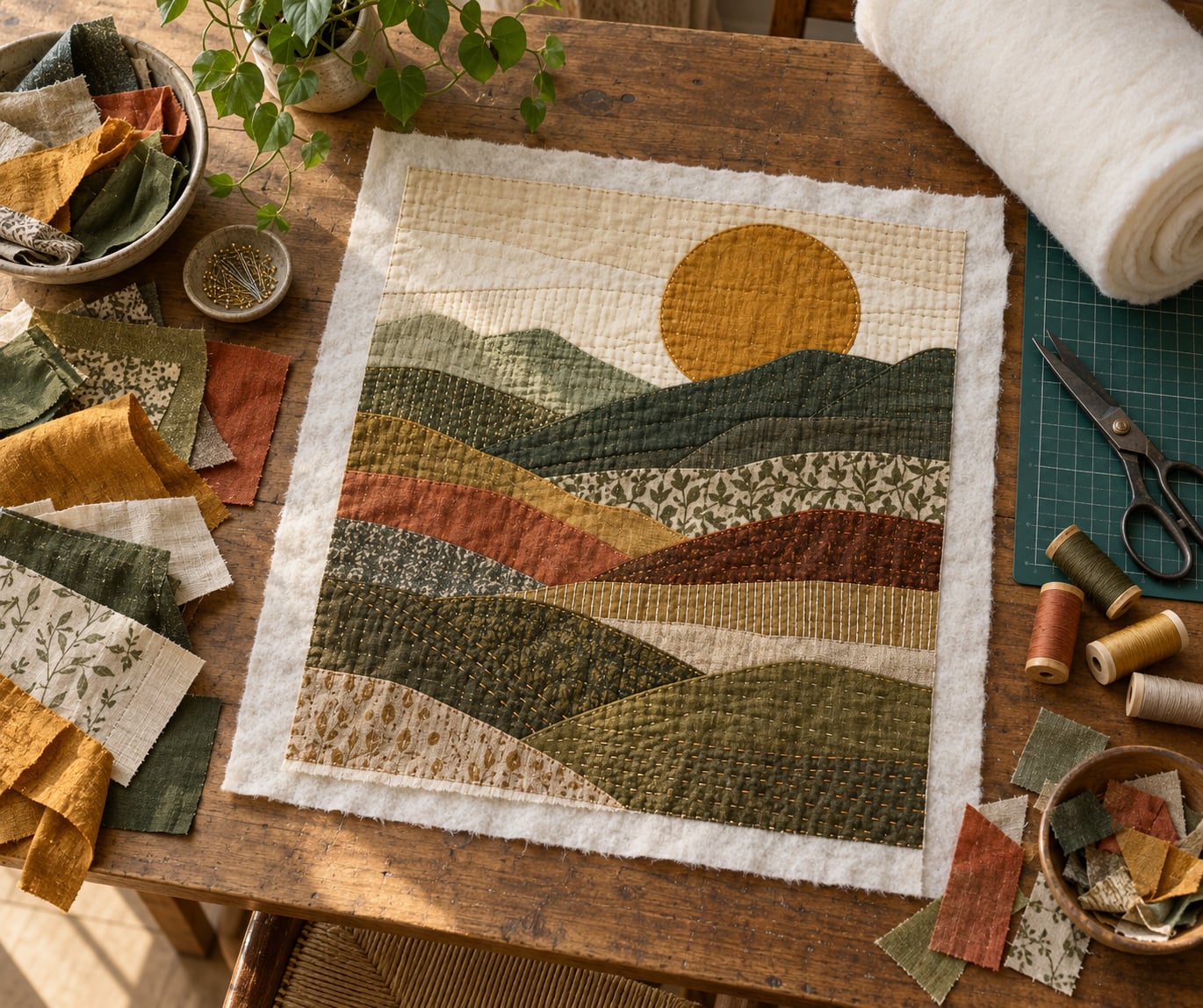
Batting is priced by the yard off a 45-inch roll, so it scales with the larger dimension: about 5.5 yards for a 16×20, 8 yards for a 24×36, 10 yards for a 30×40, 15 yards for a 40×60 and roughly 18 yards for a 50×70. Poly-cotton batting runs in the $8 to $14 a yard range, all-cotton runs $10 to $18, and wool runs $18 to $35. That is why one quilter reported batting alone crossing $32 and still felt surprised. Wool on a 40×60 is a $270 line item before any fabric is bought.
What Affects the Price?
Size, and how far you push past standard formats
Wall quilts cluster around 16×20, 24×36, 30×40 and 40×60 because those are the sizes standard frames and mat boards carry. Going custom means custom framing, custom batting yardage and a slower quilting pass, so a 28×52 piece costs noticeably more than a 24×36 of similar area.
Fabric quality and thread count
Good quilting cotton runs about 70 threads per square inch, and anything under roughly 60 can fray and shift during handling. Mid-weight cottons from the big-box quilting chains are the value pick for large areas, while hand-dyed, hand-printed and silk cloth belong in the places you look at up close.
Surface design and embellishment
Textile paint, dyed silk, screen printing, couching wire and hand embroidery all add a supply line that a plain pieced quilt does not have. Beads, crystals and found objects cost less per piece but add real handling time, which is where the money actually goes.
Complexity, more than size
The clearest example on the market is a quilt company costing a simple design throw at $963 and a complex design throw at $3,443 for the same 60×72 size. Same cloth area, same batting, wildly different labour. Design decisions move cost more than dimensions do.
How much does it cost to make a quilt once your rate is in it?
Add your hours across the stages: picking and buying fabric, cutting, design layout, surface design, piecing, quilting, and finishing. Multiply by your chosen rate and the number explains most of the gap between what a piece cost you and what it would sell for. Forum consensus treats an unstated rate as the thing that makes a quote look unserious.
Whether you quilt it yourself or hire it out
Longarm quilting on a domestic machine can run $0.02 to $0.13 a square inch depending on the quilter and the density of the pattern, with a common working figure near $0.035. That puts a 40×60 piece at 2,400 square inches somewhere between $48 and $312 before a custom design charge.
| Service | Typical rate |
|---|---|
| Longarm quilting, edge to edge | $0.02-$0.13 per square inch, often quoted around $0.035 |
| Custom pantograph or free-motion design | $150-$350 per design, then charged per square inch |
| Piece top by a professional quiltmaker | around $100 per square yard of finished quilt |
| Hand binding | about $0.35 per linear inch, roughly $4 a foot |
| Machine binding | $40-$120 for a wall-size piece, depending on size |
| Frame and mat, 16×20 | $75-$200 |
| Frame and mat, 24×36 | $120-$300 |
| Frame and mat, 40×60 | $250-$700 |
| Hanging hardware and wire | $15-$40 |
A published market survey of quilting services put the national average between $116 and $356, with most people paying about $203. That is a useful sanity check before you accept a quote far outside the band.
Handwork
Hand appliqué, hand quilting and couching run at the slowest pace of any stage. Even a few hours a day adds up, and it is the stage most likely to make a maker underestimate by half.
Binding versus framing
Finishing a quilt is called binding, and for a wall piece you have a choice. Bound and hung on a dowel is cheaper and shows the back. Mounted on board and framed looks gallery-ready and costs $75 to $700 depending on size and frame stock. Conservation framing for a show entry runs higher still.
Design or drafting fees
Original design work gets charged separately from making. Custom quilt design is often billed at $50 an hour and up. If you drew your own pattern you can either log those hours honestly or treat them as part of your creative practice and say so plainly rather than quietly absorbing them.
Shipping
Rolled quilts travel by tube, and the tube plus insurance is a real line item for anything over 30×40. It rarely shows up in a maker’s first estimate, which is why gallery pieces sold online quote shipping separately.
Ways to Save on an Art Quilt
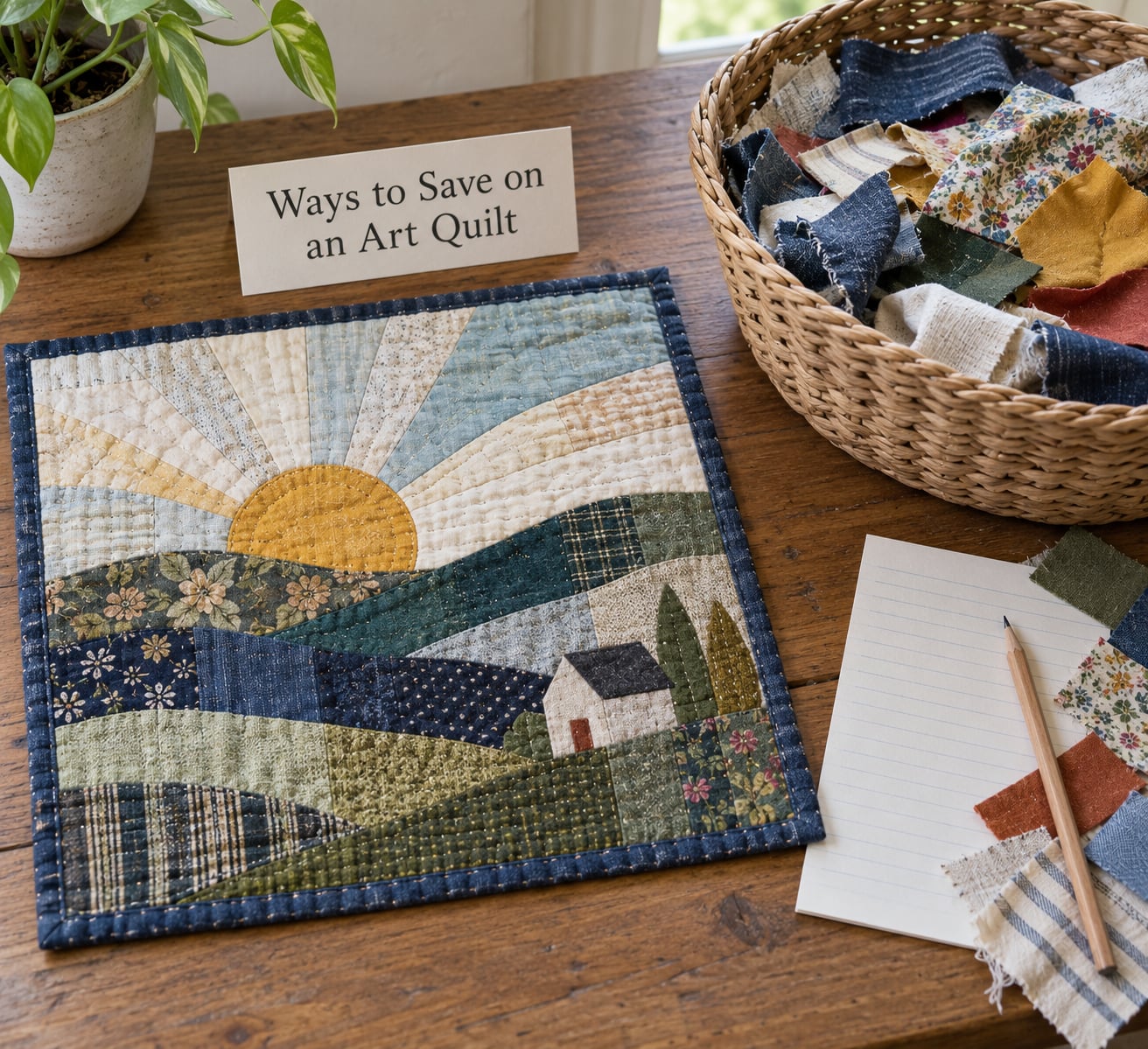
Work small first
A 16×20 teaches you everything a 40×60 does and costs a fifth as much. Several makers on quilting forums report that a first small piece saved them from wasting good yardage on a format they had not yet tested.
Plan a fabric palette before you buy
Two or three prints in one colour family plus a solid buys a lot of visual variety from a small stash. Buying yardage in a rush is the most common way a $200 budget becomes a $400 bill.
Use scraps, selvedge and reclaimed textiles
Selvedge strips, thrifted linens and old clothing make excellent appliqué and couching material, and one maker reported building a piece that took nearly a year out of materials most people would have thrown out.
Spend on the middle of the quilt
Cheap fabric in the quilt’s centre and good fabric around the focal area works visually and costs far less than premium cloth across the whole surface. It also lets you keep the expensive hand-dyed silk where it reads.
Decide what to quilt before you start
Outline quilting, a single meandering pattern or leaving large areas unquilted are all legitimate choices, and each one is a real saving in hours. Sketching the quilting plan on paper first prevents dense stippling you did not want halfway through.
Compare batting before the quilt sandwich goes together
Poly-cotton is the cheapest route and fine for most wall pieces. Wool is worth it for pieces you will handle or keep for decades, and it costs two to three times more per yard. Decide on the spot rather than discovering the difference at the register.
Finish it yourself
Self-binding saves $40 to $120 on a wall piece and self-framing saves more. If you hang indoors and out of direct sun, a simple shadow-box frame with a hinged mat does the job for a fraction of a conservation frame.
Keep a materials and time log
A spreadsheet with one row per supply and one row per production stage turns guesswork into a number. Most makers underestimate time by half, and the log is the only thing that corrects it.
Budget for a second attempt
Set aside about 15 percent of materials for the miscut block, the fabric that fails a colour test and the binding that comes out short. Makers who budget for one perfect try almost always end up buying fabric twice.
Frequently Asked Questions
How much does it cost to make an art quilt in materials?
Materials alone usually run $60 to $150 for a 16×20 wall piece, $95 to $200 for a 24×36, $150 to $350 for a 30×40 gallery piece and $300 to $900 for a 40×60 with paint, embellishment and framing included. A pieced piece with no embellishment sits at the low end; mixed media sits at the top.
How much do quilts cost to make in total?
Counting your own hours, a 16×20 lands near $300 to $550 at $20 an hour, a 30×40 near $710 to $1350 and a 40×60 near $1300 to $2700. Move to a $50 an hour rate for advanced or commissioned work and those totals rise sharply. The rate you choose matters more than the fabric.
How much do people charge to quilt a quilt top?
Longarm quilting is usually priced per square inch, with figures seen from $0.02 up to $0.13 and a common working rate near $0.035. A 40×60 top covers 2,400 square inches, which works out to roughly $48 to $312 for the quilting pass alone, before any custom design charge.
What is the going rate for long arm quilting?
Most longarm quilters quote per square inch, and published market data puts national average quilting service costs between $116 and $356 with most people paying about $203. Custom pantograph designs usually add $150 to $350 on top of the per-inch charge, since the design work is done by hand on the machine.
How much do quilters charge to bind a quilt?
Hand binding runs about $0.35 per linear inch, which is roughly $4 a foot, so a 40×60 piece with 16 feet of perimeter comes to about $64 plus materials. Machine binding is often quoted as a flat fee of $40 to $120 for a wall-size piece. Binding fabric is usually billed separately unless the quilter says otherwise.
What should a beginner budget for a first art quilt?
Set aside $80 to $150 in materials for a 16×20 and roughly 12 to 20 hours of work. Choose mid-weight quilting cotton, poly-cotton batting and machine binding to keep the first spend low. Buy one backing fabric, one binding fabric and let the rest be scraps from the top fabric. Keep the first piece out of competition.
If you have never made one, start here: pick a 16×20, write down a fabric palette, buy one backing and one binding fabric, and total the receipt before you cut anything. That single habit, materials separated from hours, is what turns a vague idea into a budget you can actually plan around in 2026 and beyond.