Yes, you can use matte medium as a sealer, and for sketches, mixed media, paper work and studies it does the job well. Thin it roughly 1:1 with water, brush or roll on a very light coat, let each coat dry, and give it about 24 hours before you paint or varnish over it. The catch is that matte medium is a non-removable acrylic polymer emulsion, not an archival varnish, so treat it as a working seal rather than a permanent finish.
I use it constantly in the studio, mostly to lock in a graphite sketch before I start painting over it and to protect collage pieces that will never be sold. Knowing when to stop at matte medium and add a real varnish is the part most guides skip, so that gets its own section below.
Table of Contents
- What You Need
- Step-by-Step
- Prepare the Artwork and Choose the Matte Medium
- Apply the First Thin Coat
- Let Each Coat Dry Completely
- Add Additional Coats and Finish the Surface
- Common Mistakes
- Too much medium in one go
- Sealing damp artwork
- Bubbles and foam
- Cloudy or milky patches
- Visible brush marks and ridges
- Cracking over heavy texture
- The wrong surface for the job
- Tips for Using Matte Medium as a Sealer
- Frequently Asked Questions
- Can I use matte medium as a sealer?
- How long does matte medium take to dry as a sealer?
- Do I still need varnish after using matte medium?
- Can matte medium be used on paper, canvas, and wood?
- Should I dilute matte medium before using it as a sealer?
- Why is my matte medium finish still shiny or uneven?
What You Need
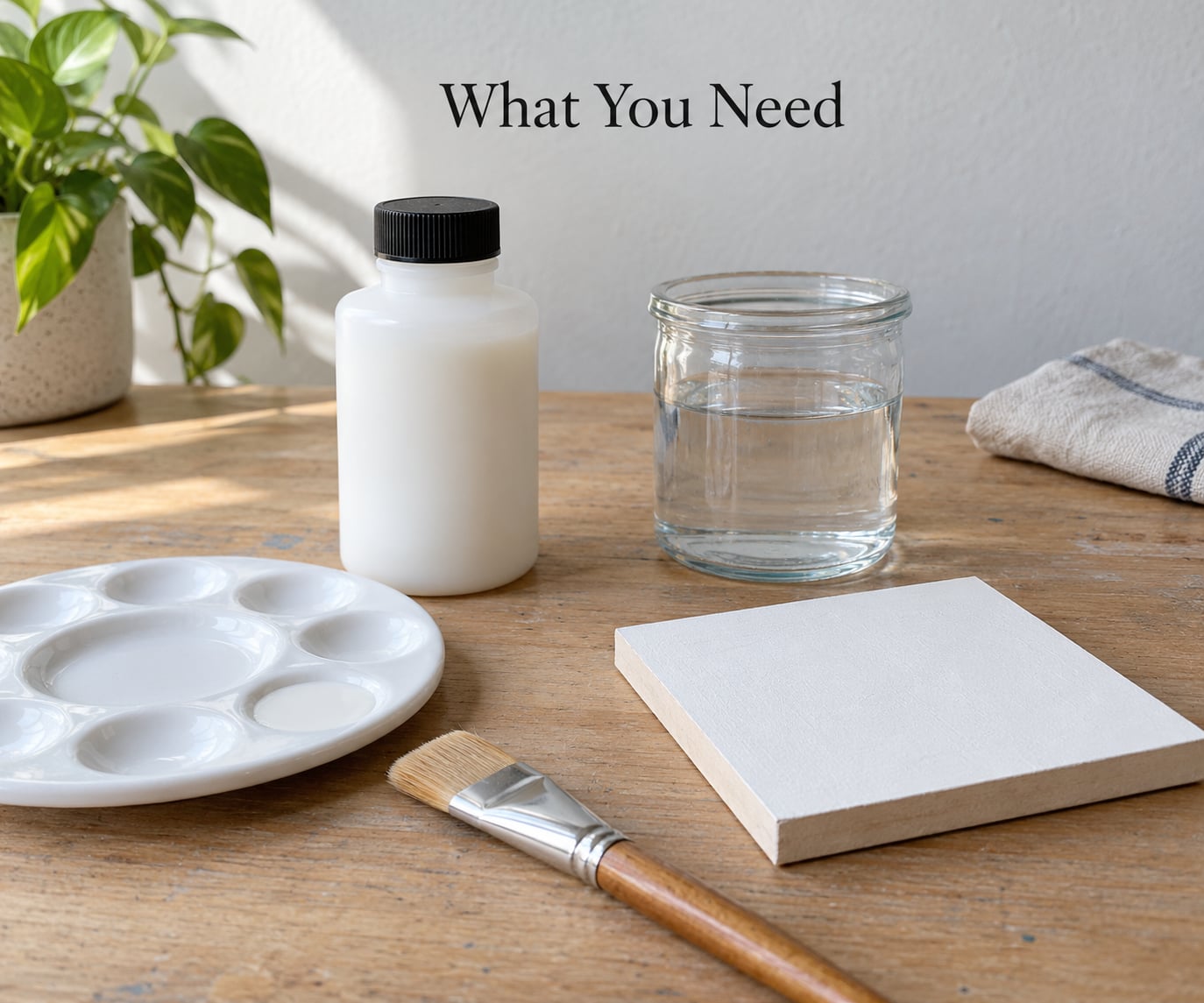
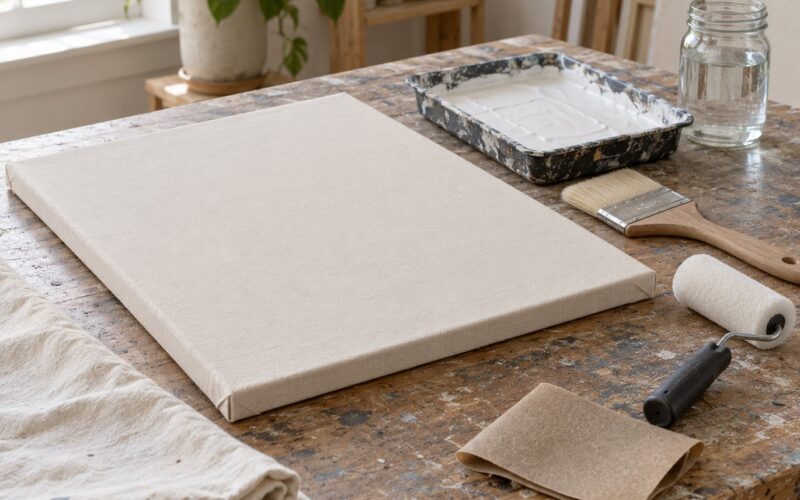
Gather everything before the surface is dry, because the working window once acrylic starts moving is short.
- Matte medium, or a matte gel if you want more body in the mix.
- Clean water for thinning and for rinsing the brush.
- A soft brush or a small foam roller. A wide flat bristle brush works well on paper and canvas.
- A mixing cup or the lid of a jar, plus a spoon or palette knife.
- The surface itself, fully dry, plus scrap board for testing.
- A dust cover, a clean work mat, and an open window or fan for airflow.
Optional extras: a sponge for stippling texture, a small spray bottle if you prefer a misted coat, a hairdryer on cool for thick areas, and a clean dry rag for lifting drips before they set.
Skip the disposable paper cup for mixing. A plastic lid or glass jar holds enough medium for several passes, and a lid lets you cap leftovers instead of throwing them out.
Step-by-Step
Prepare the Artwork and Choose the Matte Medium
Start by confirming the artwork is genuinely dry, not just touch dry. Press a clean finger lightly in an out-of-the-way corner; if it leaves a mark or feels tacky, wait. Acrylic that is even slightly damp under a seal will blister later, and you cannot undo that.
Then match the medium to the surface. Matte medium is a waterborne acrylic polymer emulsion, so it works on acrylic, oil pastel under an isolation layer, graphite, charcoal, collage paper, cardboard, wood panel and canvas. For heavy charcoal or soft pastel, spray a workable fixative first and let that dry, because brush-applied medium can drag the dust around instead of setting it.
Test before you commit. Swoop a little on a scrap of the same primed board or on the back edge of the piece, and check in twenty minutes whether it dulls the sheen without whitening. If the colours go chalky and pale, dilute another part water into it.
Apply the First Thin Coat
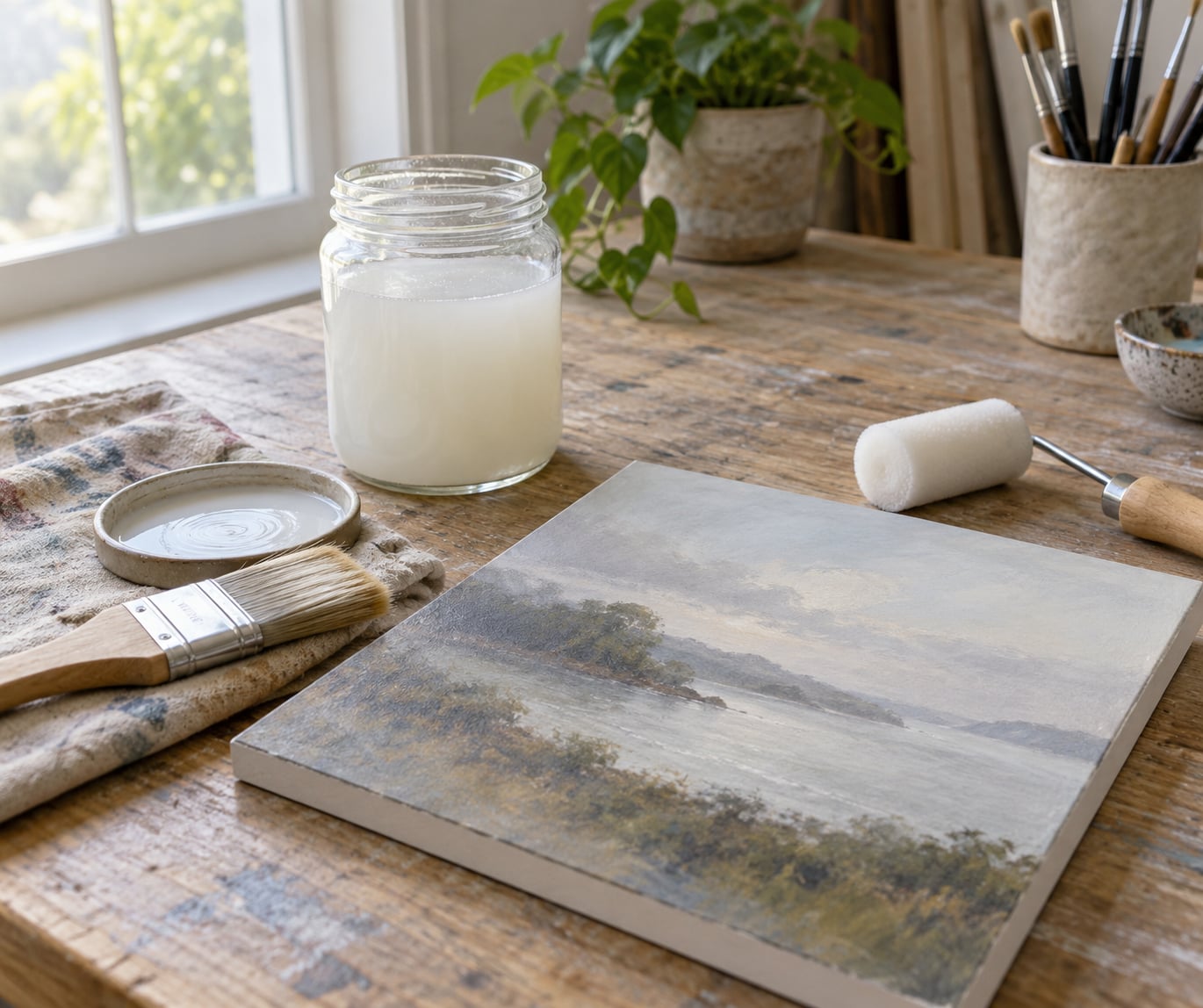
Mix one part medium to one part water for most surfaces. Lay the coat on with a soft flat brush in long, even strokes, or roll it on with a foam roller for a perfectly even finish on panels and paper. Keep the load light. Two thin coats beat one heavy coat every time.
| Method | Medium to water | Best for |
|---|---|---|
| Soft brush | 1:1 | Paper, sketchbook pages, detailed areas |
| Foam roller | 1:1 or neat | Large panels, canvas, even coverage |
| Sponge | 1:1 | Deliberate texture, sealing without flattening |
| Spray bottle | 1:3 to 1:4 | Very thin mist, tiny models, sealing a finished surface |
How do you know the coat worked? The gloss sheen drops noticeably, colours even out instead of looking chalky, and brush marks level themselves out as the water leaves. Hold the piece at a shallow angle under good light and look for pale, streaky patches. Those are thin spots and they need another pass.
Work from the centre out, keep a wet edge, and resist the urge to go over an area twice while it is still damp. Two quick overlapping strokes beat scrubbing.
Let Each Coat Dry Completely
Thin coats dry fast, but fast is not the same as safe. Give the surface airflow and keep dust off it, and expect a touch dry in 15 to 30 minutes in a warm airy room. Cool, humid or still air stretches that to a couple of hours.
| Milestone | Time | What you can do |
|---|---|---|
| Touch dry | 15 to 30 minutes | Lay a sheet of clean paper over it, nothing heavy |
| Ready to recoat | 1 to 2 hours | Add a second thin coat |
| Bonded | About 24 hours | Paint over it or apply varnish |
| Fully hardened | 2 to 3 days | Frame, transport, display without extra care |
Test dryness at the back edge or on the test panel, not across the artwork. If it feels cool, slightly tacky or rubbery under a light fingertip, it is not ready for handling or shipping.
Add Additional Coats and Finish the Surface
A second coat is worth adding when the first left thin patches over exposed canvas, exposed paper or heavy graphite. Wait an hour or two, then feather the weak areas rather than reloading the whole surface. A third coat usually only helps on porous material that drinks the medium.
Keep waiting times honest. A 50/50 dilution followed by a full 24 hours before the final varnish is a sensible benchmark for most acrylic pieces. Once the surface is no longer tacky and the matte sheen looks consistent, it is ready to display, and ready to frame once it has had the full couple of days.
Common Mistakes
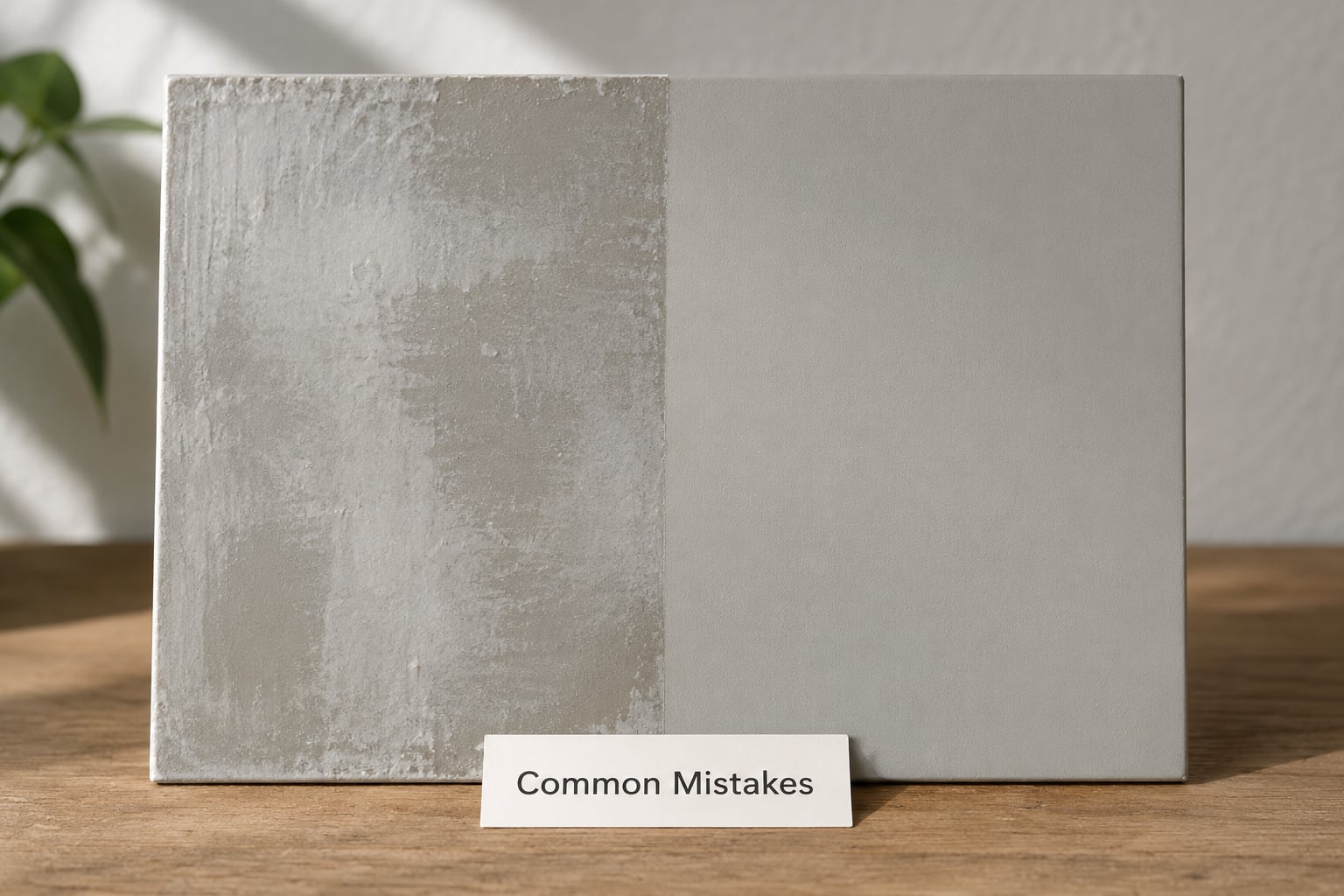
Most disappointing sealer coats come down to too much medium, too little time, or the wrong surface. Each one has a simple fix.
Too much medium in one go
A heavy coat dries cloudy, whitish and uneven, and it sits on top of the colours instead of protecting them. Sand it back gently once fully dry, then do two 1:1 coats instead.
Sealing damp artwork
Blisters, wrinkles and peeling all trace back to sealing too early. Wait until the acrylic is completely dry to the touch, which can take longer than the label suggests on thick passages.
Bubbles and foam
Beating medium into a foam produces pinholes that stay visible under raking light. Stir slowly from the bottom, avoid whipping air in, and hold the roller lightly so it does not trap air as it rolls.
Cloudy or milky patches
This is the drying-too-fast problem. A hairdryer, a fan pointed at the panel or a draughty room flashes the surface before the water has left. Airflow is fine, direct heat is not. Once it goes cloudy, the honest fix is to sand or scrape that area back and lay another thin coat over it.
Visible brush marks and ridges
Thick, fast strokes dry as ridges that catch fingerprints and dust. Use a softer brush, load less medium, and level each pass while it is still moving.
Cracking over heavy texture
Thick impasto, palette knife work and heavy gesso shrink more than a thin seal can flex with, so the coat splits along the ridges. Spray fixative instead of brushing, or accept that textured pieces need a varnish designed for texture.
The wrong surface for the job
Matte medium will not rescue an oil painting, and it is a poor choice for a piece you intend to sell or submit. It forms a non-removable film, so anything you might want to restore or varnish later becomes permanent. Oil pastels and soft pastels also need an isolation coat first, otherwise the seal lifts the colour with it.
Tips for Using Matte Medium as a Sealer
Two thin coats beat one heavy coat every single time, and that rule matters more here than anywhere else in acrylic practice.
Test colour shift on scrap before the main piece. Matte medium can lighten and desaturate slightly, which is invisible on a dark underpainting and obvious on a pale wash. If the piece is going on sale, keep a proper varnish in mind and use matte medium only as the isolation or bonding stage.
Never put gloss varnish over a matte seal expecting it to stay matte. It will not. If you seal with matte medium and then varnish, go with a matte varnish, and always put an isolation coat down first so the varnish does not sink into the matte film and cloud your colours.
Clean up with soap and water while the medium is still wet, and keep the studio ventilated, as with any waterborne acrylic product. Rinse brushes out immediately; dried medium is stubborn and will shorten the life of the bristles.
And when the piece matters, use the right tool. A UV-stabilised acrylic varnish, applied thin, is what protects colour and surface long term. Matte medium is the shortcut for studies, sketchbook pages, work in progress and anything that will not be exhibited.
Frequently Asked Questions
Can I use matte medium as a sealer?
Yes, for sketches, mixed media, collage, paper work, studies and anything in progress. Thin it about 1:1 with water and apply two light coats. It locks in pigment, graphite and collage elements and protects against dust, smudging and handling. It is not an archival finish, so for a piece you plan to sell or exhibit, use matte medium as the seal or bonding coat and finish with a UV-stabilised varnish.
How long does matte medium take to dry as a sealer?
A thin coat is touch dry in 15 to 30 minutes in a warm, airy room, and cool or humid air stretches that to a couple of hours. You can usually recoat after 1 to 2 hours. The film needs about 24 hours to bond before you paint over it or apply varnish, and 2 to 3 days to harden fully enough for framing and transport.
Do I still need varnish after using matte medium?
For a finished piece you care about, yes. Matte medium is a non-removable acrylic polymer film with no UV stabilisation, so it protects the surface but not your colours from light over decades. Use matte medium to seal or bond the layers, then add an isolation coat and a matte varnish. For workshop studies and sketchbook pages, the matte seal on its own is plenty.
Can matte medium be used on paper, canvas, and wood?
Yes. Matte medium works well on paper, cardboard, primed canvas and wood panels, and it preserves the tooth of drawing paper instead of flattening it. Brush heavily primed or raw canvas with a diluted first coat so the medium does not sit on the weave as a chalky film. Seal any exposed canvas or paper deliberately, since that is exactly where the seal shows most.
Should I dilute matte medium before using it as a sealer?
Usually, yes. Mix one part medium to one part water for brush and roller work, go neat or 1:1 on a foam roller for very even coverage, and dilute to 1:3 or 1:4 for a spray bottle or sponge. Going on undiluted gives you a chalky, uneven film. Too much water gives a weak seal that wipes off, so adjust based on how absorbent your surface is.
Why is my matte medium finish still shiny or uneven?
A shiny result usually means too much medium in one coat, and uneven usually means fast, thin coverage or thick brush ridges. Let the coat dry fully, then sand or scrape the shiny area back gently and lay on two light 1:1 coats with a soft brush. If the whole surface stays glossy, you applied it too heavily and it needs stripping back rather than another coat on top.
Start by testing a 1:1 mix on a scrap of the same board, then seal your piece with two thin coats and leave it 24 hours before you touch it again. Use it confidently on sketches, mixed media and work in progress; keep a UV-stabilised varnish for anything headed to a wall or a buyer.